
Share the page
Burundi
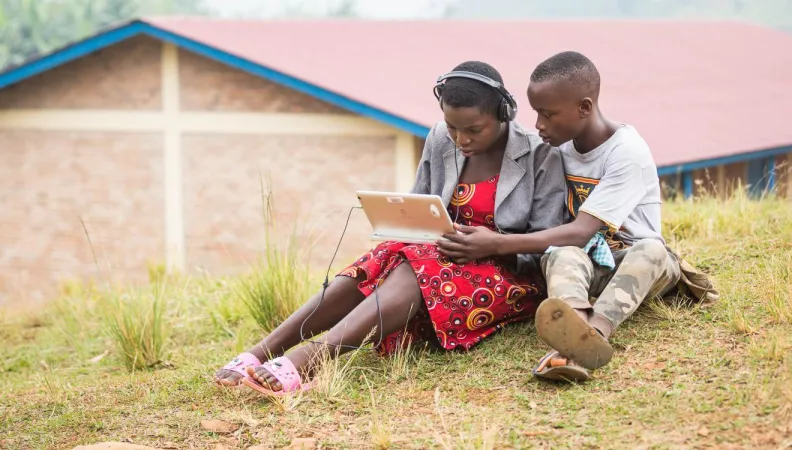
With an estimated population of 12 million, Burundi, a landlocked country in East Africa, is pursuing its development by focusing on strengthening essential infrastructure, improving public services, and enhancing its human and natural potential. To support this momentum, AFD Group, which has been present in the country since 1978, has mobilized over €3 billion through around sixty operations, promoting inclusive development focused on strengthening human capital, social cohesion, and economic resilience.
Context
Burundi is a landlocked country with a population of around 12 million people spread across a territory of approximately 27,834 km². Bordered by Lake Tanganyika to the west and neighboring Rwanda, Tanzania, and the Democratic Republic of the Congo, it occupies a central position in the heart of the Great Lakes region.
The country is characterized by hilly terrain and rich ecological diversity, including fertile agricultural areas, forests, and wetlands. The population is predominantly rural and depends largely on subsistence farming. Burundi also has significant cultural diversity, with several official languages, including Kirundi, French, and English.
Classified as a low-income country, Burundi is identified by the OECD as facing structural vulnerabilities. Despite limited resources, the country continues efforts to improve living conditions for its population, a large share of whom remain affected by poverty and limited access to essential services.
Burundi is highly exposed to the impacts of climate change and relies on agriculture that is particularly sensitive to weather variability, placing increased pressure on natural resources. Access to energy remains limited, especially in rural areas. However, the country’s energy mix is already largely based on hydropower, which provides a key advantage for developing low-carbon energy production and transitioning to more sustainable systems.
The education and health systems face constraints in both human resources and infrastructure, but continue to progress thanks to ongoing reforms and the strong emphasis placed by national authorities on human capital. A dynamic and growing youth population represents a critical asset for the country’s development.
AFD Group has been present in Burundi since 1978 and supports the country in implementing its sustainable development goals, as set out in the Burundi National Development Plan (2018–2027) and Vision 2040.
In line with its commitments on climate and social cohesion, AFD Group promotes inclusive development focused on strengthening social cohesion and human capital. This approach, centered on building the foundations for greater economic and social resilience, is structured around three strategic priorities: (i) supporting the development of human capital through work in the education, vocational training, and health sectors; (ii) improving access to reliable, sustainable, and modern energy services for all; and (iii) strengthening governance and civic participation.
Expertise France, present in Burundi since March 2023, operates in the fields of education, health, and support for financial governance, notably through the provision of technical assistance to the Burundian government.
AFD's Burundi office is directly attached to the East Africa regional office in Nairobi.
Our approach
AFD Group in Burundi: working toward inclusive development through strengthened social cohesion and human capital.
FD has been supporting the Burundian authorities for several years in strengthening the national education system, a top priority for the country and AFD’s main area of intervention. Through co-financing with the Global Partnership for Education (GPE), the projects implemented have helped improve access to education, learning conditions, and the quality of basic education.
The Twige Neza project (2019 to 2025) has led to the rehabilitation and construction of hundreds of classrooms, the strengthening of teacher skills, and greater school resilience.
Building on this momentum, the Project to Support the Improvement of Learning Quality (PAQABU, 2025 to 2029), funded by GPE and implemented by AFD, aims to consolidate these gains by supporting the initial and continuing training of basic education teachers and preschool educators, in order to promote more equitable and inclusive learning for all.
The Twige Twese project, co-financed by the European Union and AFD, seeks to strengthen and promote the role of teachers in Burundi and to support the performance-based financing system. The objective is to encourage education stakeholders, including teachers, principals and inspectors, to improve student learning outcomes and overall school performance.
In a context shaped by a young population and a changing labor market, strengthening technical and vocational skills is a national priority for Burundi.
AFD supports these efforts through the Vocational Training and Integration Support Project (2025 to 2030), with a budget of €9 million and implemented by the Ministry of National Education.
The project aims to improve access to quality training programs that are better aligned with the country’s economic needs, while also promoting the integration of young people and adults through internships, entrepreneurship support, and stronger links with the private sector.
The interventions focus on several promising sectors, including construction, crop and livestock production, cooperative management, and agro-food processing. These activities contribute to inclusive and sustainable growth.
Since 2021, health has been AFD’s second-largest area of intervention in Burundi, supporting national priorities aimed at strengthening human capital. In a context where the health system faces limited resources and persistent inequalities in access, AFD is helping build the capacity of health sector stakeholders, with a particular focus on reducing gender disparities.
An initial operation of €10 million, launched in 2022, is being implemented by a consortium led by the French Red Cross, in partnership with the Burundi Red Cross, AMREF Health Africa, and the Mérieux Foundation. The goal is to improve access to healthcare and epidemiological surveillance.
Through the Amagara Yacu initiative (2022 to 2026), AFD supports efforts to strengthen the health workforce by acting on several fronts: improving the availability and quality of paramedical training, enhancing national epidemiological surveillance capacity, and supporting the blood transfusion sector.
Despite recent investments by national authorities, electricity access in Burundi remains limited, especially in rural areas. To help develop more reliable and equitable energy access, AFD is participating in the ASCENT project (2022 to 2026), implemented alongside the World Bank for a total of €160 million, including €10 million from AFD. Carried out in partnership with the national utility REGIDESO, the project aims to improve access to electricity, enhance service quality, and support the creation of sustainable jobs.
The modernization of the distribution network will help increase electricity supply, improve system stability, and contribute to the country’s socio-economic development. Over time, the project is expected to improve household living conditions, boost business competitiveness, and more broadly support Burundi’s development.
AFD Group supports Burundi’s efforts to strengthen public governance and promote more participatory and inclusive development. This includes building the capacity of staff at the Ministry of Finance to improve public financial management and develop the skills needed for effective planning and implementation of public policies (Expertise France).
In parallel, AFD, co-financing with the European Union, is supporting civil society through the Support to Local Development Associations Project (2024 to 2029).
The project aims to strengthen dialogue between the state and civil society in the design and implementation of public development policies. It also seeks to promote the active participation of women, young people, and persons with disabilities in public and political life at all levels across the country. By supporting more open and participatory governance, AFD also aims to help solidify the role of civil society as a key actor in fostering more equitable, inclusive, and sustainable local development.
In the field
Other projects
News & Press Releases

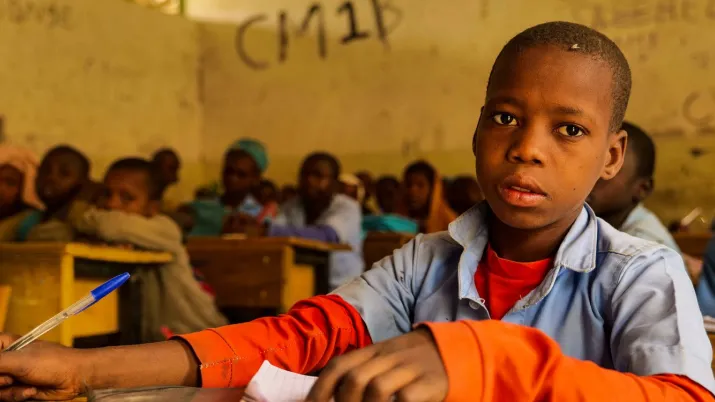
School Canteens: Part of “the Biggest Social Protection Plan in the World”
Published on October 18, 2023
Publications & Media
Key figures
-
Over €250 million invested by AFD Group in Burundi, where it has been present since 1978
-
€113 million committed in 2026