
Share the page
Caring for those who care: training health workers in Mozambique
Published on
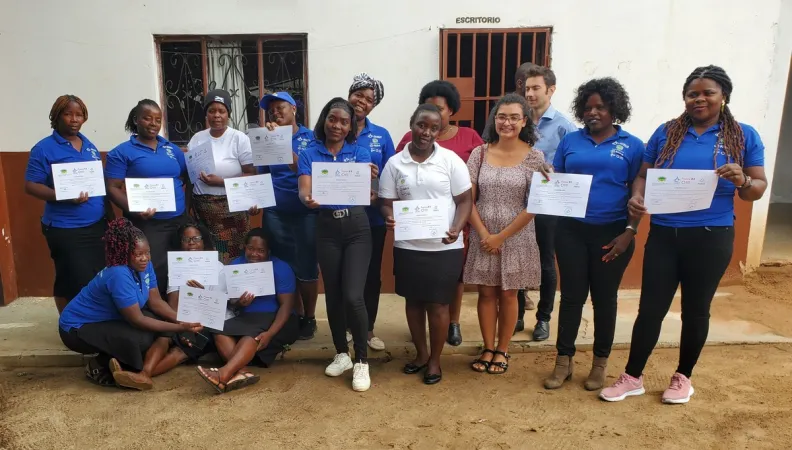
In Matola, Mozambique, health workers are being trained to improve palliative care and support caregivers. This comprehensive approach combines health care, psychosocial support, and women’s economic empowerment.
In Matola, on the outskirts of Maputo in Mozambique, health care goes beyond treating medical symptoms. For Douleurs sans frontières (DSF), a French nongovernmental organization working in pain management and palliative care, and its Mozambican partner Visão Global para Vida (VGV), supporting people living with chronic and end-of-life illnesses also means assisting those who care for them every day.
Although palliative care is recognized by the World Health Organization (WHO) as an essential pillar of health systems, its development in Mozambique remains underfunded. DSF has been working in the country for nearly 30 years to strengthen local capacity and sustainably integrate pain management and palliative care into public health policies and practices.
At the heart of DSF’s activities, under a project co-financed by the City of Paris and Agence Française de Développement (AFD), community health workers play a central role. In Matola and surrounding neighborhoods, 45 community health workers have been trained in chronic diseases, palliative care, sexual and reproductive health, women’s and pediatric cancers, and psychosocial support.
These workers provide primary health care and home-based support to hundreds of patients living with chronic diseases, including HIV. They also raise awareness among families about the importance of treatment adherence, while delivering essential psychosocial support.
In addition, support groups have been established for family caregivers to help prevent emotional exhaustion and improve the quality of life of both patients and their relatives.
Therapeutic and social support go hand in hand
Women, many of whom serve as volunteers, are also at the center of DSF’s community-based initiatives. To ensure the sustainability of their activities, DSF has integrated a strong component focused on economic empowerment. As part of this effort, a sewing training course was organized at VGV’s premises in Matola for 14 community activists. Over three months, participants developed skills in garment making and clothing repair.
The closing ceremony of the training in December 2025 highlighted the initiative’s first results. Beyond skills development, the sewing activity is strengthening women’s economic security, supporting the operation of the VGV workshop through the reinvestment of part of the income generated, and stimulating the local economy by offering affordable clothing.
“The income-generating activity launched through this training will help improve the economic situation of the activists and strengthen the sustainability of the care provided by the group. The clothing produced, particularly school uniforms, meets the community’s needs and remains affordable,” said Luisa Carlos Honwana, President of VGV.
For many of these women, community engagement involves daily exposure to suffering, illness, poverty, and sometimes violence. The project therefore includes psychosocial support delivered by DSF teams through individual and group consultations.
A people-centered approach
These mechanisms also benefit women who are survivors of gender-based violence, supporting them in their social and legal procedures. The project follows a comprehensive approach that recognizes the close links between health, dignity, protection, and empowerment.
“As an activist, I conduct home visits to patients living with chronic diseases and support them in managing their medical care. For me, palliative care and psychosocial support are essential for community patients, who often face extreme needs, such as a lack of basic necessities,” said Irene, a VGV volunteer and participant in the sewing training.
By combining palliative care, psychosocial support, and economic empowerment, the project led by DSF and VGV illustrates an integrated and deeply human approach to development, while delivering sustainable responses tailored to local realities.