Share the page
Djibouti: transforming the Layabley-Moustiquaire neighborhood
Published on
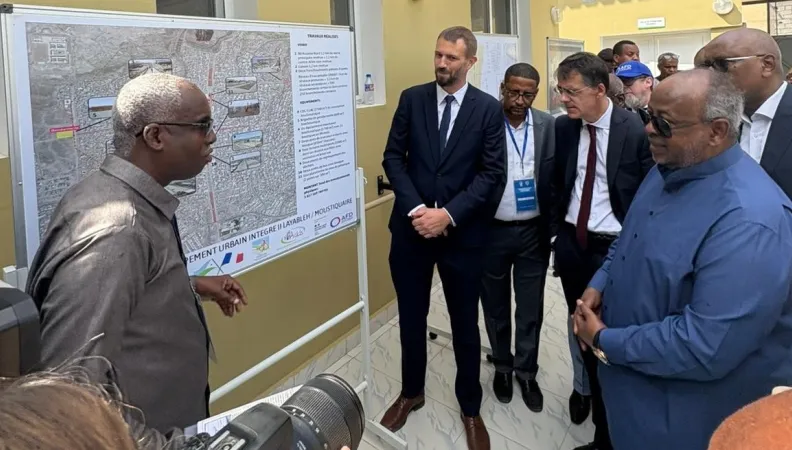
In Balbala, home to more than half of Djibouti’s population, the Layabley-Moustiquaire neighborhood is undergoing a transformation. A new road and bridge are improving access to the area, alongside upgraded sanitation infrastructure and a local market. Residents share how these changes are affecting their daily lives.
Balbala is the most densely populated area in the Djibouti metropolitan region, with around 300,000 residents, most of whom live in precarious housing conditions.
Until recently, the neighborhood lacked basic infrastructure. Roads were either nonexistent or impassable, and the absence of bridges restricted mobility, limited access to essential services, and held back local economic development.
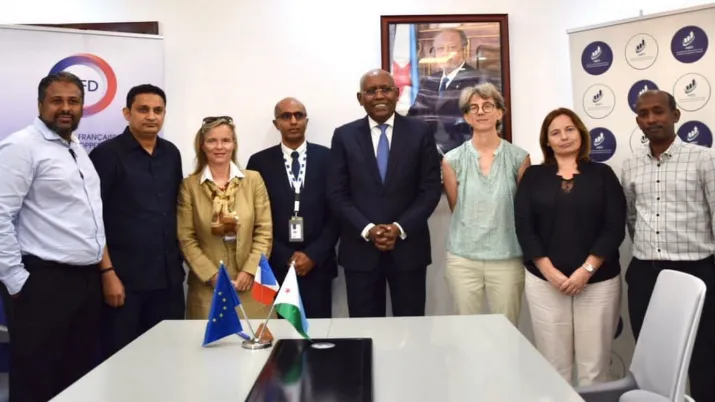
Since 2002, three consecutive urban development projects have been implemented in Balbala, each based on needs expressed by residents and supported by AFD. In addition, a project financed by the European Union and implemented by AFD was signed in 2022 to improve the sanitation system in the southern part of Balbala.
A vibrant hub at the heart of the neighborhood
In Layabley-Moustiquaire, activity now centers around the newly transformed main road, which has become a key thoroughfare. The road is now paved, lined with sidewalks, and hosts a market, a waste collection center, and sports fields set up along the central median.
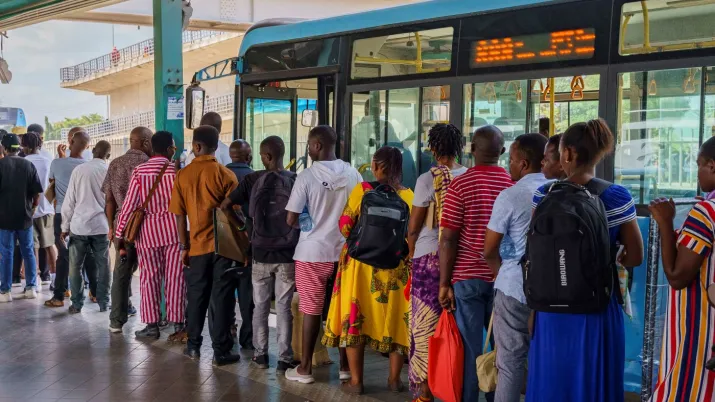
“There were no roads, no infrastructure here. For me, the inauguration of these facilities is a dream come true,” says Bicharo Ali Sahal, president of the Layabley 2 neighborhood women’s association and owner of a small shop. “We also lacked commercial spaces, even though demand was high. Now we have a large market served by several bus lines, and we can even attract customers from other neighborhoods.”
Culture for all
Another flagship component of the project is the community development center. Equipped with an amphitheater and a library, the cultural center is designed to make culture more accessible to all.
“We’ll be able to organize theater performances and dance shows, and bring our culture to life,” says Said Addillahi Sougeh, president of the Layabley 2 neighborhood council. “Opening a library was also a top priority for us. It’s essential for learning to read, especially for young people who can’t afford books.”
Connecting isolated neighborhoods
Improving connectivity within Balbala and linking it to other parts of the city is a major priority. “There were no roads before, and taxis wouldn’t come to this area. Just imagine the difficulty when someone needed urgent medical care or a woman was about to give birth,” recalls Bicharo Ali Sahal.
To meet these needs, several new structures have been built: paved roads, a bridge linking Layabley to Warabley, and large stairways that connect neighborhoods without requiring residents to climb steep slopes or cross polluted drainage channels on foot.
These efforts will continue in the southern part of the municipality, where a new project will channel wastewater from several neighborhoods in South Balbala to a new treatment plant.
Financed by the European Union through a grant delegated to AFD, this project is expected to benefit more than 20,000 people.