Share the page


National Artificial Intelligence and Data Science Research Center
Project

-
Project start date
-
Status
Ongoing
-
Project end date
-
-
Project duration
-
5 years
-
AFD financing amount
-
€ 20 750 000
-
Global financing amount
-
€ 23 150 000
-
Country and region
-
Location
-
Phnom Penh
-
Type of financing
-
Beneficiaries
-
Ministry of Economy and Finance
-
Type of beneficiary
-
State

The National AI and Data Science Research Centre is a sovereign infrastructure for research and innovation within the country’s innovation ecosystem, with AFD supporting its construction and operationalization to advance the digital sector.
Contexte
Cambodia is experiencing rapid growth in its digital sector. In 2023, more than 60% of the population used the Internet, and the rapidly expanding digital economy, estimated at $1.62 billion, could reach nearly $2.87 billion by 2027. The development of the digital sector is part of the Pentagon Strategy (2023-2028), a plan to transform the country into a middle-income economy by 2030, through the use of digital technologies.
However, challenges remain, such as the underdevelopment of digital infrastructure in rural areas, limited mastery of digital tools by the population, and the need to strengthen governance. In response, the Royal Government of Cambodia (RGC) has adopted two strategic frameworks: the Cambodia Digital Economy and Society Policy Framework (CDESPF, 2021–2035), which aims to build an inclusive digital economy, and the Cambodia Digital Government Policy (CDGP, 2022–2035) focused on the modernization of public services and infrastructure. Cambodia is also at a strategic moment in its digital development, with the emergence of artificial intelligence (AI) as a lever for economic growth and improved public services.
Description
The project aims to strengthen national AI capacities and build a sustainable, inclusive, and gender-sensitive AI ecosystem by developing access to a sovereign computing infrastructure, reinforcing local expertise and resources, and by promoting local innovation through the development of responsible and ethical AI solutions.
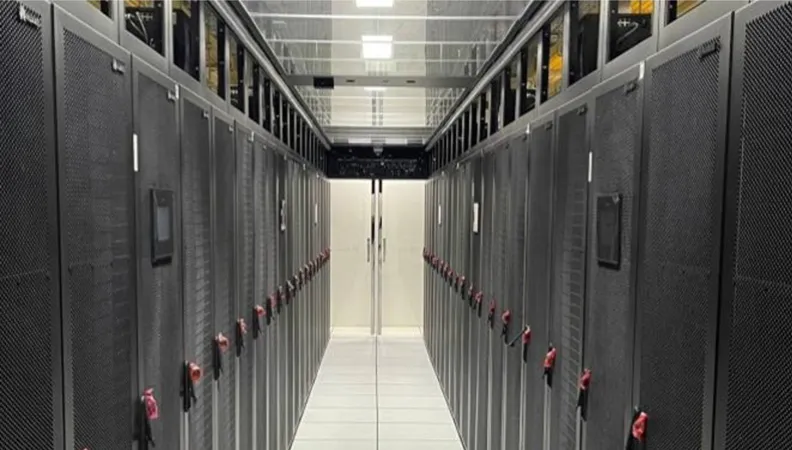
- Construction of the National AI Center: building construction and deployment of AI infrastructure.
- Operationalization of the National AI Center: Development of AI skills through the partnership between Grenoble Alpes University and the Cambodia Academy of Digital Technology (capacity building, scholarships, academic exchanges), and support for the development of AI solutions to serve the Sustainable Development Goals and the emergence of an innovation ecosystem around AI.
- Project management: steering, monitoring, and coordination of all project activities. The project execution is also supported by a grant financing (FEXTE), implemented by Expertise France aimed at supporting the MPTC in the development and implementation of regulatory frameworks related to personal data protection, digital government and ICT areas. This component was already launched in February 2026.
Impacts
The project will establish the National AI and Data Science Research Center as an operational, sustainable and accessible hub for Cambodia’s AI ecosystem. It will provide modern, energy-efficient and inclusive infrastructure, supported by strong governance structures to ensure its long-term management and sustainability.
It will strengthen Cambodia’s AI ecosystem by improving digital and AI infrastructure, building advanced skills through training and partnerships, and fostering collaboration among public and private actors to develop priority use cases in key sectors (i.e. agriculture, health, water and education). The project will also promote an inclusive and responsible AI ecosystem by increasing the participation of women and under-represented groups and embedding ethical and gender-responsive approaches across training, research and governance.
Sustainable Development Goals
Industry, Innovation and Infrastructure
Goal 9 promotes the resilient and sustainable development of infrastructure, industrialization, and innovation. These sectors must be drivers for poverty reduction and improved quality of life worldwide – while limiting environmental impact.
SDG 9 calls for financial, technological, and technical support to industries, and for promoting innovation and scientific research. Achieving this goal requires strengthened international cooperation in R&D, and effective technology transfer to developing countries.