Share the page
Research on development finance and geopolitics
Who finances development, how, and for what purpose? At a time when geopolitical balances are undergoing profound change, this research program explores the transformations shaping international development finance – actors, strategies, instruments and governance – to inform the strategic choices of donors and partner countries.
The main challenge
Development finance is going through a period of major transformation: as power dynamics between countries intensify and new public and private actors emerge, major transitions – climate, energy, digital and social – call for renewed forms of cooperation. In this context, identifying who finances development, with what objectives and through which instruments, has become essential.
Our approach
This program analyzes the geopolitical recomposition of development finance – that is, the changes in the way international cooperation and its resources are organized, distributed and shaped by relations between States and between institutions. It brings together two complementary perspectives:
- The ecosystem of development finance actors: how do national, bilateral and multilateral Public Development Banks (PDBs), ministries of finance and private financial actors operate to finance development? What are their strategies, their instruments, their complementarities?
- Geopolitical realignments and their consequences: how do shifting alliances, trade competition, crises and conflicts, or the growing influence of large private corporations reshape global development issues (governance, access to natural resources, climate change, migration, etc.)?
By bringing these two dimensions together, this research program investigates the geopolitical dynamics driving the emergence of new development models. It also analyzes the impact of these shifts on the positioning of donors and on partner countries, in light of issues of national sovereignty, debt sustainability and the conduct of public policy.
Why is it a research priority for AFD?
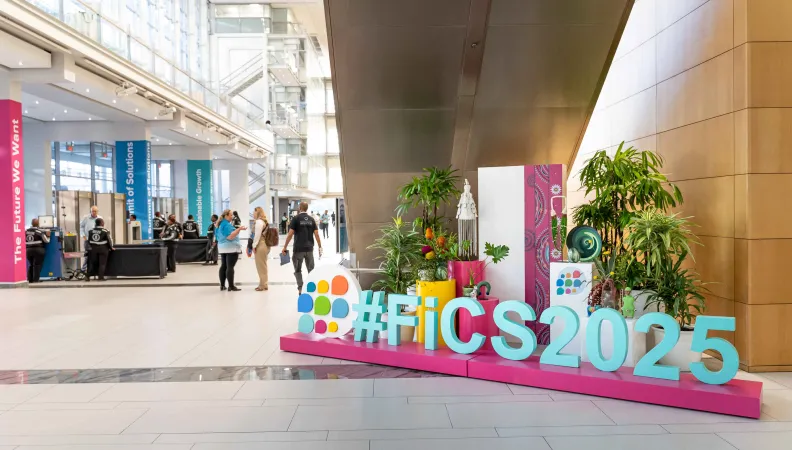
As a founding member of the Finance in Common System (FiCS), AFD is directly involved in the transformations it studies: understanding the reconfiguration of international finance also means better positioning its own action and strengthening its relevance to its partners.
Our flagship initiatives
Explore our flagship initiatives:
AFD is involved in the Global Research Network (GRN) on Public Development Banks (PDBs), an international research network attached to the Finance in Common System (FiCS). Its aim is to advance knowledge on the role of PDBs in financing the transition towards a sustainable future.
Bringing together more than 50 universities and think tanks worldwide, the GRN has produced more than 40 studies and recommendations for PDB leaders, finance ministries and financial-sector regulators. This work, which has fed directly into the FiCS summits since 2020 and is part of the G20/G7 “finance” agendas, is organized around five themes: the international financial architecture; the mobilization of the private sector; the social and environmental alignment of finance; and the quantitative and qualitative analysis of PDBs.
Watch the replay of the "2026 GRN Development Banking Research Conference"

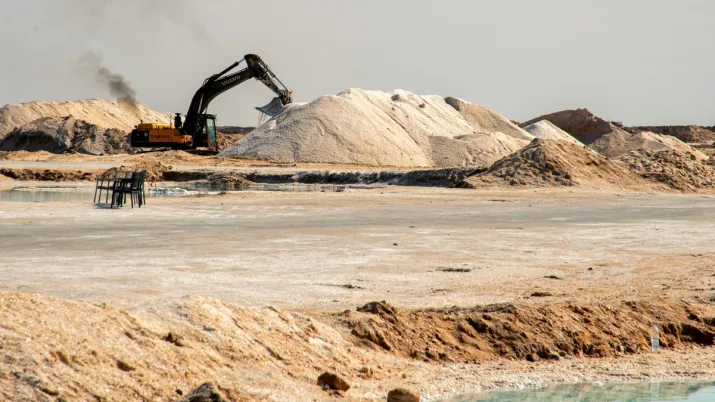
The global energy transition is accelerating demand for critical minerals – lithium, cobalt, nickel, rare earths – that are essential to low-carbon technologies (batteries, wind turbines, etc.). Yet, in this field, developing countries are often confined to the role of raw-material suppliers, while major powers compete in a context of increasing political and trade tensions.
How can Europe reduce its vulnerability while supporting a just ecological transition? What renewed forms of cooperation can be built with producer countries? How can we prevent the quest for security of supply from undermining climate and social objectives? And how can European and countries from the Global South jointly build responsible value chains?
As Lebanon, Syria and Gaza face widespread destruction across their territories, intervening effectively in the current geopolitical landscape requires a deep understanding of the contexts of intervention. Led by IFRI and coordinated by AFD, this observatory project analyzes the dynamics and modalities of the reconstruction efforts taking shape in a Middle East undergoing profound reconfiguration. These comparative insights will help AFD and its partners better understand these operating environments in order to act effectively within them.
Our key resources
Explore our key resources:
544 development banks identified in 2024
Which banks finance development, and what are their characteristics and mandates? What assets do they mobilize, and what is their role in global financial markets? A database maintained by Peking University, FERDI and AFD has provided a precise mapping of this ecosystem since 2018.

This series of three AFD policy papers offers an in-depth re-examination of the foundations and challenges of development finance:
- "Official Development Assistance at the Age of Consequences" (2022) provides a critical overview of ODA and introduces the concept of sustainable and solidarity-based investment.
- "Double Standards in Financing for Development" (2024) examines the instruments used to measure development finance (ODA, TOSSD, climate finance) and argues for a coherent global architecture.
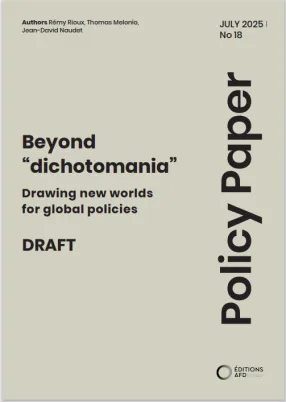
- “Beyond ‘dichotomania’” (2025) pushes the reasoning further still, questioning the very relevance of the distinction between “developed” and “developing” countries.
Our recent publications
Our latest news


Watch our conferences on demand
From Research to Action – Critical Minerals in the Mid-Transition
Published on April 2, 2026

Our research team
-
Etienne ESPAGNE
Economist

-
Jean-Baptiste JACOUTON
Research Officer on Sustainable Finance

-
Elodie RICHE
Research Officer

Want to keep up with the latest research?
AFD's research is one of the Group's activities showcased through the Savoirs AFD brand. The aim of Savoirs AFD: to disseminate, promote and open up to debate the knowledge on development produced by AFD Group and its partners.