Share the page
Environmental and Social (E&S) Complaints Mechanism

Any individual, group or community harmed by environmental or social incidents caused by an AFD-financed project can file a complaint via the Environmental and Social Complaints Mechanism.
This Mechanism is managed by a Complaints Office, acting independently of the AFD Operations Division and overseen by the Ethics Advisor. Independent experts are involved in various stages of the complaints handling process, as detailed in the rules of procedure.
This Mechanism improves the management of environmental and social risks associated with AFD-financed projects and operations, and strengthens their transparency and accountability.
Who can file a complaint?
The complaint must:
- be submitted by one or several natural or legal persons affected by an AFD-financed project;
- exclusively concern the environmental and social aspects of the project;
- concern projects financed in foreign countries (view the list of projects on the opendata portal);
- be made as a last resort, when the complainant has exhausted all possibilities of dialogue and out-of-court redress procedures with the beneficiary of financing or AFD.
Filing a complaint against an AFD project, how does it work?
Rules of procedure E&S complaint mechanism
Download the 2025 Activity Report
Download the 2022 Activity Report
Download the 2021 Activity Report
Download the 2020 Activity Report
Download the 2019 Activity Report
Download the 2017-2018 Activity Report
How do you file a complaint?
Complaints can be submitted:
- By completing a form online
- By sending an email to: reclamation@afd.fr
- By post to:
Agence Française de Développement
Secrétariat du Dispositif de gestion des réclamations environnementales et sociales
5, Rue Roland Barthes
75598 Paris Cedex 12
FRANCE
- By hand delivery to AFD headquarters at the address above or to an AFD field office.
Complaints management
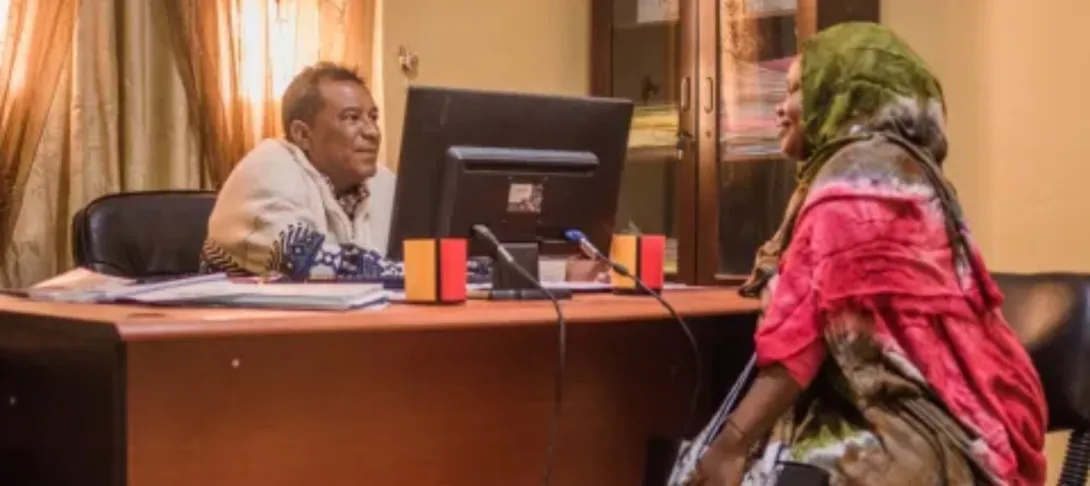
The Complaints Office is the permanent point of contact for receiving and handling complaints, under the supervision of AFD’s Ethics Advisor.
The Complaints Office acknowledges receipt of a complaint within ten working days following reception.
Complainants may request that their identity remain confidential.
The Complaints Office will register the complaint provided it:
- Identifies the complainant or their authorized representative where applicable,
- Describes the project and the environmental and/or social harm that prompted the complaint filing,
- Describes the efforts made by the complainant to resolve the issue(s), or describes the situation if the complainant fears that doing so would aggravate the dispute,
- Concerns an AFD-financed project,
- Is submitted within two years after the complainant became aware of the harm caused and within five years after AFD has made its final disbursement at the latest.
When a complaint is registered, a detailed admissibility review is conducted based on the criteria defined in the rules of procedure. The final decision about the complaint’s admissibility and further handling is made by an Admissibility Committee, chaired by the Ethics Advisor, and composed of one representative from the following AFD departments: compliance, legal, transparency and accountability.

Admissible complaints are handled in the following two ways:
- The conciliation process consists of using a neutral, independent and impartial third-party to help find an agreement between the complainant or their representative and the AFD-financed beneficiary to resolve the environmental or social issue cited in the complaint. This process ends when either the parties reach an agreement or when, in the opinion of the conciliator, no further progress can be made towards resolving the dispute.
- The compliance review process aims to determine whether AFD has complied with its environmental and social standards and to recommend remedies in cases of non-compliance. In such cases, AFD proposes an action plan, whose implementation is then monitored by the Complaints Office.
The list of admissible complaints and information on case management and monitoring,as well as a yearly report on the mechanism’s activities, are published online.
Registered environmental and social complaints
See the list of complaints (updated: December 2025)
EAHS/SEAH Ad Hoc Committee
Committee to combat sexual violence in AFD’s operations
As part of its ongoing commitment to preventing sexual exploitation, abuse and harassment (SEAH/EAHS) in its operations, AFD has established an ad hoc committee dedicated to addressing this issue over a period of one year. This committee held its first meeting on December 15, 2025.
Focus on this initiative
Sexual exploitation, abuse, and harassment are behaviors involving an abuse of power, trust, or a position of vulnerability, for sexual purposes. With approval from senior management, an internal committee has been established, made up of representatives from the executive divisions and departments who are concerned by or interested in this topic.
The EAHS/SEAH ad hoc committee is responsible for overseeing the implementation of AFD's policy on preventing and addressing sexual exploitation, abuse, and harassment in its operations, as well as defining priorities, coordinating the work of the departments and divisions involved in these issues, and proposing ways to improve existing mechanisms.
An essential need
This committee has been created to meet an essential need: combating sexual violence is a fundamental obligation; these acts of violence constitute serious human rights violations, undermine equality, and cause direct harm to the safety and well-being of local communities, as well as AFD’s teams.
A promising start
The committee held its first meeting on December 15, 2025 during which it introduced its members, defined the committee’s operating procedures, adopted an initial resolution to draft a specific policy on the handling of EAHS/SEAH cases, and finally, decided to hold three workshops to quickly align its approach with the requirements of our fund delegates.
This internal structure further demonstrates AFD’s commitment to creating a safe, respectful environment that reflects its values, both internally and across all of its operations.
Framework for protecting complainants against retaliation
The Environmental and Social Complaints Mechanism (the “Mechanism”) enables any individual or legal entity that considers itself genuinely affected by the negative environmental and/or social impacts of an AFD-financed project to file a complaint via a secure process, under the conditions defined in its rules of procedure. Protecting complainants from acts of retaliation is essential to ensuring the Mechanism’s effectiveness and accessibility. This requirement is aligned with a broader framework of international best practices, namely the San José Guidelines issued by the United Nations, which underline the importance of protecting all individuals from threats or intimidation related to the exercise of their rights.
These acts of reprisal may take various forms, whether physical, psychological, or economic in nature, and may target not only the individuals who have filed a complaint but, in some cases, their relatives or other people viewed to be associated with the process. Whatever form they may take, acts of reprisal undermine the environmental and social impact of projects.
AFD undertakes to assess, prevent, and manage the risk of retaliation, based on the information available to it, in compliance with the applicable legal framework and its operational capacities and resources. AFD takes the safety of individuals who submit a complaint via the Mechanism very seriously and makes every reasonable effort to prevent and respond to any reported threat or incident in an appropriate manner.
Guiding principles of the complaints mechanism
1. Zero-tolerance policy on reprisals against complainants
AFD deems any threat or act of reprisal associated with its activities to be unacceptable.
2. Confidentiality
When handling complaints, the complainant’s right to confidentiality is protected from their initial contact with the Mechanism. Confidential information, including the identity of complainants, is only shared with third parties when necessary and with the complainant's prior consent. This information may be shared internally by AFD and, where appropriate, with external advisors, in order to review and follow-up the complaint. Where required, AFD may also share the information received with supervisory, regulatory, and administrative authorities, as well as any judicial body, in accordance with applicable laws and regulations.
Where deemed appropriate, information may be anonymized in consultation with the individual targeted by acts of reprisal after submitting a complaint via the Mechanism.
3. Informed consent
When such actions involve the complainant, AFD undertakes to obtain the informed consent of the individual concerned. AFD specifies the procedure for complaints handling.
4. A preventive, proportionate and participatory approach
The Mechanism undertakes to identify risk factors at each stage and to implement prevention measures specific to each situation, based on the information available to it. It undertakes to avoid causing or exacerbating risks of retaliation, in accordance with the precautionary principle and the concept of “do no harm”. It adopts a victim-centered approach and, as far as possible and within its means, develops responses in consultation with the individuals concerned.
Wherever possible, the actions undertaken may also give rise to a remediation process, with the aim of acknowledging the harm suffered and further guaranteeing that such acts will not reoccur.
5. Recognition of the Mechanism’s subsidiary role and operational limitations
The Mechanism operates in a subsidiary capacity and is not designed to replace existing amicable or legal remedies at the national, local, or operational partner levels. It cannot guarantee the safety of complainants, but remains committed, to the best of its ability, to addressing the safety concerns brought to its attention. It demonstrates a transparent and realistic approach with regard to its scope of action and capabilities.
6. Recognizing specific vulnerabilities and SEAH risks
Certain individuals – particularly women, the LGBTQI+ community, children, people with disabilities, and members of marginalized groups – may be exposed to forms of retaliation associated with their personal circumstances, including sexual, sexist, or gender-based violence, as well as the risk of sexual exploitation, abuse, or harassment (SEAH).
The Mechanism adopts a gender-sensitive approach that takes into account specific vulnerabilities in its risk assessment.
7. Monitoring, evaluation, and continuous improvement
The Mechanism will monitor information related to the risk of retaliation against complainants via its annual report and will regularly review the effectiveness of its approach, based on a process of continuous improvement.
Consultation process on the new Rules of Procedure/Complaints Mechanism Website
General information
Stakeholders and members of civil society are invited to participate in the consultation process for drafting the new Rules of Procedure for AFD’s Environmental and Social (E&S) Complaints Mechanism (the “Mechanism”). The Mechanism aims to voluntarily propose Rules adapted to its size and resources, taking into account best practices from other development finance institutions and incorporating lessons learned from the handling of complaints since its last revision in 2022.
The Mechanism aims to independently review complaints submitted to AFD by one or more individuals or legal entities affected by the potentially negative E&S impacts of a project implemented in foreign countries and financed by AFD.
All relevant documents (current and proposed rules of procedure) in French and English can be found at the bottom of this web page.
Consultation period
The public consultation process will take place from May 11, 2026, to June 12, 2026. The English version of the Rules of Procedure will be available on this web page from May 15, 2026.
Contributions may be submitted until June 12, 2026 (close of business, Central European Time). They may be submitted in French or English and in any written format to the following address: Complaints Office: reclamation@afd.fr
Who can participate?
All interested parties are welcome to contribute, including:
- Individuals and communities affected by AFD-financed projects;
- Civil society organizations and non-governmental organizations;
- AFD’s partners, including other international financial institutions, and beneficiaries of AFD financing;
- Other independent E&S complaints mechanisms (Independent Accountability Mechanisms);
- Researchers and experts in environmental and social issues, human rights, and accountability.
Consultation workshops
In addition to submitting written contributions, stakeholders are invited to take part in two consultation workshops:
- Online Workshop 1: May 28, 11:00 a.m. to 1:00 p.m. (Central European Time) – for members of civil society, CSOs, and French-speaking academics. This workshop will be held in French. Register here.
- Online Workshop 2: June 2, 11:00 a.m. to 1:00 p.m. (Central European Time) – for financial beneficiaries and Independent Accountability Mechanisms (IAMs). This workshop will be held in English. Register here.
Rules of procedure review process
The revised version of the Rules of Procedure should be approved by AFD's governance bodies by summer 2026.