
Share the page
Social Fragmentation and the Commons Approach

As socio-political crises and the polarization of societies intensify, how can social ties be rebuilt and shared resources managed collectively? This research program explores the emergence of alternative modes of governance and citizen participation, particularly through the commons.
The main challenge
In a number of AFD Group's partner countries, political, economic, and social crises, demographic pressure, and the consequences of climate change are weakening territories, institutions, and societies. These dynamics reveal structural fractures (between territories, between generations, etc.) that challenge the capacity of governments, civil society, and development actors to take action.
Our approach
This research program aims to understand how dynamics of social tension and polarization emerge, as well as to identify what makes it possible to overcome them:
- Analysis of transition dynamics: What social tensions and polarization can transitions (ecological, economic, demographic, migratory, etc.) generate? How can they be anticipated in public policies and in programs supported by international cooperation?
- Management of shared spaces and resources: How can collective forms of managing territories, natural resources, public services, digital technology, and knowledge transform relationships between institutions and populations? How can the emergence of public debate spaces and citizen participation foster the mobilization of marginalized populations (ethnic minorities, young people, and women) as well as social cohesion? Conversely, what role do media and social networks play in the dynamics of social polarization?
- Conflict and post-conflict situations: In crisis contexts, through what mechanisms can social ties be rebuilt? What territorial equity issues arise (particularly between urban and rural areas)? What social challenges emerge around reconstruction and, more broadly, post-conflict recovery? Finally, what forms of public service governance are put in place?
Multidisciplinary in nature, this program draws on research methods at the interface of many disciplines in the humanities and social sciences (sociology, anthropology, law, economics, and political science).
Why is this a priority area for AFD?
Against a backdrop of growing distrust in institutions, AFD places governance and citizen participation issues at the heart of its action. This program aims to build a better understanding of the social dynamics at work, in order to respond to people's aspirations and support initiatives led by citizens.
Our flagship initiatives
Explore our flagship initiatives:
Action-research projects on the commons
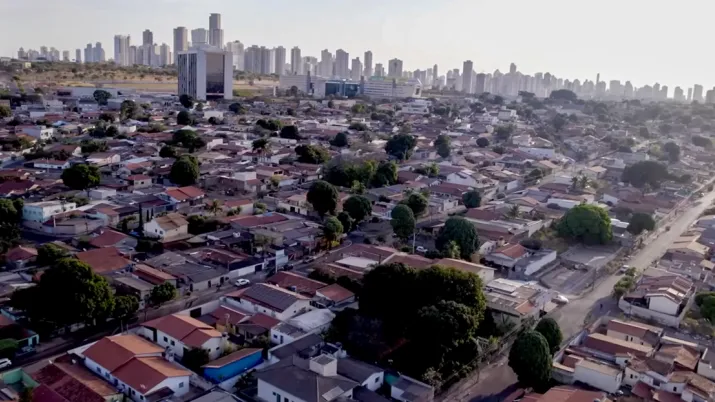
AFD supports action-research projects examining how commons contribute to democratic practices and interact with public action. This is the case for the commons of care in Colombia, the establishment of the Brasil Participativo platform, and urban commons in the Brazilian cities of Goiás and Goiânia.
These projects are part of research conducted by AFD since 2015 to explore the dynamics of the commons across several of its sectors of intervention: land, health, digital technology, water, the collaborative economy, natural resources, and more. This research has highlighted new forms of shared resource management that directly involve citizens and users, and that call for property rights to be considered beyond exclusive individual ownership.
Discover all projects on the commons
Read our publications on the commons
This work has enabled AFD to conceptualize a “commons-based approach.” Without idealizing the commons, it offers development actors a framework for taking a fresh look at local social dynamics and for supporting transitions by involving several types of stakeholders (public institutions, associations, citizens, etc.). By definition, this approach applies differently depending on the context and partners' receptiveness, while placing as much emphasis on how change is achieved as on the final outcomes. This approach has, for example, been applied to land and natural resource management issues through an operational guide produced in collaboration with CIRAD, the French research centre on agriculture for international development.
Our reference publication: The Commons in Africa
The book The Commons: Drivers of change and opportunities for Africa helps bring visibility to a wide range of citizen initiatives, each carrying the seeds of an endogenous development model. These “commons,” which take shape across varied fields (farmer collectives, housing cooperatives, collaborative digital platforms…), can inspire the action of development actors.
West Africa is a very young region: nearly half of its population is under the age of 20. Since supporting young people is one of AFD Group's priorities, it is important that its interventions be grounded in a detailed understanding of the aspirations of the young people concerned.
In Côte d'Ivoire and Senegal, AFD supports a research project led by IEFSG that aims to deepen understanding of young people's aspirations, models of success, and life paths. The data collected will make it possible to tailor AFD Group's interventions in the fields of education, training, and decent employment.
Our recent publications

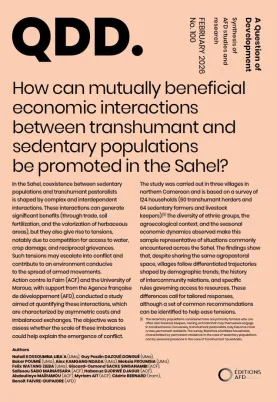
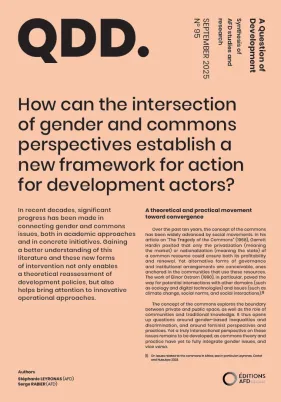

Our research projects


More resources on the commons


Our team
-
Stéphanie LEYRONAS
Research Officer

-
Elodie RICHE
Research Officer
-
Serge RABIER
Research Officer, Social Demographer