
Share the page
Macroeconomic Diagnostics and Foresight
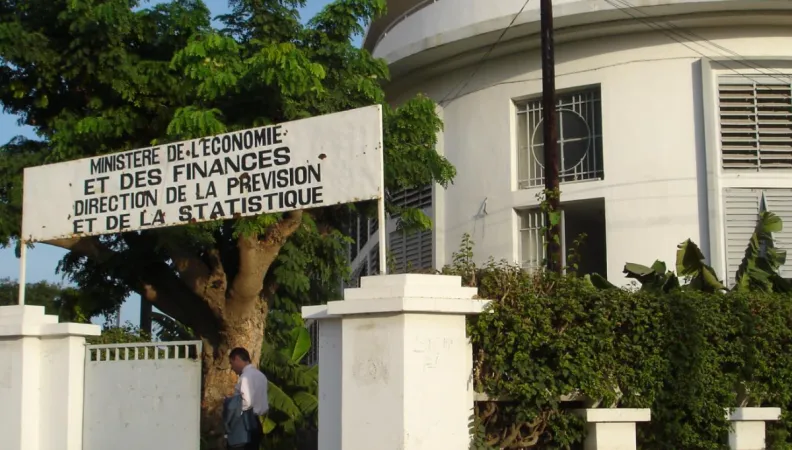
Through country risk monitoring and the modeling of countries' macro-financial trajectories, this program produces analyses that are useful to AFD Group and to public decision-makers in partner countries, informing choices on the definition, financing, and implementation of sustainable development trajectories.
The main challenge
Designing and implementing a sustainable development trajectory means navigating economic and financial constraints, climate and environmental imperatives, social dynamics, and political realities. In this complex context, the quality of decision-making – by public decision-makers and donors alike – depends on the quality of the information available and the capacity to anticipate possible scenarios.
Our approach
This research program produces medium-term country risk diagnostics and models the long-term macro-financial trajectories of countries, with a particular focus on climate and biodiversity issues and on identifying appropriate financing strategies:
- Country risk assessments: for some 60 countries, AFD analyzes ongoing development processes, characterizes growth trajectories, and identifies the associated economic, social, environmental, political, and financial vulnerabilities. These assessments, which are a regulatory requirement for banks, inform AFD Group's operational and strategic decisions.
- Modeling long-term macro-financial trajectories: AFD supports decision-makers in partner countries as they consider major economic policy directions, notably through the GEMMES and ESTEEM models. These tools incorporate environmental, social, economic, and financial issues. The objective is a practical one: to help calibrate the public policy mix and identify the corresponding financing strategies, so as to seize opportunities while minimizing risks.
This program also examines the links between climate and biodiversity policies, employment, tax revenues, international trade, financial markets, and the reconfiguration of value chains.
Why is this a priority area for AFD?
As a bank, AFD is responsible for measuring and monitoring the risks associated with each of its investments: this is the role of country risk monitoring. But beyond managing its own risks, AFD has built the capacity to support partner countries in shaping their own trajectories, working with them to build modeling tools tailored to their needs, that incorporate the environmental and financial constraints often missing from standard tools.
Our flagship initiatives
Explore our flagship initiatives:
Brazil faces significant challenges in its transition to a low-carbon economy, notably in maintaining its global competitiveness and avoiding macroeconomic imbalances. To address them, AFD is developing an economic modeling tool in partnership with the Ministry of Finance and in cooperation with the Economic Commission for Latin America and the Caribbean (ECLAC) and the Institute for Applied Economic Research (IPEA), in order to assess the impact of public policies, in particular those related to the Ecological Transformation Plan (Plano de Transformação Ecológica).
Together with the Institut d'émission d'outre-mer (IEOM), AFD has developed SIMCA, an economic and financial model. It provides a better understanding of how New Caledonia's economy works and makes it possible to simulate economic policy measures, in order to determine which are the most effective. Scenarios through 2030 have been produced.
The rapid degradation of biodiversity exposes economic and financial activities to systemic risks comparable to those created by climate change. To determine the extent to which countries are exposed to these risks, AFD researchers have developed a method that assesses both the physical and transition risks linked to biodiversity, using open databases. Another study applied this methodology to emerging and developing countries.
A key resource: the MacroDev collection
The MacroDev collection, published by AFD, hosts our development macroeconomics analyses, which cover either country-specific situations or cross-cutting issues related to development trajectories.
Twice a year, MacroDev's special “Semestrial Panorama” issues shed light on the key cyclical and structural challenges facing emerging and developing countries. These issues are accompanied by DecoDev, short webinars hosted by our economists.
Our macroeconomic analyses in figures
-
60 countries are subject to regular in-depth assessments
-
+70 publications are available in the MacroDev collection
-
12 country-risk economists are working on country assessments