
Share the page
Bolivia
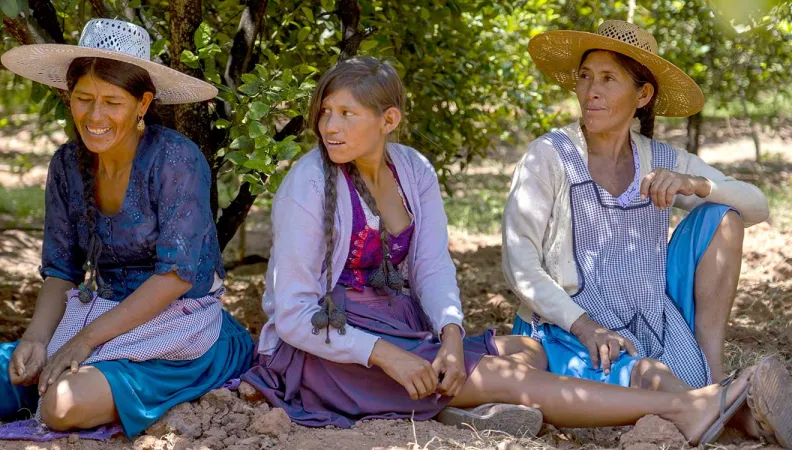
Since 2015, Agence Française de Développement (AFD) has supported Bolivia in building a more sustainable and equitable future. AFD financing supports the country’s energy transition through the development of renewable energy, expands access to drinking water, strengthens environmental protection, and promotes a sustainable economic and social recovery.
Context
Bolivia has significant oil, gas, and mineral resources. During the 2000s, rising commodity prices and proactive public policies helped drive major social progress for its 11 million inhabitants: according to the Economic Commission for Latin America and the Caribbean (ECLAC), the poverty rate fell from 70% in 2000 to 31% in 2021.
In recent years, however, declining hydrocarbon reserves – particularly natural gas – and lower related revenues have created a major challenge for the country.
Bolivia is also home to exceptional natural wealth: nearly half of its territory is covered by forests, and the country ranks among the most biodiverse in the world. Yet it is also one of the countries most exposed to the effects of climate change in South America. Extreme droughts between 2016 and 2018, devastating forest fires, and record areas burned in 2024 illustrate this vulnerability.
These environmental challenges are compounded by limited access to basic services. In many rural areas, access to drinking water and sanitation remains inadequate. Diversifying energy production and expanding the electricity grid are also essential to building a more sustainable system.
Active in Bolivia since 2015, AFD Group supports the country’s efforts to address these challenges. Nearly €700 million in loans to the Bolivian state and around €30 million in grants have already been committed to finance projects in renewable energy development, access to drinking water, economic recovery, climate resilience, and the promotion of gender equality.
Our approach
AFD and Bolivia: working together for sustainable and inclusive development
Bolivia’s National Interconnected System (Sistema Interconectado Nacional – SIN) covers 96.6% of the country’s electricity demand, and renewable energy sources – biomass, solar, and wind power – accounted for 10.6% of national electricity generation in 2023.
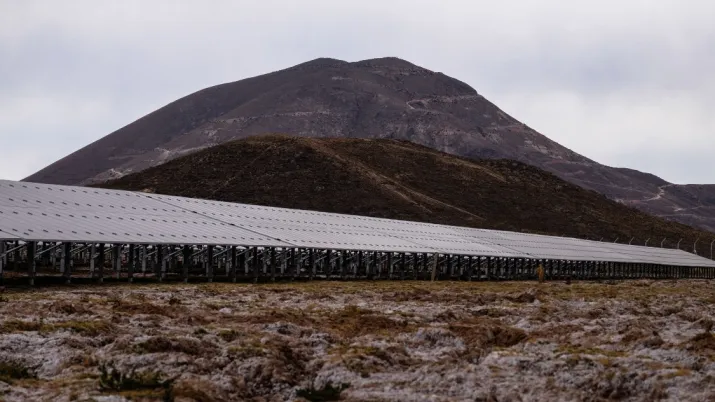
Since 2015, Agence Française de Développement (AFD) has worked in Bolivia to support the government’s efforts to achieve universal access to electricity and move toward a safe, sustainable, and affordable electricity supply for the population. In particular, AFD co-financed, alongside the European Union, the construction of Bolivia’s largest and highest-altitude solar photovoltaic plant in the department of Oruro, as well as the construction of a wind farm in the department of Santa Cruz.
AFD has also supported public policies for the energy transition and worked with the country on issues including strengthening national expertise in the sector, developing environmental and social standards, integrating intermittent renewable energy into the SIN, implementing the Energy Information System (Sistema de Información Energética – proposed translation), and promoting gender equality in the sector.
In a fragile global context, Bolivia faces the challenge of diversifying and consolidating its economy. In response, the country has adopted economic recovery measures aimed at strengthening its productive sectors. AFD Group has contributed to this effort through:
- an emergency loan co-financed with other donors during the COVID-19 pandemic to fund social assistance for the country’s most vulnerable populations,
- a loan to the Bolivian state to support a sustainable and climate-resilient recovery, structured around three areas of work:
i/ macroeconomic stability, including analysis of the macroeconomic effects of a low-carbon transition and the modernization of national accounts in partnership with Bolivia’s National Institute of Statistics (Instituto Nacional de Estadística – INE) and France’s National Institute of Statistics and Economic Studies (INSEE),
ii/ implementation of Bolivia’s commitments under its Nationally Determined Contributions for 2030, particularly through activities with the Plurinational Authority of Mother Earth (Autoridad Plurinacional de la Madre Tierra – APMT) and the Euroclima program, and
iii/ a just transition, through the consolidation of the green finance strategy of the Productive Development Bank (Banco de Desarrollo Productivo – BDP).
AFD also supports women’s economic empowerment through a social and solidarity-based approach, thanks to a grant awarded to the Centro de Promoción de la Mujer Gregoria Apaza. In addition, Proparco, AFD Group’s private sector financing arm, has provided loan financing to Banco Ganadero.
Access to quality basic services remains a major challenge in Bolivia, particularly in intermediate cities and rural areas. For example, drinking water and sanitation services remain inadequate, and water quality is a serious issue for both the population and the environment.
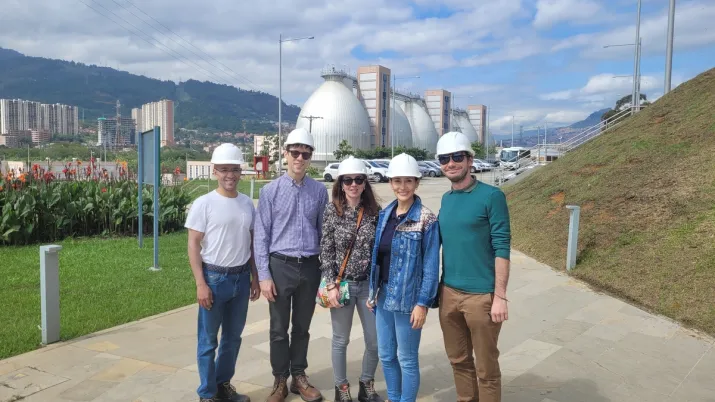
In this context, AFD has worked with Bolivia in the water sector for the past 10 years and is financing the construction of a drinking water supply system that delivers water to the Cochabamba metropolitan area. Efforts have also focused on strengthening the sector’s long-term institutional framework, notably through institutional support for several EPSAs (Empresas Prestadoras de Servicios de Agua y/o Alcantarillado – water and sanitation service providers) and Empresa Misicuni. A research program on inequalities in access to water in Bolivia has also been launched.
In addition, advancing sustainable urban development remains a challenge in many parts of the country. This issue has been addressed through a range of projects and studies, including a sustainable urban mobility project featuring the construction of a pilot bicycle lane in the city of La Paz, financed through the European Union’s Euroclima+ program; a study on different financing mechanisms for local authorities (Ciudad Confianza – proposed title translation: “Trusted City”); and climate vulnerability studies conducted in Tarija and La Paz by the French National Research Institute for Sustainable Development (IRD) and other partners.
Bolivia is a vast country with highly diverse ecosystems, ranging from the Altiplano to the Amazon rainforest. Protecting and strengthening these territories is essential to addressing the effects of climate change and ensuring the sustainable management of natural resources and food security for the population.
AFD Group works with a range of Bolivian stakeholders to address these challenges. AFD has supported the Ministry of Environment and Water and two pilot river basins in implementing integrated water resources management, in partnership with the International Office for Water (Office International de l’Eau – OiEau). AFD also finances several projects led by Bolivian and French civil society organizations on agricultural development, with partners including CIPCA and AVSF, as well as forest conservation initiatives in collaboration with Conservación Amazónica.
For its part, Expertise France has implemented projects for several years aimed at strengthening value chains in the Amazon, the Chiquitania, and the Chaco regions, while also addressing integrated fire management in the country through the European Union’s Euroclima+ and Amazonia+ programs.
Disaster risk management and stronger environmental governance are also key areas of AFD’s work, carried out in close coordination with Team France in Bolivia.
In the field
Below, find the country's projects, news, publications, and contact details in one click.
News & Press Releases
Key figures
-
710 million euros in loans to the Bolivian government between 2016-2023
-
48 projects
-
30 million euros in grants