
Share the page
New Caledonia
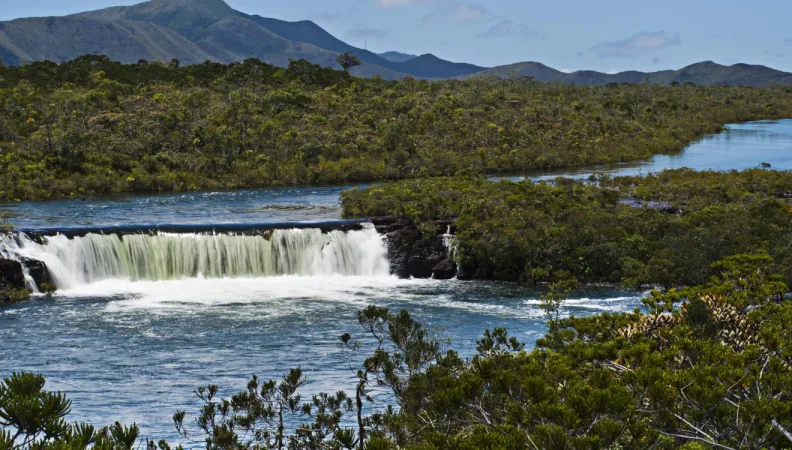
A French Overseas Territory with exceptionally rich and diverse natural heritage, New Caledonia is currently facing an economic slowdown, compounded by the impact of the Covid-19 crisis, as well as uncertainty regarding its future institutional status. AFD, a longstanding partner of the territory, is supporting New Caledonia and local stakeholders during this critical period through a wide range of projects across multiple sectors.
Context
A true biodiversity hotspot, New Caledonia is home to ecosystems of exceptional diversity. It hosts the largest lagoon in the world, one-third of the planet’s remaining wild coral reefs, and more than 3,300 plant species, 76% of which are endemic. Despite its geographic isolation and the insular nature of its economy, the island has experienced significant development over the past 25 years. Driven by nickel extraction and financial transfers from mainland France, average economic growth in recent decades has exceeded 3%, leading to a rapid improvement in living standards.
Today, as the economy slows and inequalities persist, the goal is to reduce dependence on nickel and improve productivity, while continuing efforts to address socioeconomic disparities and climate change. This challenge is particularly urgent as New Caledonia enters a pre-referendum period. The third and final referendum under the Nouméa Accord on self-determination is scheduled for 12 December 2021. The outcome remains uncertain between maintaining the current status within France and moving toward full sovereignty.
AFD has been a partner to New Caledonia since 1947 and plays a key role in the island’s development. Its work supports efforts to reduce territorial imbalances in infrastructure and public services, improve quality of life, and protect the environment. From the smallest municipalities to the territorial government, AFD supports public and private economic stakeholders across many sectors, including renewable energy, health and social care, transport, housing, urban planning, climate, and biodiversity. AFD also acts as a catalyst and strategic advisor to its local partners.
Under its mandate in the French overseas territories, AFD also operates in Wallis and Futuna under the same framework as in New Caledonia.
Since September 2018, the geographic scope of AFD’s Nouméa office has expanded to cover the entire Pacific region following the establishment of AFD’s Pacific Regional Office (DROP).
Our approach
AFD and New Caledonia: ensuring the sustainable development of the archipelago
Local development and territorial balance are among the key priorities of New Caledonia’s development policy. Local authorities, from the smallest municipality to the territorial government, play a vital role in achieving these goals. AFD supports their efforts to promote socioeconomic development, reduce inequalities, and adapt to the evolving needs of New Caledonian society.
AFD is the leading financier of local authorities in New Caledonia, thanks in particular to the Overseas Public Sector Loan (PSP), a flexible loan subsidized by the French government.
AFD also works alongside local governments to strengthen financial management and sector-specific expertise. Training, technical assistance, and the publication of studies and evaluations complement direct financing. One example is the Observatoire des communes (in French), an annual publication designed to support decision-making by local stakeholders.
The geographic isolation of New Caledonia calls for a dynamic local private sector. In response to signs of economic slowdown, further exacerbated by the global Covid-19 pandemic, Agence Française de Développement (AFD) has stepped up its support for the private sector.
Our dedicated financial tools include:
- Direct loans to medium and large enterprises, co-financed by local banks, for medium- to large-scale projects
- Financing for small businesses through the Société de gestion des fonds de garantie d’Outre-mer (Overseas Guarantee Fund Management Company, Sogefom), a subsidiary of AFD. Sogefom provides guarantees for loans issued by local banks to businesses operating in New Caledonia, French Polynesia and Wallis and Futuna. The goal: to boost local competitiveness and support job creation and value generation. In 2020, our financing supported the growth of more than 120 businesses in New Caledonia, with 88% of the guarantees going to companies with fewer than ten employees.
AFD is also involved in a number of development projects, such as the construction of an MK2 cinema to expand access to film and cultural programming across the territory, and the 2017 development of New Caledonia’s largest solar power facility. This was also the first installation built on customary land, supplying electricity to the equivalent of 7,000 households.
In the face of the climate crisis and persistent inequalities, the development of sustainable cities and reduction in regional disparities are among the key challenges. To this end, Agence Française de Développement (AFD):
- Allocated nearly €17.7 million in green loans in 2020 to support local authorities in making climate-positive investments.
- Finances infrastructure needed for the balanced development of the island, including schools and sports facilities.
- Holds shares in mixed-economy urban development companies and in the Société immobilière de Nouvelle-Calédonie (New Caledonia Real Estate Company, SIC), and contributes to projects such as the renovation of social housing and the rehabilitation of substandard housing.
- Supports local authorities through technical dialogue, reflection on the “smart city” concept and training in land use planning, including urban development, mobility and service management.
Among the supported projects:
- NÉOBUS, a bus system with dedicated lanes offering fast and regular service to ease mobility across Greater Nouméa
- Support for the city of Nouméa to help transform the capital into a more attractive, modern and green city by 2030
The development of the health sector is a key factor in improving living conditions for all residents of New Caledonia, where major challenges remain in ensuring equitable access to care, preventing chronic diseases and strengthening public health measures.
As medical facilities face growing demand for healthcare services, Agence Française de Développement (AFD) helps finance the expansion and renovation of both public and private hospitals across the island. AFD also supports the social care sector, particularly in addressing mental health, the challenges of an aging population (the number of people over age 60 is expected to triple in the next 20 years), and the inclusion and care of people with disabilities, especially children.
Notable projects in the health and social care sectors include:
- Expanding and improving healthcare provision in the North Province with the Koné hospital, in the South Province with the Médipôle of Koutio, and in Nouméa with the Île Nou Magnin clinic.
- The creation of the first publicly initiated nursing home (EHPAD) in New Caledonia.
- The construction of a new specialized care center for children with disabilities.
Since September 2018, the geographic coverage of AFD’s Nouméa office has expanded to the entire Pacific region, following the creation of AFD’s Pacific Ocean Regional Office. In this region, AFD focuses its operations on three main priorities: regional and bilateral cooperation, biodiversity protection, and climate change adaptation and mitigation.
AFD works in partnership with regional multilateral organizations such as the Pacific Community (SPC) and the Secretariat of the Pacific Regional Environment Programme (SPREP), providing support in areas such as waste management and the Pacific Public Health Surveillance Network (PPHSN). Strengthened during the Covid-19 crisis, this collaboration promotes regional cooperation on vector control, antimicrobial resistance, and the health impacts of climate change.
As a contributor to decentralized cooperation, AFD also supports the international engagement of New Caledonia’s local governments with neighboring countries through the French Local Authorities Financing Facility (FICOL). Four FICOL grants have been awarded to the municipality of Dumbéa, the Government of New Caledonia, and for projects in Vanuatu.
In Vanuatu, AFD holds a broader mandate beyond climate-related issues, which has enabled financing for the country’s first public bilingual university. In Wallis and Futuna, AFD has supported the development of the public sector since 1993, including funding for the Wallis airport terminal, modernization of fixed and mobile telecommunications, and connection to the undersea digital cable. Until 2004, AFD also issued nearly 1,400 housing loans, enabling many families to access home ownership. Current efforts focus on the blue economy and elderly care.
Announced by President Emmanuel Macron at the One Planet Summit in December 2017, the Kiwa Initiative reflects AFD’s commitment to climate action in the Pacific region through the promotion of nature-based solutions. With a budget of more than €40 million, the initiative is supported by a coalition of donors: France, the European Union, Australia, New Zealand and Canada.
By financing local, national and regional projects, as well as providing technical assistance to a wide range of stakeholders across the Pacific, the Kiwa Initiative represents an innovative approach by AFD Group to strengthen the resilience of Pacific Island ecosystems, economies and communities to the impacts of climate change.
In the field
Below, find the country's projects, news, publications, and contact details in one click.
Projects
News & Press Releases
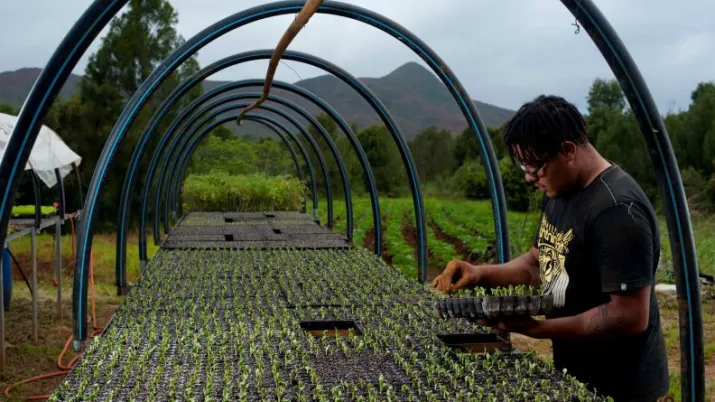
The Pacific Ocean: Working with Island States Vulnerable to Climate Change
Published on September 8, 2023
Publications & Media
Key figures
-
€1.75 billion in outstanding amounts
-
70 years of partnership between AFD and New Caledonia