
Share the page
Somalia
Published on
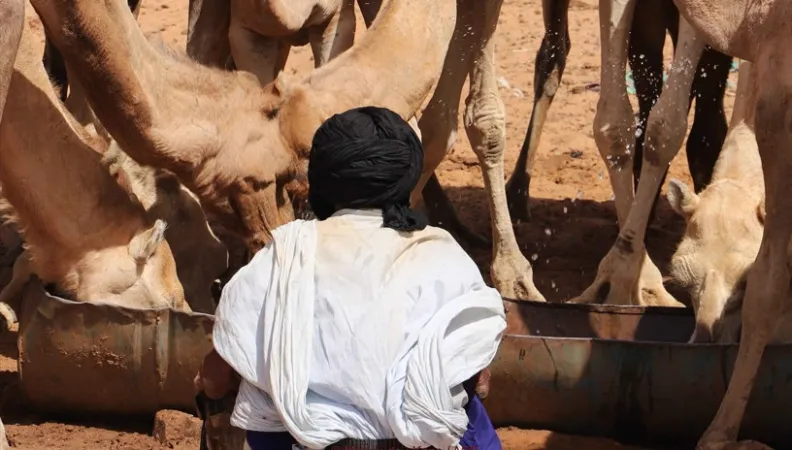
In Somalia, where economic, social, and climate challenges compound prolonged fragility, Agence Française de Développement (AFD) supports the country’s efforts toward stabilization and development. Its actions focus on two key sectors: the preservation of archaeological heritage, reflecting a millennia-old human history, and support for livestock farming, a cornerstone of the economy and a vital source of livelihoods for the population. Through these actions, AFD helps build sustainable solutions for the benefit of the Somali people.
Context
Located in the eastern Horn of Africa, Somalia shares borders with Djibouti, Ethiopia, and Kenya. Covering 637,657 km², the country is characterized mainly by plains and highlands, including the Karkaar Mountains. Its semi-arid climate limits agricultural production, except in irrigated areas near the Jubba and Shabele rivers.
The capital of the Federal Republic of Somalia is Mogadishu, with a population of 2.2 million. The regions of Somaliland, whose administrative capital is Hargeisa, and Puntland are among the most integrated into regional trade networks, notably through the ports of Berbera and Bosaso. These ports play a key role in exporting livestock to the Middle East.
Somalia’s formal annual GDP is estimated at USD 12.1 billion in 2024. However, this figure does not fully reflect national value creation, which relies heavily on informal economic activity. The main productive sectors are agriculture, which accounts for about 60% of GDP, particularly livestock farming, and fisheries. The country also benefits from significant remittances from its diaspora, estimated at around 20% of GDP. Somalia’s economy is increasingly dollarized, despite moderate inflation, and remains highly dependent on food imports.
Vulnerability to climate change, combined with security challenges linked to the presence of Al-Shabaab and the Islamic State group in Somalia, continues to constrain development prospects, despite progress in governance and support from the African Union. Recurrent droughts since 2020, along with severe flooding, have caused large-scale displacement and worsened food insecurity. In 2024, nearly 4.4 million people are affected by food insecurity.
AFD Group supports the country in advancing its sustainable development goals and addressing climate change. Its work in Somalia, aligned with the country’s development challenges and the priorities of the African Union, is structured around two main areas:
- Support for the livestock sector and resilience to climate change,
- Protection and promotion of national heritage.
To date, AFD operates exclusively through grants, primarily via regional projects.
AFD’s activities in Somalia are overseen by the East Africa Regional Directorate.
Notre approche
AFD Group and Somalia: strengthening regional value chains
Somalia is one of the main export routes for livestock produced in the Horn of Africa. The Regional Livestock Program, co-financed by AFD and the Swiss Cooperation for a total of €20 million, covers five corridors, including a northern corridor (Tog Wajale) between Ethiopia and Somaliland, a central corridor (Galkayo) between Ethiopia’s Somali region and Puntland, and a southern corridor (Afmadow) between Kenya and Mogadishu. The project aims to:
- Strengthen the quality and quantity of livestock in the Horn of Africa, particularly camel production, by supporting the growth of small businesses involved in vaccine distribution and fodder production,
- Increase incomes for all actors in the livestock value chain, especially women involved in camel milk production, which also contributes to addressing food insecurity due to its high nutritional value,
- Build regional and local capacity to adapt to climate change and support social cohesion in areas affected by severe droughts and flooding,
- Support regional regulatory bodies, particularly the Intergovernmental Authority on Development (IGAD), to promote the elimination of double taxation in the sector and harmonize national regulations.
Somalia is recognized as one of the cradles of humanity and is home to several prehistoric sites. AFD supports heritage protection in the Somaliland region by working with local authorities to promote the environmental conservation of the Laas Geel caves and the promotion of several major sites.
This €2 million project, implemented by Expertise France, aims to strengthen sustainable tourism in the region by training staff involved in heritage promotion, supporting the development of visitor pathways that respect site conservation, and engaging local communities so they can benefit from increased visitor numbers.
The project also enables AFD Group to support cooperation between Somali and French archeologists through the active involvement of the Agde archeological team. This team has notably contributed to raising international awareness of the Laas Geel caves, particularly following an initial visit in 2002.