Share the page
Compounding crises: can development investment help rebalance the world?
Published on
Energy crises, trade tensions, and strained supply chains are intensifying global imbalances. Against this backdrop, France’s G7 presidency this year places international cooperation at the heart of the response. AFD Group is actively contributing to the G7 presidency, notably through its participation in the Development and Finance tracks.
The situation around the Strait of Hormuz has reminded everyone of the persistence of structural vulnerabilities in the global economy. As a strategic transit point for a significant share of global energy flows, it highlights many countries’ dependence on critical trade routes and their economies’ reliance on fossil fuels.
More broadly, global imbalances are rooted in an accumulation of recent shocks. Trade and industrial tensions are compounded by interconnected energy and agricultural crises. Rising oil and gas prices, along with disruptions to fertilizers, particularly nitrogen-based fertilizers, are creating immediate risks for economies and upcoming agricultural seasons, especially in Africa.
These developments call into question the very foundations of globalization. “The closure of the Strait of Hormuz shows that what was once taken for granted, namely the smooth flow of international trade, whether maritime or air, can be disrupted. We are thus seeing a return of physical constraints on the economy,” says Thomas Melonio, Chief Economist at AFD. In this context, “there is a need to invest more in economic resilience and to strengthen more robust value chains, potentially refocused on closer and more reliable partners."
Energy: electrification to reduce dependency
Energy is one of the main sources of imbalance. A large majority of the world’s population lives in countries that import hydrocarbons and are highly exposed to price shocks. In response to this vulnerability, demand management and the electrification of uses are emerging as key levers. “Managing energy demand is a direct way to reduce inequalities: it is always low-income households, fragile public finances, and businesses least able to absorb shocks that pay the highest price for rising oil prices,” explains Nicolas Guichard, Head of AFD’s Energy Division.
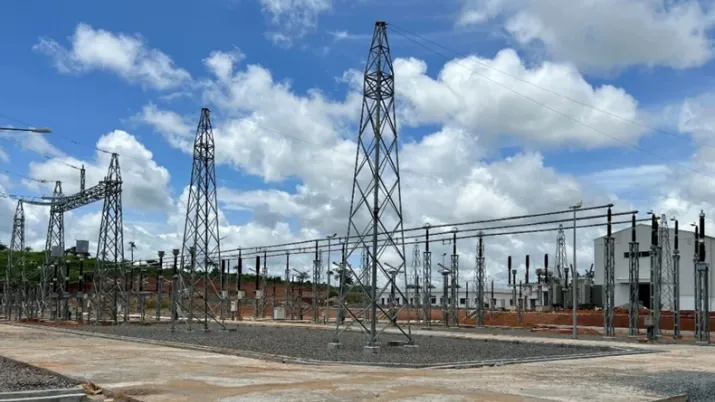
Reducing unnecessary consumption and improving energy efficiency helps limit exposure to shocks. Electrification of uses, supported by domestic production, also helps reduce dependence on imported oil. In this area, AFD finances energy infrastructure projects in many partner countries, including solar power plants, electricity grids, and hydroelectric dams. These investments help secure supply and support economic development.
Agriculture: securing inputs and transforming models
Tensions in fertilizer markets are another major source of imbalance, with direct implications for global food security. In the short term, Official Development Assistance can play a decisive role in securing access to inputs and preventing declines in production.
Over the longer term, the priority is to transform agricultural systems. “The key challenge is to ensure that agriculture relies less on synthetic fertilizers,” explains Matthieu Le Grix, Head of AFD’s Agriculture, Rural Development, and Biodiversity Division. This transition will, however, remain partial. “Even under favorable scenarios, there will still be a need for synthetic fertilizers, particularly in sub-Saharan Africa.” Solutions are nevertheless emerging. “One option is to produce synthetic fertilizers using renewable energy, through green hydrogen.”
Development as leverage for balance
In the face of these imbalances, development emerges as a structural response. By financing energy infrastructure, supporting agricultural systems, and accompanying transitions, it helps strengthen economic resilience. Institutions such as Agence Française de Développement play a central role in this dynamic. Making development a lever for balance means addressing the root causes of crises and contributing to more sustainable global stability.