
Share the page
Working with Papua New Guineans to protect nature – the SoNG project
Published on
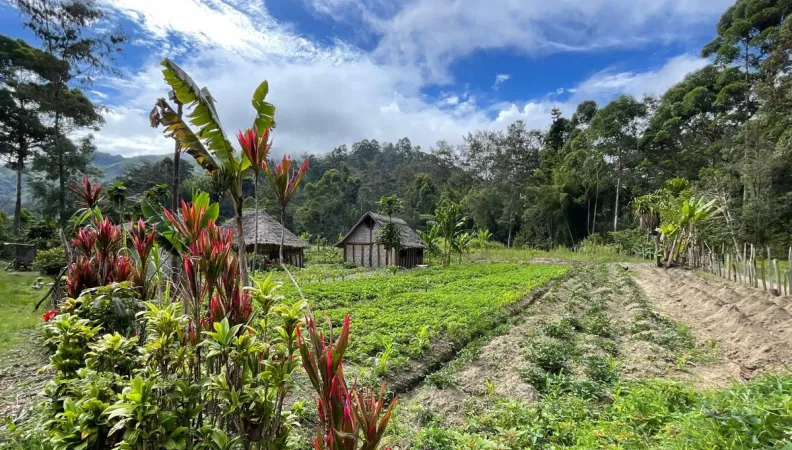
Officially launched in December 2025, the SoNG project aims to preserve Papua New Guinea’s rich biodiversity in close collaboration with local communities, who depend on it for their livelihoods and cultural identity.
Papua New Guinea (PNG) enjoys a wide variety of environments: highlands and their mountainous cordillera, lowland rainforests, savannas, swamps and mangrove forests of the coastal areas, as well as many islands, atolls, and extensive fringing and barrier coral reefs. The country is estimated to be home to 7% of the planet’s biodiversity.
The SoNG (Solwara na Graun blo Pipol – “sea and land for the people”) project was officially launched in December 2025. The project is a direct outcome of commitments made by France at COP28 to contribute to a “country package” for forests, nature, and climate action, linking the global challenge of climate change to the needs of local populations.
Biodiversity rooted in cultural practices
This is important in PNG, where traditional and rural lifestyles dominate (97% of the land is governed by customary law) and where ecosystems – which are subject to increasing pressure from population growth and climate change – remain the source of food for many people. Papua New Guineans also draw on biodiversity for their cultural practices: brightly colored bird feather headdresses for ceremonies, traditional shell coins for traditional exchanges, everyday objects braided with pandanus, etc. The essence of SoNG is to preserve biodiversity so that future generations continue to live this unique relationship with their ecosystems.
Supporting public policies
AFD is relying on two partners to put SoNG into action: Expertise France and the NGO Wildlife Conservation Society (WCS Papua New Guinea), which has been working there since the 1970s. The Nature Conservancy will also help in leading the project.
Expertise France, AFD’s subsidiary for technical cooperation, began operating in Papua New Guinea in 2023 to implement part of the EU-FCCB program on forests, climate change, and biodiversity. Expertise France is responsible for supporting the country’s public policies on biodiversity protection, the fight against deforestation, and the promotion of a green economy. “For example, the government wants to strengthen the institutional framework for protected areas, but action on the ground is needed for them to be truly active,” says Émilie Mignot, Expertise France Director in PNG.
Other tasks of Expertise France will be to lead calls for conservation projects with local organizations and to develop a scholarship program for master’s students “so that these leaders of tomorrow can make conservation a key focus of public policies or even of dialogue during the COPs.”
Involving local communities
Over the years, WCS has developed a well-tested method of consulting local populations to make them actors and decision makers in conservation actions. The NGO also supports “conservation deeds”: these are innovative legal acts that enable communities to adopt their conservation rules and enforce them. For SoNG, WCS will leverage this experience to improve the management of existing protected areas (over 1.7 million hectares) and support the creation of new marine and forest protected areas that will potentially cover 2.9 million hectares at sea and 20,000 hectares in forests.
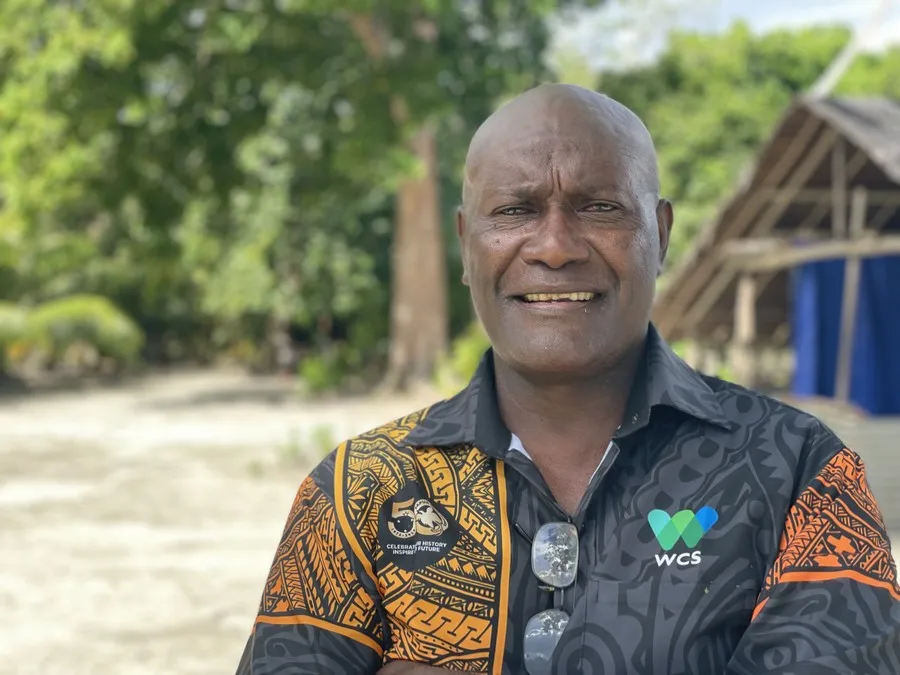
Among the dozens of people working for WCS in the heart of the communities is Senior Community Engagement Officer July Kuri. A former soldier, July joined WCS when he took up an occasional position as Community Facilitator in 2012, after his return to his native province, New Ireland. His desire to learn, his knowledge of local languages and his ability to organize information exchanges have stood him well.
He now holds a permanent position at WCS that sees him work on a daily basis with local communities to raise their awareness and help guide them in the conservation of their resources and then the adoption of management measures. These latter can include limiting access to a reef at a particular time of year, supervising the use of a particular species of bird, specifying the minimum size for an animal to be fished or hunted, and others.
“Seeing the communities understand the basics of science and implement them using the traditional methods of management encourages me to continue this work. What drives me is seeing people making a difference in the community,” says July.
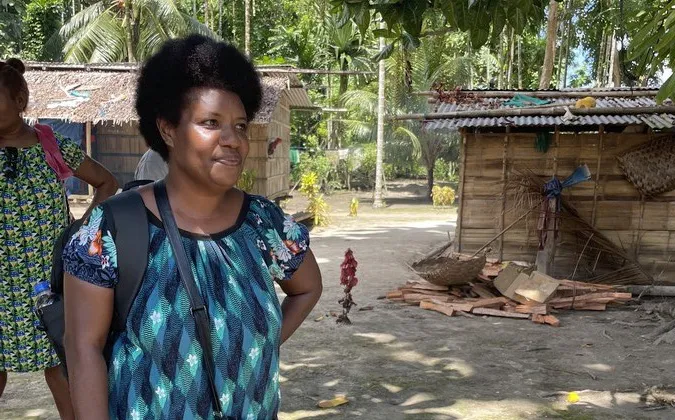
Meanwhile, WCS Program Manager Annisah Sapul reports that she is delighted to have spent the past 12 years sharing the scientific knowledge she acquired at university with the communities: “We see our job as adding value to something that’s already there. So, looking to the future, we won’t have changed a lot of things in the way our people are conserving or managing ecosystems, but we’ll have just given them a bit more so that they are more empowered to make good choices.”
Read also
Strengthening biodiversity cooperation between India and Southern Africa
Published on November 26, 2025
Developing family farming without damaging primary forests in the DRC
Published on November 17, 2025
