
Share the page
Sudan
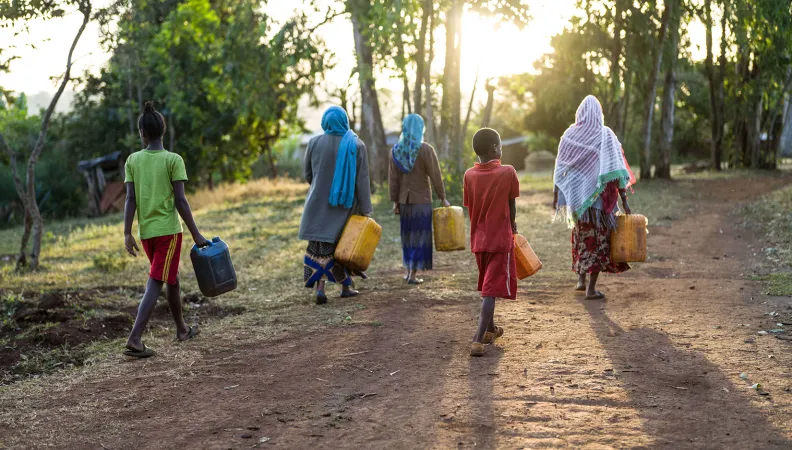
The third-largest country in Africa, Sudan, crossed by the Nile, has historically been one of the continent’s "breadbaskets," with more than 100 million hectares of arable land. Located at the crossroads of Africa and the Middle East, the country has strong economic potential, particularly in agriculture. However, it remains fragile due to structural, climate, and institutional vulnerabilities, compounded by the armed conflict that began in April 2023. In this context, Agence Française de Développement (AFD) supports targeted actions to strengthen food security, access to basic services, climate resilience, and social cohesion.
Context
Located in northeastern Africa, Sudan has a population of around 48 million, the majority of whom live in rural areas and depend directly on natural resources and agricultural activities. The Sudanese economy relies primarily on agriculture, mining, particularly gold, and services. Agriculture is a key pillar of the national economy, employing between 40% and 50% of the workforce. Sorghum, millet, cotton, peanuts, and gum arabic, for which Sudan is the world’s leading exporter, are both consumed locally and exported to East Africa, Egypt, and the Middle East.
Before the outbreak of armed conflict in April 2023, the country showed prospects for economic and institutional transition, supported by its strategic position between East Africa, North Africa, and the Middle East. However, significant inequalities, weak public services, and high exposure to climate hazards were already constraining its development.
Since 2023, the conflict has severely degraded the economic and social situation, weakening infrastructure, disrupting value chains, and reducing access to essential services, particularly for rural and displaced populations. In this context, needs related to food security, access to basic services, and climate resilience have increased sharply.
With a mandate to operate in Sudan since 2002, Agence Française de Développement (AFD) has supported the country’s efforts toward peace and sustainable development. AFD’s intervention in Sudan is structured around four priorities:
- Strengthen agricultural value chains and address food insecurity,
- Improve access to basic services for all populations,
- Strengthen resilience to climate change,
- Promote social cohesion and reduce inequalities.
At this stage, AFD operates exclusively through grants, implemented via national and regional projects in close coordination with its partners.
AFD’s activities in Sudan are overseen by the East Africa Regional Office.
Our approach
AFD Group in Sudan: strengthening access to basic services, supporting agricultural production, and reducing vulnerability to climate change
Despite the conflict that began in April 2023, AFD continues to support the Sudanese population and maintains an active project portfolio of around €60 million.
- The project “Resilience and sustainability for food security in four states of Sudan,” implemented by Action Against Hunger, aims to address food insecurity through a multisectoral approach. It helps sustainably improve livelihoods, strengthen household resilience to climate change, and combat malnutrition,
- A project led by the International Institute of Tropical Agriculture also aims to improve food security and the incomes of producers of peanuts, sorghum, cotton, sesame, and maize. It develops biological solutions to combat aflatoxin, a carcinogenic mycotoxin that contaminates seeds and crops,
- The project implemented by the Danish Refugee Council in Gedaref State in Sudan and in the Benishangul-Gumuz region in Ethiopia contributes to developing sustainable solutions to forced displacement. It supports displaced and returning populations, as well as host communities, particularly women and girls, through an approach that links humanitarian action and development.
AFD contributes to the STARS fund administered by the World Bank in Sudan. The fund aims to support the resilience of the Sudanese population while helping stabilize the country.
Funded activities focus in particular on strengthening institutions and governance, supporting economic recovery through job-creating agricultural and irrigation projects, building local capacity for sustainable resource management, and improving decision-making through reliable data.
Since 2020, the fund has supported projects in modern irrigation and the development of agricultural value chains, helping improve productivity and incomes for nearly 150,000 smallholder farmers while strengthening their resilience to droughts and floods.
Within AFD Group, Expertise France also supports access to education in Sudan. Between 2018 and 2025, the EQUIP program, funded by the European Union and implemented by Expertise France, helped improve the training of more than 10,000 teachers and expand access to quality education, particularly for girls.
In Sudan, the effects of climate change are exacerbating existing humanitarian crises. Recurrent droughts, floods, and the degradation of natural resources are increasing food insecurity and weakening livelihoods.
In this context, the NGOs Action Against Hunger and the Danish Refugee Council, supported by AFD, play a central role in strengthening the resilience of vulnerable populations.
Their interventions focus in particular on improving access to water, modernizing agricultural systems, and promoting climate-adapted agricultural practices. They also support the sustainable management of natural resources in the most exposed regions, particularly in Darfur and Kordofan.
These initiatives aim to help communities anticipate and adapt to climate-related crises while contributing to reducing tensions over access to resources, which are often exacerbated by environmental shocks.
In Sudan, projects supported by AFD also contribute to strengthening social cohesion and reducing economic and social inequalities. They promote cooperation between communities through inclusive economic and agricultural initiatives.
Support for local cooperatives and water management committees helps involve farmers and herders in collective decision-making and reduce tensions related to access to natural resources.
Community dialogue and mediation mechanisms are also put in place to promote integration between displaced populations, host communities, and refugees.
Projects give particular attention to the most vulnerable groups, especially women, young people, and displaced populations, in order to improve their access to economic resources and employment opportunities.
Since 2023, AFD has committed €105.5 million to support populations affected by the crisis in Sudan, including €55.5 million committed before 2023 and reallocated to address conflict-related needs.
Projects
News & press releases
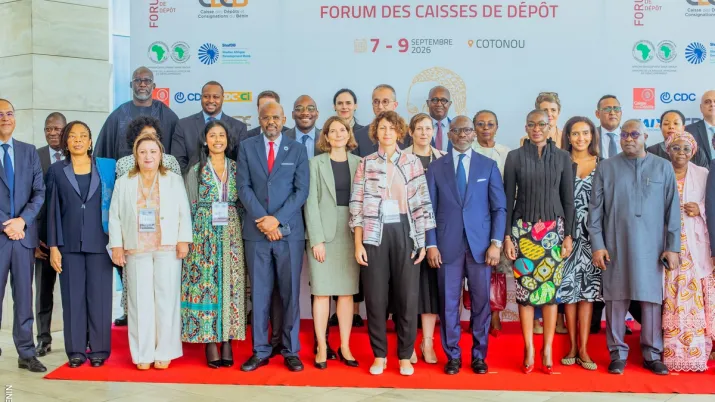
The African Forum of Deposit Funds: strategic partners for long-term development finance
Published on September 29, 2026
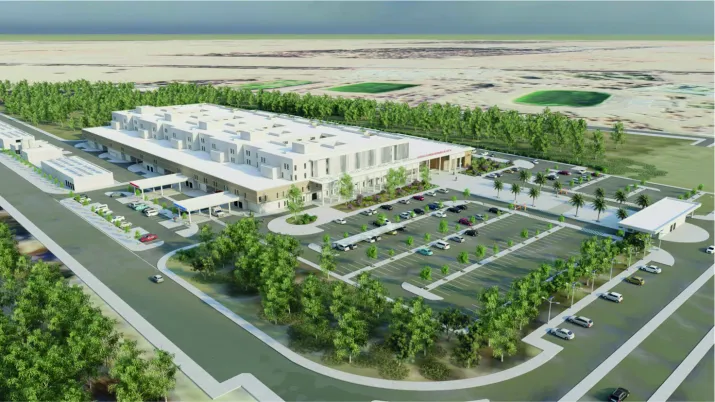
Climate change: a MOOC for more sustainable construction in the Mediterranean
Published on September 7, 2026
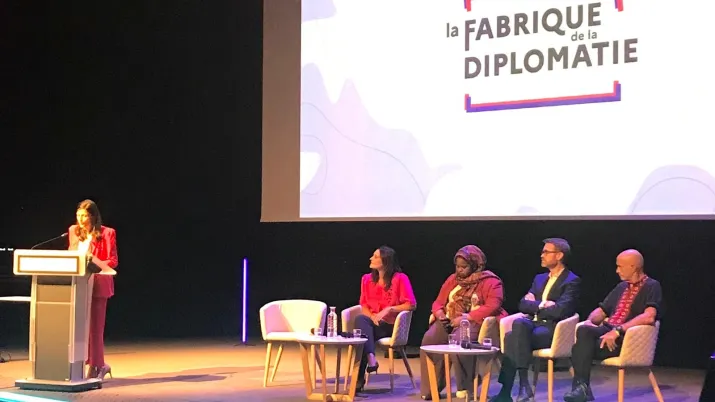
Development or climate action? Rethinking the choice at "La Fabrique de la Diplomatie"
Published on September 7, 2026
Publications & Media

Key figures
-
€8 million for a new regional project approved in 2025 to support populations affected by the crisis in Sudan
-
€105.5 million committed since 2023 to support populations in Sudan and neighboring countries, including €55.5 million reallocated to address the consequences of the conflict