Share the page

Support for the development of pro-nature community enterprises in Southern Africa
Project

-
Project start date
-
Status
Ongoing
-
Project end date
-
-
Project duration
-
6 years
-
AFD financing amount
-
€ 5 000 000
-
Global financing amount
-
€ 12 000 000
-
Country and region
-
Zambia, Africa
-
Location
-
Zambia, Botswana, South Africa
-
Type of financing
-
Beneficiaries
-
Conservation International
-
Type of beneficiary
-
CSO
The project aims to establish, in Zambia, Botswana, and South Africa, socio-economic and environmental conditions that are favorable to the development of “pro-nature” community enterprises within three transboundary landscapes.
Context
At a time when the planet was being shaken by a pandemic crisis of rarely seen magnitude, calls to act according to “One Health” approaches increased. This approach emphasizes the need to break down the barriers between human, animal, and ecosystem health, and to recognize their interconnected nature. It calls for the design of interdisciplinary strategies and operations that link health with human and animal activities and ecosystem management.
Description
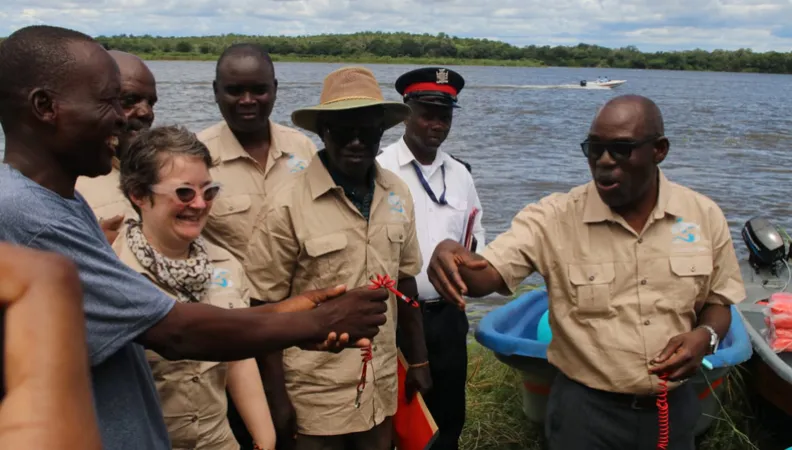
The project aims to support the development of “pro-nature” community enterprises in the livestock and fisheries sectors within three transboundary areas of Southern Africa (South Africa, Botswana, Zambia). It is based on “conservation agreements,” which bring together communities, investors, and public stakeholders around commitments that promote the preservation of natural resources while ensuring sustainable incomes.
These agreements define sustainable production practices, health measures to secure value chains, and health-related actions that meet community needs.
The project thus contributes to several objectives: economic development of vulnerable populations, food and health security, biodiversity protection, and the fight against climate change, with particular attention to gender issues and financial innovation.
It is structured around five pillars: sustainable rangeland management, sustainable fishing in the Lower Zambezi, promotion of responsible private investment, dissemination of results, and technical support.
Impacts
- conserve and restore 1 million hectares of high-value habitats in transboundary conservation areas through livestock systems that integrate cross-cutting consideration of health, ecological, and socio-economic issues (rangeland restoration, rigorous health monitoring, responsible resource use, etc.);
- develop sustainable fisheries co-management systems, based on incentives, between communities and tourism operators over 250 kilometers along the lower transboundary zone of the Zambezi River (sustainable fishing);
- enable nearly 30,000 people (more than half of whom are women) to benefit from pro-nature enterprise activities in the livestock, fisheries, and tourism sectors (with social co-benefits: health, education);
- secure at least 6 investments in community enterprises from private sector partners and impact investment funds;
- document and disseminate the project’s results and lessons learned to other communities, partners, and governments, in order to replicate the conservation agreement model in other geographic areas.
Sustainable Development Goals
Life on Land
Goal 15 aims to implement the sustainable management of terrestrial ecosystems – forests and mountains – by preserving biodiversity and soils and limiting the long-term impacts of natural disasters. It calls for integrating ecosystem and biodiversity protection into national planning and poverty reduction strategies. SDG 15 also stresses the need to protect endangered species through strengthened international cooperation against poaching and trafficking, and by implementing controls—or even eradication—of invasive alien species that harm ecosystems.