Share the page

Green education for climate resilience in Iraq
Project

-
Project start date
-
Status
Ongoing
-
Project end date
-
-
Project duration
-
3 years
-
AFD financing amount
-
€ 450 000
-
Global financing amount
-
€ 500 000
-
Country and region
-
Location
-
Ninawa, Anbar, Basrah
-
Type of financing
-
Beneficiaries
-
Public Aid Organization
-
Type of beneficiary
-
CSO
The Project addresses climate change issues, including water scarcity and the lack of community strategies for resilience and adaptation.
Description
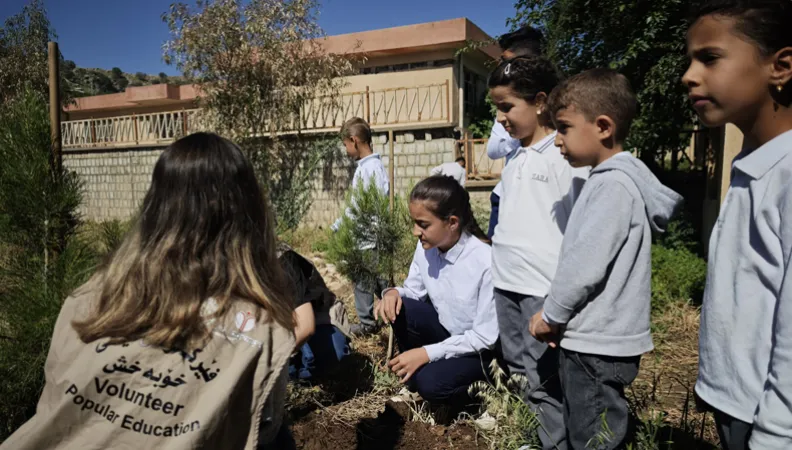
In Iraq, climate change ranks low on community priority lists, with limited recognition of its long-term effects on livelihoods, health, and socio-economic development. Cultural barriers and restricted access to technical resources hinder women, youth, and civil society participation, despite their potential as key actors in fostering community engagement and climate resilience. PAO intends to leverage the Non-Formal Education (NFE) tools, such as Learning-By-Doing, art, cultural activities, and community participatory action, etc. which have been developed previously, as well as a methodology in addressing climate change (learner-centered approach, needs-based education, and peer learning) to contribute to developing climate resilience and promoting community adaptation strategies to the consequences of climate change in Iraq. It will enable a productive environment for civic engagement and effective participation of youth and women with the decision-makers. It will support locally-owned solutions to the climate-related issues, including water scarcity.
Partners
Technical Partner: Fédération Léo Lagrange. The Fédération Léo Lagrange is a non-profit youth and community education organisation established in 1950 under the French 1901 law and recognised as being of public interest. The FLL is active in the fields of early childhood, youth work and vocational training. The FLL works to promote lifelong development, particularly through the democratization of culture and leisure activities.
CSO
PAO empowers youth, women, and community groups through Non-Formal Education, strengthening participation, volunteerism, and local initiative development to promote climate resilience. It promotes civic engagement, supports community-led solutions, and enhances the role of marginalized groups in addressing local challenges related to climate change and advancing sustainable community development.
Impacts
Overarching objective: Promote sustainable climate resilience and community adaptation strategies, ensuring inclusive and effective participation of women, youth, and community-based informal groups with the decision-makers, including local authority and policymakers.
Specific objectives (SO)and outcomes:
-
90 youth and 60 informal groups (Community Based Organisations or CBOs, volunteers) build their capacity and actively participate with the decision-makers in elaborating and implementing locally owned solutions for the issues caused by climate change like water scarcity. Youth leaders participate in capacity-building training on climate resilience using NFE methods, they conduct initiatives in their community (to save water, protect the environment, etc.).
-
200 rural women acquire the skills to work on water scarcity and climate resilience issues; they are trained, develop leadership, participate to local policies, implement local initiatives to tackle water scarcity including in the agriculture sector, they lead advocacy campaigns on climate resilience, water and sanitation issues as well as and modern agricultural techniques.
Public Aid Organization (PAO)
PAO empowers youth, women, and community groups through Non-Formal Education, strengthening participation, volunteerism, and local initiative development to promote climate resilience. It promotes civic engagement, supports community-led solutions, and enhances the role of marginalized groups in addressing local challenges related to climate change and advancing sustainable community development.
Sustainable Development Goals
Quality Education
Goal 4 calls for universal access to free, equitable, quality education at all stages of life, with particular emphasis on eliminating disparities related to gender and income. It also stresses the acquisition of basic and higher-level skills for living in a sustainable society. Targets include building and upgrading educational infrastructure, expanding scholarships for students from developing countries, and increasing the number of qualified teachers.