
Share the page
Sports as a Driver of Development Opportunities in Africa: AFD, the IOC, and the World Bank Publish a New Report
Published on
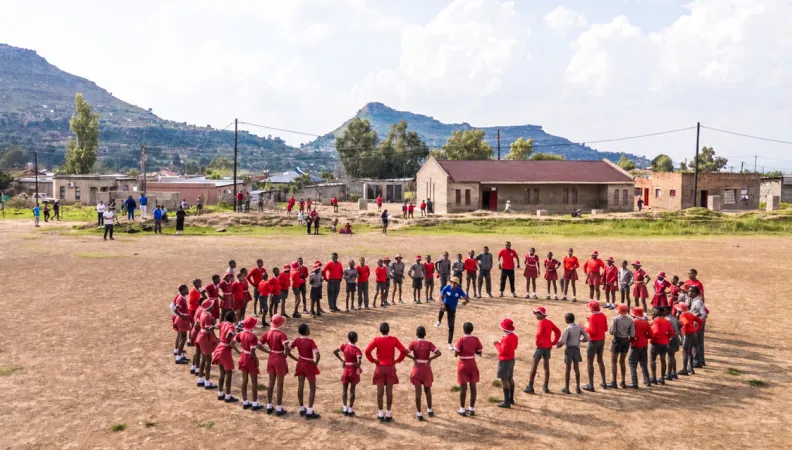
To mark the Dakar 2026 Youth Olympic Games, the first Olympic event to be held on the African continent, Agence Française de Développement (AFD), the International Olympic Committee (IOC), and the World Bank present a new publication exploring the contributions and potential of sport as a catalyst for positive development outcomes and opportunities across Africa. Based on original research, the book highlights the opportunities the sports economy offers for employment, entrepreneurship, and growth, as well as the benefits of sports for health, education, and social inclusion.
Understanding the Contribution of Sport Across Diverse African Contexts
Across Africa, sport plays’ an important role in everyday life. From neighborhood soccer fields to sports clubs, from individual physical activities to international competitions, sport provide a space for people to come together, a source of well-being, and a sector of economic activity.
Despite its growing influence, the role and contribution of sport across African nations and economies remain insufficiently documented.
To help address this knowledge gap, AFD, the IOC, and the World Bank have pooled their expertise in the report Unlocking the Potential of Sports in Africa.
The book draws on a large-scale survey conducted in nine countries across the continent, a mapping of the sports policies of nearly twenty African governments, and an in-depth analysis of scientific research on the impacts of sports on the delivery of development outcomes.
It offers new insights into sports participation, consumption patterns, sports-related employment, and the conditions under which sporting activities can contribute to human and economic development.
Sport as a Driver of Education, Health, Economic participation and Inclusion
First, the report confirms the many benefits that participation in sports can bring. Beyond their recognized effects on physical health, sport can contribute to psychological well-being, skills acquisition, employability, learning and educational achievement.
When combined with appropriate support, training, or mentoring programs, sports-based programs can also foster self-confidence, autonomy, and employment prospects, particularly among young people and underserved populations.
While these benefits are not automatic, they are however: depend on the conditions in which people participate, the quality of the programs delivered, and how well they are adapted to local realities.
The study also emphasizes that opportunities to participate in sport remain unevenly distributed. Women and girls face specific barriers related to the accessibility of safe and inclusive facilities, as well as economic social and cultural norms.
Improving access to sport for everyone therefore arises as a major challenge to advance development and ensure equal opportunity.
Sport Economies Across Africa: Unlocking Jobs and Opportunities
The report also highlights an often-overlooked dimension: beyond major events and professional sports, sport across Africa has real but largely untapped economic potential.
Equipment manufacturing and sales, sports coaching, facility management, competition organization, media, tourism, and related services: sports-related activities involve a wide range of occupations and businesses across the continent.
In the countries studied, a significant share of this economy relies on informal activities or small local, community organizations, whose contribution remains difficult to measure.
The volume highlights the potential for growth in this sector, particularly in entrepreneurship and youth employment. Realizing this potential, however, requires strengthening skills, supporting local businesses, and encouraging the emergence of sustainable business models.
Elevating Sport Within National Development Agendas
Beyond its findings, the report offers recommendations for public authorities, sports stakeholders, businesses, and development partners.
It emphasizes a call for better access to safe and suitable spaces and facilities for sports to be practices and accessed, greater participation by women and girls, stronger school and community sports, and support for the development and organization of local economic sectors.
It also emphasizes the importance of improved data to inform public decision-making and measure the effects of investment in sports.
The aim is to better recognize the contribution of sports to national and continental development agendas and targets and create conditions for their benefits to reach as many people as possible.
A Joint Publication Advancing Development Opportunities Through Sport
This report is the result of collaboration between the French Development Agency, the International Olympic Committee, and the World Bank, which have combined their respective expertise in development, sports, and economic research.
The book also features contributions from the International Finance Corporation (IFC), the Development Bank of Southern Africa (DBSA), and the Laureus Sport for Good Foundation, enriching the analyses and perspectives presented.
Its publication to mark the Dakar 2026 Youth Olympic Games offers a unique opportunity to highlight the role that sports can play in the development of the African continent and to foster dialogue among public decision-makers, sports institutions, researchers, businesses, and practitioners.
ABOUT THE REPORT
Title: Unlocking the Potential of Sports in Africa
Publishing partners: Agence Française de Développement (AFD), International Olympic Committee (IOC), and World Bank
With contributions from: International Finance Corporation (IFC), Development Bank of Southern Africa (DBSA), and Laureus Sport for Good Foundation
Launch date: November 4, 2026, Dakar, Senegal
Press contact:
- Etienne Charrière – AFD charrieree@afd.fr
- Chloé Odstrcil – AFD odstrcilc.ext@afd.fr