Share the page
Algeria
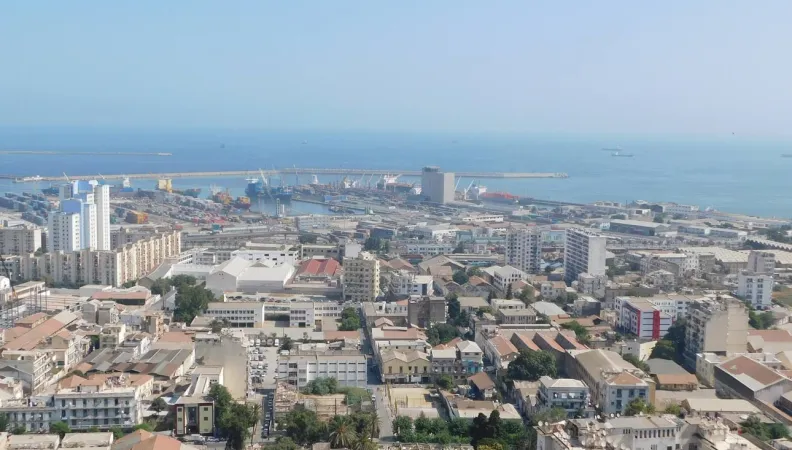
Through AFD, Expertise France, and Proparco, AFD Group works within the framework of the renewed partnership between France and Algeria, helping to build a more sustainable, inclusive, and low-carbon economy. AFD Group can support public institutions, the private sector, and civil society through knowledge production, technical assistance, and institutional cooperation.
Context
Covering an area of over 2 million km², Algeria is the largest country in Africa and the Arab world. A gateway to the African continent, it occupies a strategic position, opening onto the Mediterranean basin and, therefore, Europe. Its energy resources also give it significant influence within the various regional groupings to which it belongs.
The country has diversified its economy by reforming its agricultural system and modernizing its heavy industry. Nevertheless, hydrocarbons still account for a large share of its exports, as Algeria is a major producer of natural gas and oil. This economic model presents a major challenge: reducing dependence on hydrocarbons while consolidating economic growth and promoting the development of sustainable cities.
AFD has supported Algeria through several economic, energy, and urban development projects. We operate as AFD Group, alongside Proparco, our private sector financing arm, and Expertise France. AFD Group manages programs funded primarily through European Union delegated funds to support knowledge production, mobilize expertise, provide technical assistance, and strengthen capacities.
AFD’s Algeria office reports to the Mediterranean and Sahel Regional Office.
Our approach
AFD and Algeria: supporting sustainable growth
Algeria is promoting skills development across its workforce. In this context, AFD Group supports Algerian institutional partners in strengthening their staff’s capacities and implementing ambitious transformation projects.
Expertise France is implementing the €12 million Public Financial Management and Domestic Resource Mobilization Support Project in Algeria (PAGFAL), funded by the European Union. The project aims to improve fiscal discipline, optimize resource allocation, and enhance the effectiveness of public services.
Expertise France is also implementing an EU-funded €4.2 million twinning project for the Ministry of Higher Education and Scientific Research entitled “Support for the Development of Research and Innovation” (IPTICAR). The project aims to strengthen Algeria’s national innovation capacities and foster the integration of Algerian research into the European Research Area.
In 2020, the Algerian government adopted a new energy transition program. It combines the preservation and enhanced use of fossil fuel resources with changes to energy production and consumption models, the development of green energy, and environmental protection.
AFD has provided expertise to support the implementation of several components of the country’s energy transition. This has included technical assistance to the Ministry of Energy and Mines to strengthen its command of the technical and macroeconomic modeling tools used to develop energy-sector scenarios through 2050.
Economic diversification is a key challenge for Algeria’s sustainable development. AFD Group supports the country in implementing programs that combine economic diversification, environmental protection, and the creation of sustainable jobs. Two main projects are currently underway with European Union funding:
- Expertise France is implementing Algeria’s Blue Economy Strategy, focusing in particular on research, entrepreneurship and innovation, socioeconomic support for fishers, and maritime surveillance. The program is funded by the European Union for a total of €20.7 million.
- AFD is implementing the €10 million Ecovertec green and circular economy support program in partnership with the United Nations Industrial Development Organization (UNIDO). A dedicated green economy office will train micro-, small, and medium-sized enterprises, startups, and social and solidarity economy enterprises in circular economy principles.
AFD supports environmental protection and the sustainable management of natural resources. Through regional programs, it has supported projects promoting the preservation and economic development of oasis agrobiodiversity and the protection of coastal and marine areas. These projects were carried out in consultation with local communities to promote the sustainable use of resources. The programs represent a total investment of close to €1 million.
In the field
Below, find the country's projects, news, publications, and contact details in one click.