
Share the page
Vanuatu
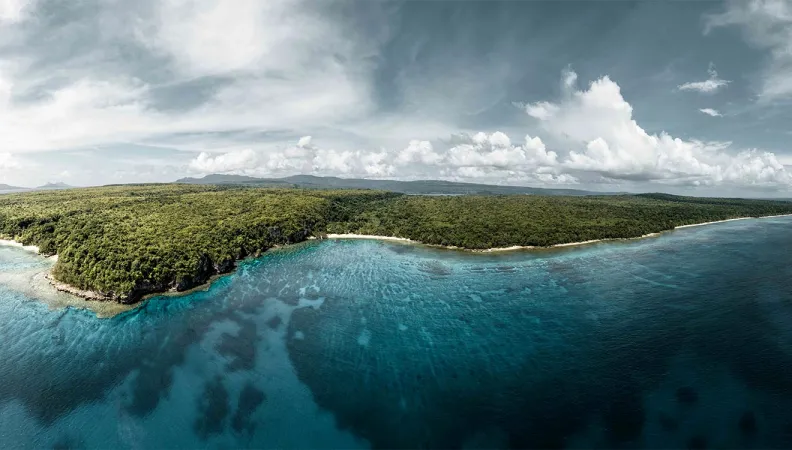
An Oceanian archipelago made up of more than 80 islands, Vanuatu is particularly vulnerable to climate risks and natural disasters, putting pressure on both its population and economy. AFD has been a partner of Vanuatu since 1961 and now focuses its work there on four main areas: climate action and biodiversity, young people, health, and waste management.
Context
Made up of 83 islands covering a total land area of 12,190 km² and located along the Pacific Ring of Fire, Vanuatu had a population of nearly 330,000 in 2024. Until the end of 2020, it was one of the four Least Developed Countries (LDCs) in Oceania. With a small economy – its GDP stood at around €1.6 billion and external debt was estimated at 48.6% of GDP in 2024 – the country offers limited prospects for sustainable growth.
Its economy relies on tourism and services, as well as agriculture and fishing, but remains fragile due to geographic isolation, a dispersed population, and limited infrastructure.
Vanuatu is among the countries most exposed to climate risks and natural disasters. The country is regularly hit by major events, such as Cyclone Pam, which destroyed much of its infrastructure in 2015; Cyclone Harold in 2020; and the “twin cyclones” Judy and Kevin in 2023. Most recently, a 7.3-magnitude earthquake in December 2024 caused extensive human and material damage, forcing the displacement of communities and the relocation of Port Vila’s city center, the capital.
Against this backdrop, the country’s development depends on sustained efforts to strengthen climate resilience, improve access to essential public services, and protect a uniquely rich natural environment.
A historical partner of Vanuatu since 1961, AFD initially supported investments in the aviation sector to promote territorial development and foster economic and tourism growth. It also provided assistance in health, education, and water sectors.
Today, to contribute to sustainable, inclusive, and resilient development across the archipelago, AFD supports bilateral and regional projects focused on four main areas:
- Climate and biodiversity, through initiatives aimed at climate risk adaptation, mitigation, ecosystem protection, and crisis preparedness and response.
- Youth and education, with support for the National University of Vanuatu.
- Health, via the rehabilitation and equipping of health centers, training of nursing staff, capacity-building for the Ministry of Health, and regional initiatives that strengthen health surveillance.
- Waste management, which is vital to ecological transition and the quality of life of Vanuatu’s people.
AFD's operations in Vanuatu come under the Pacific Ocean Regional Office.
Our approach
Helping make Vanuatu less vulnerable through strong action focused on climate, health, young people, and environmental transition.
A country particularly at risk, Vanuatu declared a climate emergency in 2022. AFD supports the country’s efforts to adapt to and build resilience against climate change.
Like New Caledonia, French Polynesia, and Wallis and Futuna, Vanuatu benefits from the regional CLIPSSA program, launched in 2021 by AFD, the French National Research Institute for Sustainable Development (IRD), and Météo France. The program is the first to develop scientific data on future climate conditions at the scale of island territories. It also analyzes the impacts on agriculture and water by placing them in dialogue with local knowledge, with the aim of supporting adaptation strategies.
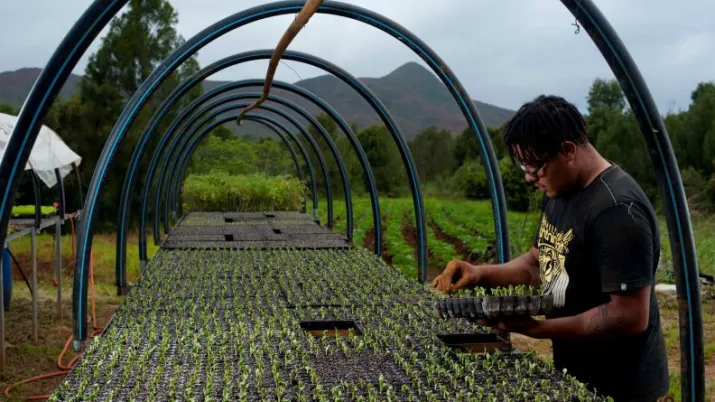
The multi-donor Kiwa Initiative funds climate change adaptation projects based on nature-based solutions. Three projects are currently underway in Vanuatu, including the Kiwa ResiCo project, implemented by the Agronomic Institute of New Caledonia (IAC) in the nine most populated islands of Vanuatu and in the Loyalty Islands (New Caledonia). The project aims to strengthen the resilience of rural communities, particularly women, through the rehabilitation of agroforestry practices.
Through the Regional Response Platform for the South Pacific Ocean, PIROPS, run by the French Red Cross, AFD supports disaster preparedness and response in the Pacific by providing national Red Cross societies, including Vanuatu’s, with the human, material, and logistical resources needed to respond to climate and natural crises. This platform is part of the broader Trois Océans project.
AFD supports Vanuatu in the sustainable strengthening of its health system, with the aim of improving access to care, prevention, and the country’s capacity to respond to health crises.
Launched in 2025, the HASAP project aims to improve access to primary health care across the archipelago. It targets the island of Pentecost, where it will rehabilitate and equip two health centers and one dispensary, including the Melsisi health center, which was severely damaged by Cyclone Harold and serves a population of 5,000 people. The project also includes a significant component of national nurse training, as well as technical support to the Ministry of Health.
Vanuatu also benefits from the ROSSP program (Pacific Island Health Surveillance Network), implemented by the Pacific Community and funded by AFD. In Vanuatu, ROSSP contributes to national health security by providing technical support for transporting infectious substances, responding to epidemics, DNA sequencing, and establishing early warning systems for climate-related diseases.
Finally, the DIRECCT+ program, delegated by the European Union and completed in 2024, funded a database of people with disabilities to facilitate their inclusion in disaster response efforts.
With 38% of its population under the age of 15, Vanuatu’s youth represents a key driver of development. To support this potential, AFD focuses its efforts on strengthening the education system and building the skills of new generations.
AFD supports the National University of Vanuatu (NUV) in developing quality bilingual higher education and improving the economic and social integration of young people. The project involves both infrastructure, through the construction of the university campus, and institutional support, helping NUV teams expand their training offer in line with labor market needs.
Through the DIRECCT+ program, all students and staff at the National University of Vanuatu now have functional access to digital tools, with 215 computers, dedicated classrooms, and training on online teaching methods.
AFD has also funded the construction of the Maison des Francophonies, opened in 2025 as part of a decentralized cooperation initiative with the municipality of Dumbéa (New Caledonia). This cultural center offers young people in Port Vila opportunities for learning, creativity, and expression.
By banning the production, import, and use of plastic bags, plastic straws, and polystyrene food containers as early as 2018, Vanuatu positioned itself as a global leader in the fight against plastic pollution. However, waste management remains a major environmental and public health challenge in the country, particularly in urban areas such as Port Vila and Luganville.
Vanuatu benefits from the regional SWAP project, funded by AFD and implemented by the Programme régional océanien pour l’environnement (Secretariat of the Pacific Regional Environment Programme). The project supports the rollout of integrated waste management policies across the Pacific. Focusing on four areas, used oils, landfills, metal waste, and marine litter, the program helps strengthen local capacities, promote more effective sorting, collection, and recycling practices, and encourage the development of circular solutions adapted to island contexts.
SWAP has already supported beach clean-up campaigns, improved access to waste collection facilities on the islands of Efate and Santo, and helped deliver a used-oil treatment project based on pyrolysis.
In the field
Projects
Publications & Media
News & Press Releases
The Pacific Ocean: Working with Island States Vulnerable to Climate Change
Published on September 8, 2023
Key figures
-
10 projects in implementation
-
38% of the population is under 15 years old
-
7 active volcanos represent another factor contributing to the country's vulnerability to disasters