
Share the page
Africa–France academic partnerships (PeA) program: Five new recipients
Published on
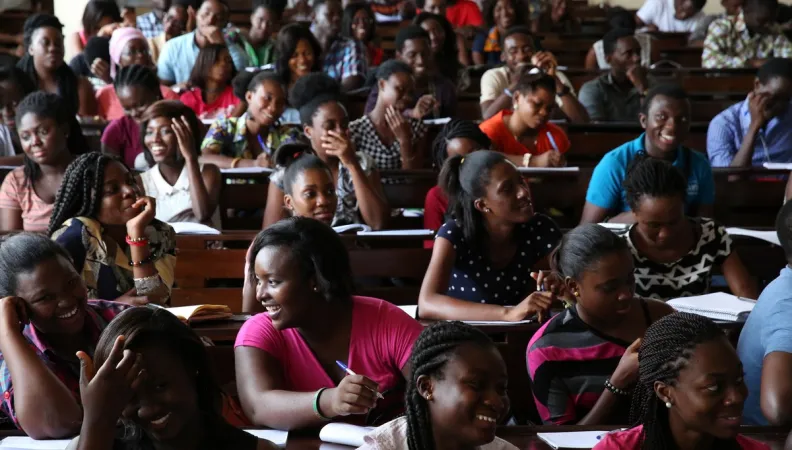
The Academic Partnerships Africa-France (PeA) program has just announced the winners of its third edition. Five projects jointly supported by 19 African and French higher education and research institutions were chosen. Their objective is to create job-oriented training programs spanning bachelor’s through PhD levels, in economic sectors that are priority for the African countries.
Following the announcement of the winners of the third edition of the Academic Partnerships Africa-France (PeA) program, Professor Coumba Touré Kane and Professor Jean-Pierre Gesson, co-chairs of the evaluation committee that analyzed the submitted projects, outlined the main features of this edition, the expected results, and the benefits of the academic partnerships between Africa and France.
How do you view this new edition and what trends have emerged from it?
Prof. Jean-Pierre Gesson: This edition encompasses five countries. Ethiopia, which had already been selected in the 2nd edition, is this time represented by the ITEGE project aimed at developing the geothermal energy sector. And four countries have now come on board the PeA: Gabon, Kenya, Nigeria and Rwanda. This opening-up to new geographies, particularly non-French-speaking ones, is an opportunity for French higher education and research institutions. They have shown a growing interest in English-speaking countries, and the PeA offers them a structured multi-year framework allowing them to forge robust and long-term partnerships. This third edition also introduces five very different themes: energy, health and agrifood, as well as the cultural and creative industries and pharmacy, which are two novelties for the PeA. The many projects submitted show that, while the targeted sectors are generally similar to those in the previous calls for proposals, they continue to exhibit remarkable diversity. This clearly illustrates the scope and diversity of the current challenges facing Africa.
Prof. Coumba Touré Kane: Before becoming the evaluation committee’s co-chair, and having already benefited from the first PeA edition, I coordinated the PETTAL project in Senegal. As such, I can fully vouch for the relevance of this splendid initiative and say that opening it up to non-French-speaking countries boosts the momentum and scope of the partnerships. What I note in this edition is that each of the selected projects has a reach that goes beyond the African country directly concerned. Their regional impact will certainly promote South-South cooperation. Their potential can also inspire other institutions on the continent to create training programs tailored to current and local contexts. Over and above the immediate benefits for students, the whole of Africa’s university community will be able to gain from this.
The selected projects are Beat (cultural and creative industries – Nigeria), Co-Fiphar (pharmaceutical industry – Rwanda), Itege (geothermal energy – Ethiopia), Masucu (human, animal, and environmental health – Gabon), and Shift-KF (agri-food sector – Kenya). Find out more...
What key results can be expected from the winning projects?
Prof. Jean-Pierre Gesson: The main goal for the projects is to put in place high-quality training programs that provide all students with the skills required to contribute to the development of their country or region. For instance, the MASUCU project aims to train experts in health sciences and in human, animal and environmental health, in line with the “One Health” approach, so that they can help enhance the public health system and meet Gabon’s health challenges. To achieve this, the project expects several results: educational content design adapted to local needs, the purchase of equipment, and the upskilling of staff. This means that the PeA is working to create real centers of excellence at national or regional scale that are closely connected to the socio-economic sectors involved, thus providing young Africans with real opportunities.
Prof. Coumba Touré Kane: In addition, the PeA also plans for an “inclusion” component to improve young women’s participation and success in higher education. Beyond these expected results, the program is a tool with highly concrete impacts. It creates an ecosystem of cooperation based on knowledge- and experience-sharing, bilateral mobility and a continuing dialogue with the socio-economic world. This mutually beneficial dynamic offers advantages to all stakeholders. So, institutions should really make the most of this opportunity.
What does this reveal about the importance of closer ties between African and French academic communities?
Prof. Coumba Touré Kane: What the PeA brings to light is that networking between academic communities, economic players and civil society enables innovation and the emergence of locally rooted solutions. Basically, these rapprochements signal a common desire for long-term investment in sustainable change, grounded in expertise and mutual trust.
Prof. Jean-Pierre Gesson: The partnership between African and French institutions must be a win-win affair over the long term. In addition to training and research, it must effectively fulfill society’s economic, social and technological needs. For this, cooperation can and must bring together all of the actors for the sake of efficiency, centered on precise and shared objectives. The PeA is in step with this rationale as it proposes partnerships that benefit both parties and their territories.
Read also
Strengthening biodiversity cooperation between India and Southern Africa
Published on November 26, 2025