Share the page
Climate change: Combining scientific data to help Pacific islands adapt
Published on
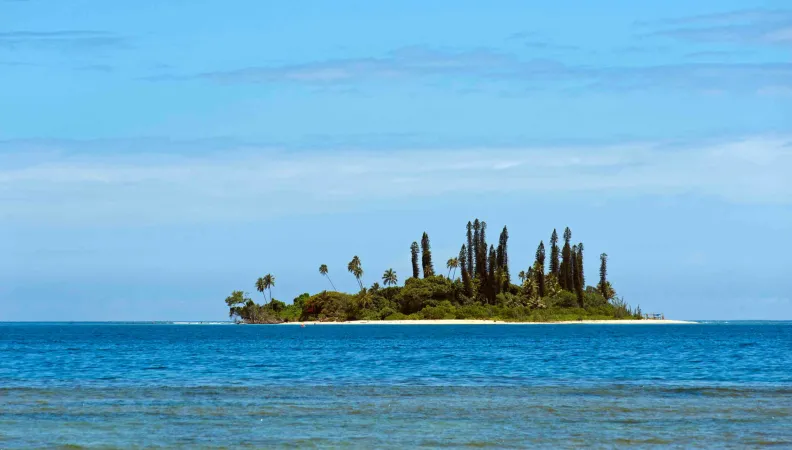
Over five years, the CLIPSSA project has combined scientific data to model and anticipate climate conditions and crop performance through 2100 across four Pacific territories. This key project supporting adaptation to the climate crisis in these particularly exposed territories offers inspiration as COP31 approaches.
“The Pacific is now among the world’s most exposed regions. […] Cyclones, droughts, heat waves and extreme rainfall are already affecting communities, water resources, agriculture and land-use planning. In the face of these challenges, building the knowledge we need to anticipate change is more than a scientific ambition: it is a necessity for these territories, public decision-makers and communities,” says Mélanie Roué, representative of the French National Research Institute for Sustainable Development (IRD) in French Polynesia.
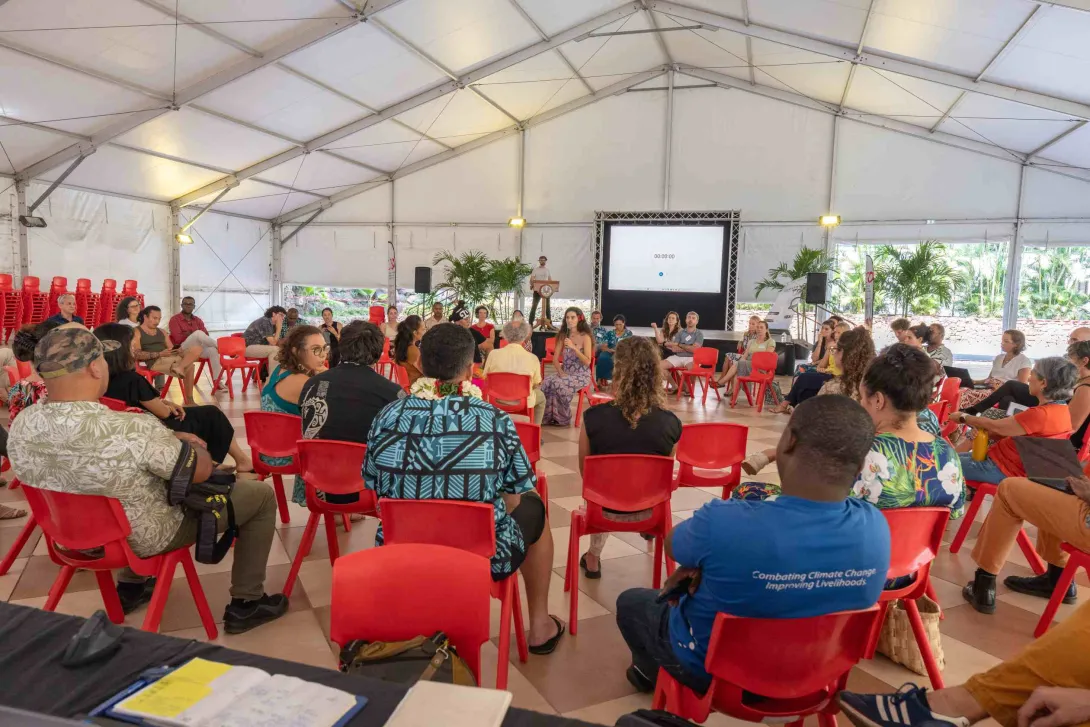
Roué was speaking at the project’s closing conference in Tahiti in June 2026, which marked the conclusion of the five-year CLIPSSA project, whose name stands for “Pacific climate, local knowledge and adaptation strategies.” Reflecting the project’s innovative, multidisciplinary approach, the conference brought together climatologists, anthropologists, farmers and public decision-makers. Their combined expertise helped identify future adaptation needs linked to climate change.
Working at the scale of Pacific islands
Led by the IRD, Météo-France and the AFD, CLIPSSA set out to produce unprecedented climate and crop projections through 2100 for New Caledonia, French Polynesia, Wallis and Futuna, and Vanuatu. The project’s distinctive approach brings together disciplines that rarely work alongside one another, from climate science to anthropology, as well as farmers’ knowledge. Its aim is to provide public authorities with a shared knowledge base tailored to each territory.
For Pacific islands, the first challenge is to work at a scale suited to their size. Global models, such as those used by the IPCC, operate at resolutions of 100 or 200 kilometers and can fail to capture territories this small. CLIPSSA therefore used downscaling to simulate future climate conditions at resolutions of 20 kilometers and 2 kilometers.
Root and tuber crops in a changing climate
The project’s agronomic component examines the effects of climate change on local agriculture, particularly tropical root and tuber crops such as yams, taro and cassava, which account for a major share of local production. Each crop has an optimal temperature range, making some more vulnerable than others.
CLIPSSA’s modeling shows that taro is the crop most exposed to heat stress across all four territories, with losses accelerating after 2050 and poor harvests becoming more frequent. Yams emerge as a mainstay of resilience, with some varieties remaining viable throughout the century. Cassava falls somewhere in between, with its prospects varying by territory.
Drawing on these findings, researchers are putting forward adaptation options for farmers and public authorities to consider: selecting heat-tolerant varieties, adjusting planting dates, moving cultivation to higher elevations, using agroforestry to provide shade alongside mulching, and diversifying production to include a larger share of yams.
From data to decisions
“Without science, our political ambitions and laws would remain little more than declarations and appeals,” says Moetai Brotherson, President of French Polynesia. “CLIPSSA’s data give public action an objective foundation: they allow us to anticipate, plan and therefore make decisions. They build a solid bridge between scientific research and public decision-making, drawing on the participation of our farmers, who know the realities on the ground better than anyone.”
“In New Caledonia, CLIPSSA’s data are now being used to assess the territories’ vulnerabilities, meeting a need expressed by government departments, local authorities, consultancies and businesses,” explains Myriam Vendé-Leclerc, who leads the New Caledonian government’s adaptation strategy. The data also inform workshops with municipalities, where perceptions of climate change will be compared with scientific observations to develop adaptation strategies together.
An example for COP31
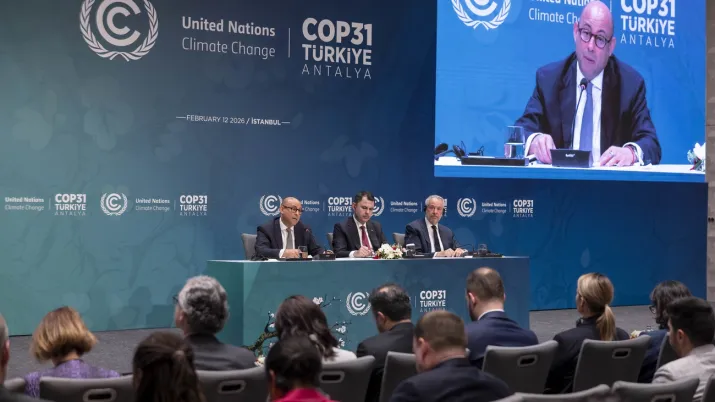
After five years of examining conditions at the local level, CLIPSSA’s achievements are now reaching a much wider audience. Its data, participants’ accounts and the public policies it has inspired are informing efforts around COP31, which places particular emphasis on the Pacific islands.
Read more
Why does France’s development bank finance climate action in other countries?
Published on November 6, 2026
What role does AFD Group play in international environmental negotiations?
Published on October 7, 2026
The Pacific Ocean: Working with Island States Vulnerable to Climate Change
Published on September 8, 2023