Share the page
G7 Development: reinventing international partnerships and solidarity
Published on
As part of France’s G7 presidency, ministers responsible for development met in Paris on 29 and 30 April to discuss the renewal of international partnerships and the reform of the global development finance architecture. The meeting also provided an opportunity for AFD Group to share its reflections on these issues.
With war in Ukraine, tensions in the Middle East around the Strait of Hormuz, and growing risks affecting oil supplies, fertilizers, and harvests, global crises are multiplying and placing increasing pressure on development finance. “We are witnessing the return of the economy’s physical constraints,” says Thomas Melonio, AFD’s chief economist. Energy, agricultural inputs, and trade routes are once again at the center of international tensions. At the same time, Official Development Assistance (ODA) from members of the OECD Development Assistance Committee (DAC) fell by 23.1% in 2025 compared with 2024 – a historic decline.
It was against this backdrop that development ministers from the G7 countries met to reflect on a renewed approach to development assistance based on mutually beneficial partnerships. France’s 2026 G7 presidency is structured around two strategic priorities: addressing major global macroeconomic imbalances and reinventing international partnerships and solidarity. Éléonore Caroit, Minister Delegate for Francophonie, International Partnerships, and French Nationals Abroad, describes this new approach as based on “resilience, sovereignty, effectiveness, and relevance.” France has made this presidency an inclusive moment by involving several emerging countries and partner nations in the discussions.
Finding new indicators
AFD Group contributed to the work led by the French Ministry for Europe and Foreign Affairs and the Ministry of Economy and Finance by providing expertise, analysis, and proposals to support the G7 Development and Finance tracks. In particular, the Group published a report entitled “ODA and Beyond: Toward an Integrated Approach to Financing for Development – The Case of AFD Group”, which proposes a better way to capture the diversity of financial flows supporting sustainable development, drawing on AFD Group’s model. This contribution forms part of broader efforts – notably within the Organisation for Economic Co-operation and Development (OECD) – to reform the monitoring and governance framework for Official Development Assistance (ODA) and development finance.
Looking, for example, at the Group’s 2024 annual results, AFD distinguishes between overall activity volume, climate finance, and bilateral ODA financing volumes. The Group relied on €1.6 billion in state budget resources while mobilizing an additional €12 billion in investment through co-financing with AFD partners. This raises a key question: which indicator should be used to steer the Group and measure its real performance – both in terms of ODA and, more broadly, sustainable development finance?
AFD Group’s dual alignment approach
In both cases, AFD Group relies on the complementarity of its wide range of instruments – grants, concessional loans, non-concessional loans, guarantees, private investments, technical expertise, and co-financing – while pursuing a dual alignment approach: each financing operation must respond both to the sovereign priorities of partner countries and to the Sustainable Development Goals.
Three case studies presented in the report illustrate these challenges:
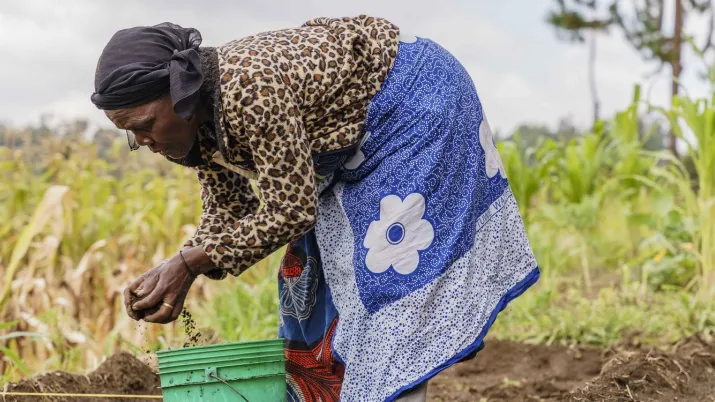
- In Benin, 61% of AFD flows qualify as ODA, which remains essential for education, energy, and agriculture.
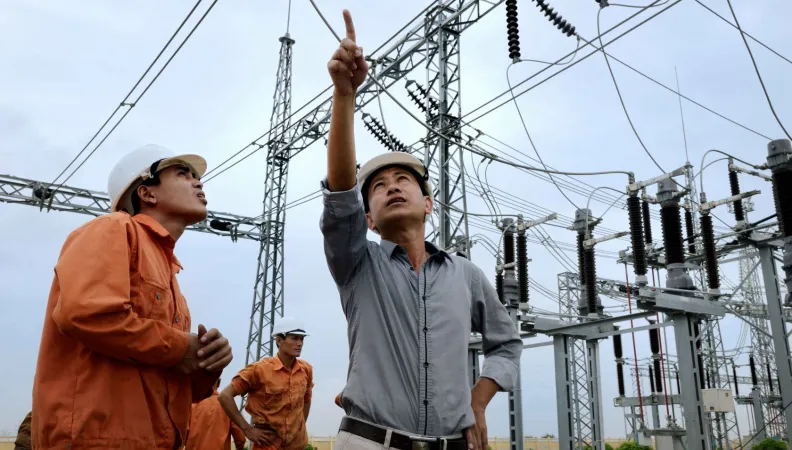
- In Vietnam, ODA now accounts for only 31% of flows: the priority is financing the energy transition and climate resilience.
- In Colombia, only 25% of flows qualify as ODA, but they support climate, territorial, and social public policies.
In conclusion, G7 member countries adopted a ministerial communiqué reaffirming solidarity with the most vulnerable countries in order to strengthen their resilience. It highlights the importance of improving the effectiveness of development assistance and calls for international partnership frameworks to be broadened and updated in order to better reflect the full range of financial flows contributing to development, include new partners, and ultimately promote a renewed approach to development.
Further reading
Reshaping European and African partnerships to advance the agroecological transition
Published on February 25, 2025