
Share the page
Sub-Saharan Africa faces persistent demographic challenges
Published on
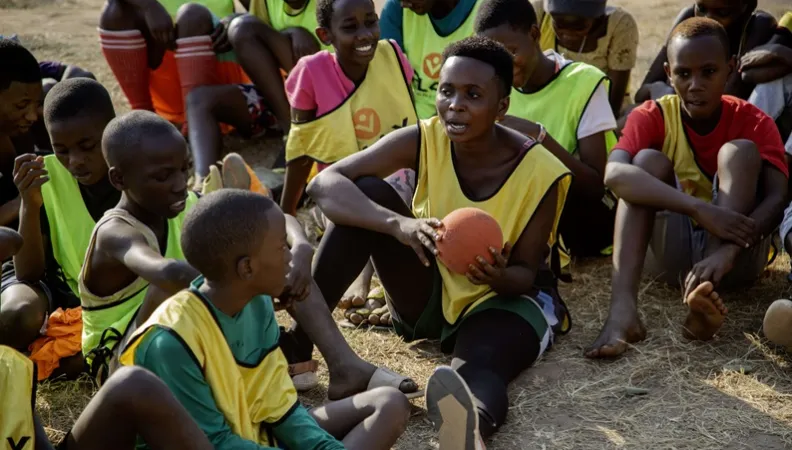
The vast majority of African countries are experiencing a population boom, particularly in sub-Saharan Africa. While this growth could bring economic benefits, it also poses significant challenges, according to an analysis published in "L’économie africaine 2026".
By 2100, Africa could be home to 3.8 billion people, accounting for 37% of the global population. Nigeria, the Democratic Republic of the Congo, and Ethiopia are projected to be among the most populous countries.
In L’économie africaine 2026 (La Découverte, 128 pages), authors Serge Rabier (AFD), John F. May (George Mason University, United States), and Aristide Romaric Bado (National Center for Scientific and Technological Research, Burkina Faso) analyze the rapid demographic growth expected in Africa over the course of the 21st century.
Most African countries today are experiencing a population boom, especially in sub-Saharan Africa, which is the main focus of the authors’ analysis. This region alone is expected to account for 22% of the world’s population by 2050, up from 14% today.
Demographic dividend
Two main factors are driving this projected growth. The first is the significant decline in child mortality across sub-Saharan Africa. “Before 1990, under-five mortality exceeded 180 deaths per 1,000 live births, compared to 74 in 2021 – still well above the global average of 38,” the authors write. This progress is attributed to vaccination campaigns, the distribution of insecticide-treated mosquito nets, and nutritional programs.
As a result, life expectancy at birth has increased markedly, reaching an average of 61 years in 2020. In four island nations – Seychelles, Cabo Verde, Mauritius, and São Tomé and Príncipe – it now exceeds 70 years.
This trend could generate a “demographic dividend,” meaning an economic gain during a period when the working-age population outnumbers dependents – those under 20 and over 65. The dividend would come from increased capacity for production, consumption, investment, and savings.
Challenges ahead: youth employment and climate adaptation
Several challenges remain. Fertility rates are still high in sub-Saharan Africa, averaging 4.2 children per woman. This is largely due to poverty, low education levels, traditional cultural norms, and the limited autonomy of women.
Young people under the age of 20 currently represent 51% of the region’s total population. This demographic weight demands massive investment in health, education, and food systems – investments that many countries cannot finance on their own.
These young people will need access to stable, quality jobs. According to World Population Prospects 2024, 93 million young Nigerians will enter the labor market between 2025 and 2040, alongside 13 million from Côte d’Ivoire and 12 million from Ghana. Yet employment opportunities remain scarce and are still largely informal, meaning low wages and a lack of social protection. Limited access to education continues to confine many women to these precarious jobs for years to come.
Sub-Saharan African countries must also adapt to rising temperatures and more frequent droughts and floods, which are driving food insecurity. Agricultural productivity is already 35% below its potential due to climate disruption. The cost of adaptation policies will place a heavy burden on populations and hinder economic development and efforts to reduce poverty and inequality.
Expanding opportunities
According to the authors, several public policies could help the continent meet these challenges. These include expanding access to family planning, investing in human capital, and addressing population aging.
Through the implementation of family planning policies – including access to contraception and shifts in reproductive norms – countries such as Rwanda and Ethiopia have seen fertility rates drop from over six children per woman to around four in just 20 years. However, these policies, which require coordinated efforts in health, education, and legal reform, often remain ineffective in other countries due to a lack of strong political commitment.
In terms of employment, “technical and vocational education and training is one of the most common approaches used to promote youth employment in sub-Saharan Africa. These programs develop technical, managerial, and behavioral skills, and also include life skills, formal and informal learning, as well as second-chance education programs.”
Lastly, population aging in sub-Saharan Africa over the coming decades will also require "strengthening social protection systems.” At present, these systems exclude a large share of informal workers. The region also suffers from the absence of an effective tax collection system to fund social protection and strengthen the link between health coverage and retirement. Some countries have already introduced social safety nets, micro-insurance schemes, and community-based mechanisms.