Share the page
Working for better waste management in Latin America
Published on
As heat waves, water scarcity and desertification intensify across the world, water conservation is now vitally important. Water lies at the heart of the most critical challenges of our time, whether universal access, climate adaptation, public health, biodiversity or the circular economy. In Brazil and Colombia, local stakeholders are calling on French expertise to enhance their water management practices.
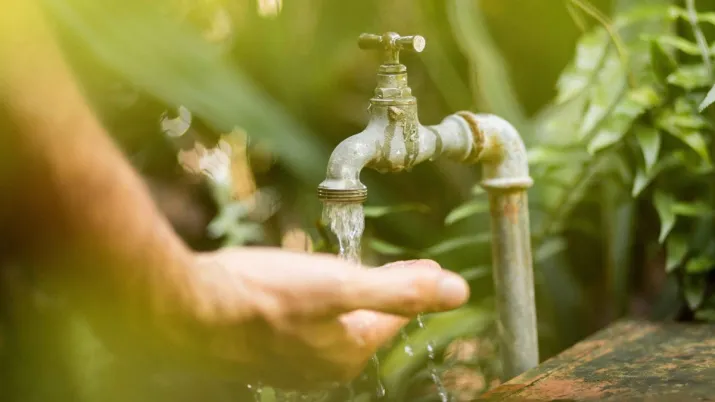
While Latin America boasts an abundance of freshwater, access to drinking water is an ongoing challenge in certain areas. Effective water management goes beyond maintaining supply networks and treatment plants; it is essential to public health, agriculture, urban planning, climate resilience and resource conservation.
Solutions must be tailored to specific local conditions. In some regions, the goal is to provide access to safe drinking water and sanitation, while in others, wastewater is already being converted into energy or reusable materials. In both cases, the main challenge is to develop services aligned with social needs, climate conditions, and local expectations.
Working toward universal water and sanitation access in Brazil
Brazil has vast water resources, but equal access to drinking water and sanitation is by no means guaranteed. In 2020, the country passed legal reforms that set a target for 2033: achieving 99% drinking water coverage and 90% wastewater collection and treatment. Despite these measures, according to AFD's partners in Brazil, millions of people in the country will still not have access to a constant water supply.
“Progress has been made, but over 30 million people still lack access to water. This situation should not be regarded as normal,” says Márcio Leão Coelho, Director of the Transfer and Financing Department for the Brazilian government’s National Secretariat for Sanitation.
Meeting these targets will require major investment and better project planning. Brazil’s public banks are working with states and municipalities, providing support for preliminary studies, and developing solutions tailored to local needs.
AFD’s partnerships with BNDES and Caixa are aligned with this broader effort. Among other things, the Group is working with BNDES on a financing facility of €200 million that will go toward sanitation, urban development, and renewable energy in the country’s North and Northeast regions. It is also facilitating dialogue between public banks, and leading discussions on project planning.
“There is no one-size-fits-all solution for all regions. BNDES’s role is to provide financial and technical solutions suited to each state and each municipality,” says Vivian Machado, Manager for International Organizations at BNDES.
In Curitiba, this region-specific approach is strengthening resilience to climate change in an informal settlement, located within a major environmental protection and control zone. In the Barigui River basin, urbanization and settlements along riverbanks have increased the risks of flooding and water contamination. The “New Caximba Neighborhood Climate Risk Management” project is working on a combination of environmental restoration measures, drainage solutions, retention ponds, a linear park, housing, and social support. It aims to reduce families’ exposure to climate risks without disrupting their access to schools, economic opportunities, and support networks.
Transforming wastewater into usable resources in Columbia
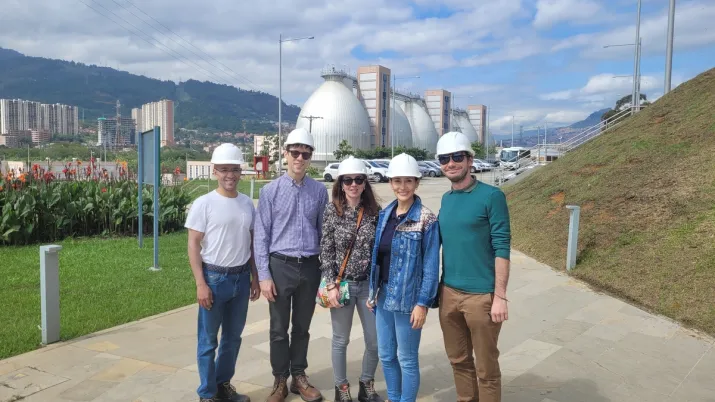
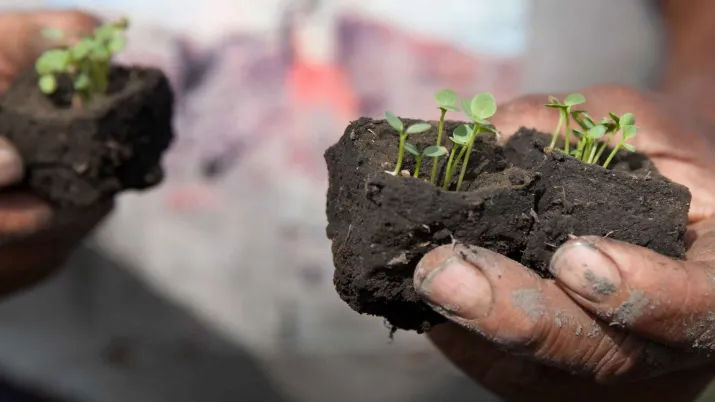
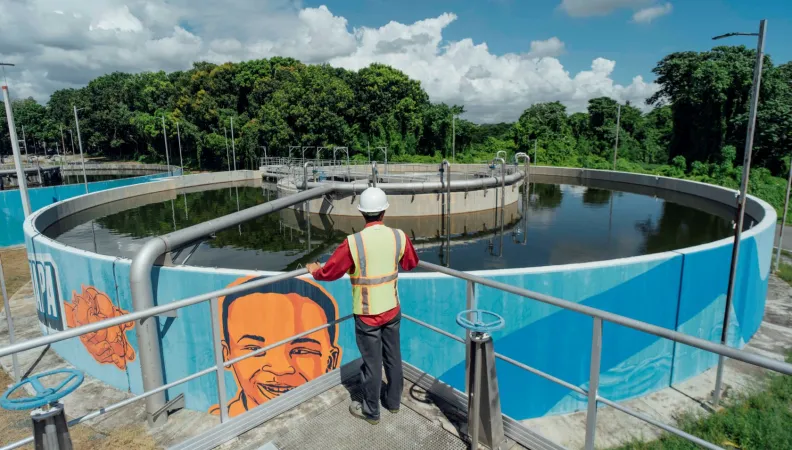
In Colombia, EPM is piloting another sustainable model where wastewater treatment plants are transformed into “biofactories”. Rather than simply treating wastewater before its release back into the environment, these facilities recover useful resources such as reclaimed water, biogas, heat, nutrients, and biosolids. The solid organic materials derived from wastewater treatment are then used in the agricultural sector as soil amendments or fertilizers rich in nitrogen and phosphorus.
EPM has already developed detailed knowledge of these facilities and byproduct recovery processes. It has launched a joint project with Seureca, a subsidiary of the French group Veolia, to organize this information and develop a decision-making tool that meets the Colombian company’s priority needs.
In particular, this study is focused on the reuse of treated water, the increase of biogas production, the co-digestion of sludge and organic waste, and the recovery of nutrients, heat and biosolids. Each option is being evaluated based on technical feasibility, economic viability, environmental and social impact, and contribution to the circular economy.
EPM will then draw on this research to prioritize its options and develop its own approach, rather than adopting an existing model from elsewhere. EPM brings local knowledge to the project, while Seureca draws on French and international expertise. Facilitated by AFD, this partnership promotes knowledge exchange between the two countries.

From partnerships come shared solutions
Brazil and Columbia have adopted complementary approaches to the same problem. Brazil is focused on broader access, improved project planning, and climate change adaptation in cities. Meanwhile, Colombia is developing new water treatment processes to recover usable resources and reduce consumption.
In both countries, local stakeholders, whether institutions, governments, or operators, are leading these transformations. AFD Group supports these efforts by mobilizing funding, sharing expertise, and facilitating long-term cooperation. The benefits are shared by everyone: France provides expertise, while developing links with institutions in Latin America that implement practical solutions on the ground, which could advance the green transition around the world.