Share the page

Hebron Regional Wastewater Treatment Plant
Project
This project is carried out with the support of the European Union


-
Project start date
-
Status
Ongoing
-
Project duration
-
14 years
-
AFD financing amount
-
€ 17 500 000
-
Global financing amount
-
€ 38 200 000
-
Country and region
-
Location
-
Hebron, southern West Bank
-
Type of financing
-
Beneficiaries
-
Palestinian Authority
-
Type of beneficiary
-
State
This project is carried out with the support of the European Union
The content of this project information sheet falls under the sole responsibility of the AFD and does not necessarily reflect the opinions of the European Union.
The wastewater of the region of Hebron will be treated in a high capacity treatment plant, improving health conditions and protecting the Aquifer.
Context
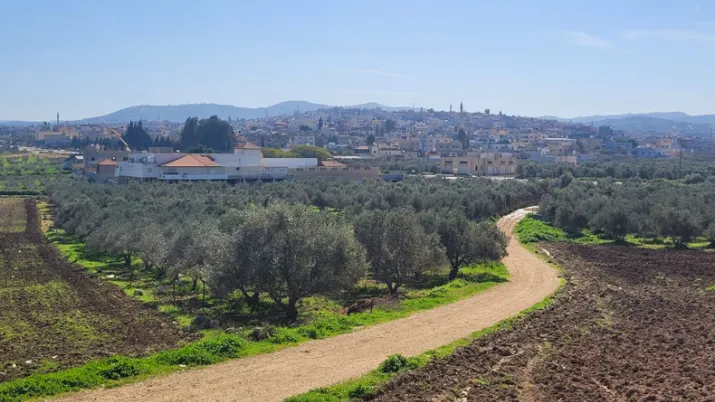
The city of Hebron, located in the southern West Bank, is an economic hub with approximately 215,000 inhabitants. Although 80 % of its inhabitants are connected to the wastewater collection system, no treatment is provided until now, so the wastewater is discharged in the natural valley (Wadi As Samen). The wastewater flow covers an area of approximately 40 kilometres with many negative repercussions affecting both the environment and the population living alongside it, some 180,000 people in the downstream villages, while the Eastern Aquifer, a strategic shared groundwater resource, faces a growing risk of irreversible nitrate and faecal contamination.
Developing waste water treatment infrastructures with a view to developing non-conventional water resources is an integral part of the Palestinian Water Authority’s (PWA) strategy. Its National Water Sector Strategy 2022–2042, updated in May 2025, sets ambitious targets for sanitation and reuse: 80 % of effluents treated and 2,500 hectares irrigated with treated waste water by 2042.
Description
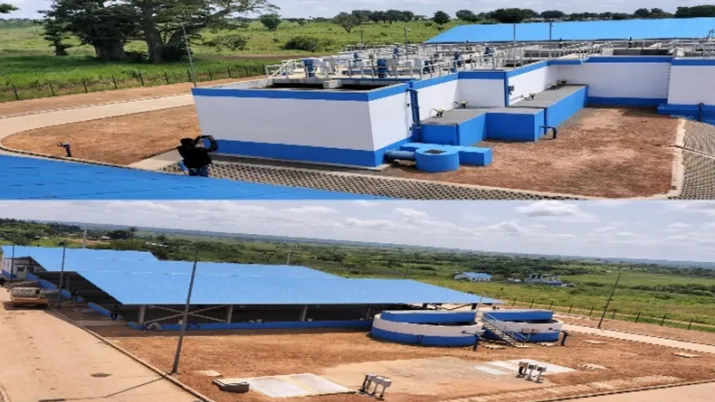
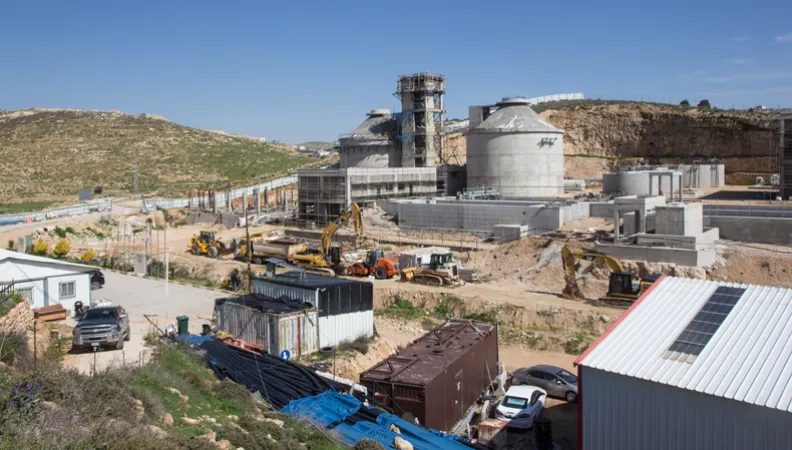
The purpose of this project is to improve health and living conditions and to preserve environment and water resources. The project is building waste water treatment infrastructures for the city of Hebron, with a treating capacity of 22,500 cubic metres per day.
The project also includes technical assistance for the municipality’s water and sanitation department and engineering services for supervision of the works.
Impacts
From a health point of view, the project will improve living conditions for the population of Hebron and for the villages located along Wadi As-Samen, some 395,000 people in total. It will help preserve the natural environment along the watercourse and protect the eastern aquifer by improving the quality of the effluents. Given that the water environment is especially vulnerable, the project provides a way of adapting to climate change; the production of biogas from sludge will also reduce fossil fuel consumption and capture methane emissions, with an estimated net avoidance of 19,000 tonnes of CO2 equivalent per year.
Furthermore, the effluent that the plant will treat will comply with quality standards that allow it to be re-used for agricultural purposes: the volumes produced could irrigate up to 11,000 donums each year.
Sustainable Development Goals
Clean Water and Sanitation
Goal 6 seeks to achieve universal and equitable access to safe drinking water, hygiene, and sanitation by 2030, especially for vulnerable populations. It also calls for sustainable water management and reducing the number of people affected by water scarcity.
The goal includes the concept of transboundary water management, which is key not only to sustainable governance but also to peace and cooperation.