Share the page

Madaba wastewater collection, treatment and reuse expansion project
Project
This project is carried out with the support of the European Union


-
Project start date
-
Status
Ongoing
-
Project end date
-
-
Project duration
-
6 years
-
AFD financing amount
-
€ 98 000 000
-
Global financing amount
-
€ 123 000 000
-
Country and region
-
Location
-
Madaba
-
Type of financing
-
Beneficiaries
-
Hashemite Kingdom of Jordan
-
Type of beneficiary
-
State
This project is carried out with the support of the European Union
The content of this project information sheet falls under the sole responsibility of the AFD and does not necessarily reflect the opinions of the European Union.
The project aims at expanding the existing wastewater collection and treatment capacity in the city of Madaba in order to respond to the increasing needs of this area facing a growing population, as well as maximizing the reuse capacity of the system.
Context
Jordan is one of the most water-scarce countries in the world and is grappling with a severe water crisis, which constrains the country’s economic and human development. With less than 100 m3 per capita per year, available water is well below the absolute water scarcity threshold of 500 m3 per capita per year. Population growth and the influx of refugees over the past decade has severely strained water service delivery. In addition, the combination of climate change and population growth is expected to further reduce per capita water resources availability by 30 percent by 2040.
Jordan also faces a lack of sanitation services. The Madaba district (South of Amman) is currently suffering from insufficient wastewater collection networks coverage, and insufficient treatment capacity, with the existing plant being overloaded. Securing public investment in Jordan for wastewater collection and treatment infrastructure is key to safeguarding public health and protecting the local environment.
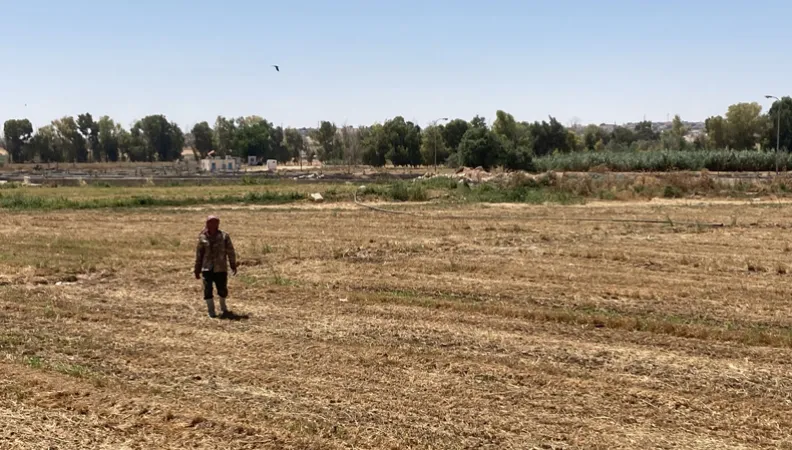
The project intends to tackle both challenges at the level of the Madaba district urban area and of irrigable perimeters located in the district and in the Jordan Valley.
Description
treatment capacity of the existing wastewater system in order to cope with an increasing population located in the sub-district of Madaba governorate and (ii) support the efficient utilization of all available water resources and reduce the reliance on fresh water for irrigation purposes.
This will allow the population to consolidate and / or gain access to safely managed sanitation services and therefore contribute to the preservation of soils and water bodies, threatened by poorly managed individual installations.
The project will include 3 components:
Component 1: Expansion of the wastewater collection system: the wastewater collection networks will be expanded to presently unserved area, which represents approximately 180 km of new networks.
Component 2: Expansion of the existing Wastewater Treatment Plant (WWTP): The existing wastewater treatment plant will be rebuilt and its capacity expanded from 7,600 m3/d to 16,000 m3/d in order to serve an estimated population of 200,000 inhabitants in 2045, up from 115 000 currently living in the area serviced by the existing system.
Component 3: Reuse of treated effluent in agriculture, locally and in the Jordan Valley (Kafrein reservoir area): The project will replace and expand the current local reuse network of treated wastewater for irrigation purposes with approximately 14 km of new distribution lines, which will support the local agriculture and secure via a new transfer line of approximately 33 km the discharge of excess treated wastewater (TWW) through a dedicated pipeline up to the Kafrein dam area in the Jordan Valley.
Impacts
By the end of the project (2045), the existing and new networks should together serve a total population of 200,000, 85,000 of whom will benefit from a new access to improved sanitation facilities. The quantity of wastewater directly treated will average16,000 m3/d.
By collecting and treating wastewater in the project area, the project will directly contribute to environmental protection, while also increasing the adaptation capacities to climate change by enabling and optimizing the reuse of treated effluent.
Sustainable Development Goals
Quality Education
Goal 4 calls for universal access to free, equitable, quality education at all stages of life, with particular emphasis on eliminating disparities related to gender and income. It also stresses the acquisition of basic and higher-level skills for living in a sustainable society. Targets include building and upgrading educational infrastructure, expanding scholarships for students from developing countries, and increasing the number of qualified teachers.
AFD's office in Jordan
14, Zahran Street, Jabal Amman
P.O. Box 5348
11183 AMMAN Jordan
(+962 6) 500 4 333
Fax : (+962 6) 500 4 344
afdamman@afd.fr