
Share the page


One Health epidemiological surveillance and laboratory network (Resoh Lab) in South Kivu
Project

-
Project start date
-
Status
Ongoing
-
Project end date
-
-
Project duration
-
4 years
-
AFD financing amount
-
€ 8 000 000
-
Country and region
-
Location
-
South Kivu Province, Democratic Republic of the Congo
-
Type of financing
-
Beneficiaries
-
South Kivu general referral hospitals (implemented by Expertise France)
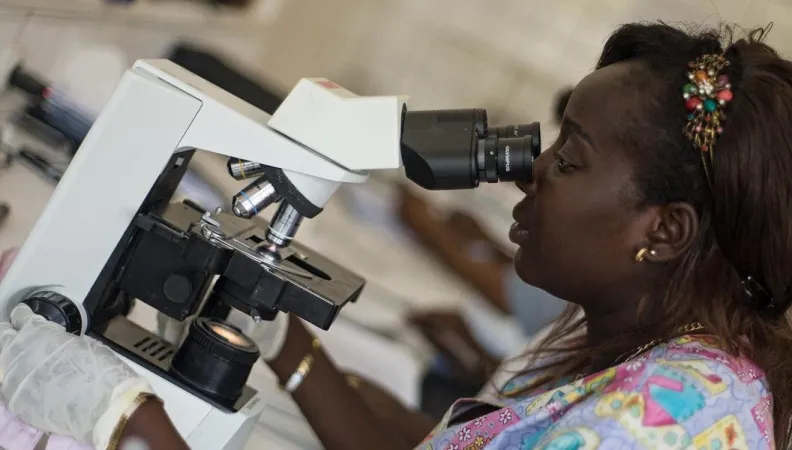
The project supports the establishment of a national laboratory-based epidemiological surveillance system using the One Health approach. It covers 15 laboratories, including three reference laboratories, across 12 health zones in South Kivu Province. It aligns with the 2019 French-Congolese roadmap to combat Ebola and other epidemics, the National Health Development Plan 2019–2022, and the Democratic Republic of the Congo’s laboratory development sector plan.
Context
Against the backdrop of the epidemics that South Kivu has faced in recent years, including Ebola virus disease and, more recently, COVID-19, implementing the national laboratory strategy offers an opportunity to strengthen the health system and epidemiological surveillance. Although a laboratory system is in place, it is not fully operational and remains inadequately organized. Alongside this, gender inequalities pose a major risk to women and have systemic implications for the emergence and spread of epidemics in the Democratic Republic of the Congo.
Description
The intervention strategy aims to progressively establish a provincial public health laboratory in line with national guidelines.
It involves strengthening laboratory services in South Kivu Province to support disease monitoring and epidemiological surveillance within a national network that is being consolidated. It also seeks to better address women’s exposure to infectious risks and strengthen their role in epidemiological surveillance.
The project will focus on three areas, with specific attention to gender and human rights:
- Strengthening the laboratory system and improving women’s representation and roles within these laboratories;
- Strengthening the organization and management of epidemiological surveillance and response, and coordination between human, animal, and environmental health laboratory services, while integrating a gender perspective;
- Building a body of knowledge, practices, and evaluation findings on gender issues in epidemiological surveillance and health security.
Impacts
The main expected outcomes are:
- Improved availability, quality, and accessibility of clinical laboratory testing in South Kivu Province, particularly for vulnerable women;
- Better organization and management of epidemiological surveillance in the province, and stronger coordination between human and animal health laboratory services within a national surveillance network;
- Better documentation of structural gender inequalities.