
Publications and media
Can development banks step up to the challenge of sustainable development?
The great planetary challenges, be it the climate, loss of nature or human solidarity, call for concerted actions at all levels, on a scale commensurate with the problems. Yet, this transformative cha...
Published on
Climate Change and Development Bank Project Cycles
In the five years since the Paris Agreement, Development Finance Institutions have made various commitments to aligning their operations with climate change goals. In this report, we analyze the exten...
Published on
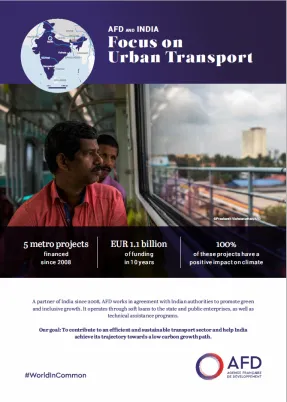
AFD and India: focus on urban transport
A partner of India since 2008, AFD works in agreement with Indian authorities to promote green and inclusive growth. It operates through soft loans to the state and public enterprises, as well as tech...
Published on
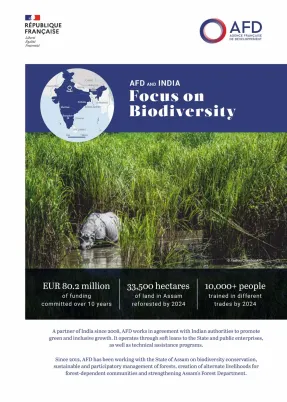
AFD and India: focus on biodiversity
A partner of India since 2008, AFD works in agreement with Indian authorities to promote green and inclusive growth. It operates through soft loans to the State and public enterprises, as well as tech...
Published on
Climate Variability and Inequality: Comparing the Experiences of Indonesia and Vietnam
Households in Indonesia and Vietnam that are poor, rural, older, headed by women, and/or from ethnic minorities bear the biggest burden of variability in climatic conditions. New research investigate...
Published on
The Impact of Climate Variability on Inequality: Evidence from Indonesia
Households in Indonesia that are rural, older, larger, and/or headed by women experience worsening income, deeper poverty, and social exclusion as a consequence of climate instability. New research f...
Published on
The Impact of Climate Variability on Inequality: Evidence from Vietnam
Climate instability in Vietnam leads to reduced incomes and greater inequality, especially in areas most affected by climatic events related to El Nino, such as the Central Highlands, Southeast and Me...
Published on
The Landscape of Adaptation Aid in SIDS
Small island developing states (SIDS) are recognised as “particularly” vulnerable to the effects of climate change, and accordingly receive relatively high levels of adaptation assistance as a group....
Published on
How to Finance the Protection of Biodiversity?
About $143 billion will be invested in the protection of biodiversity in 2020. However, three times as much is required to halt the destruction of ecosystems, and preserve the benefits and services th...
Published on
Who bears the burden of climate variability? A comparative analysis of the impact of weather conditions on ine...
Is climate variability regressive? One argument could be as follows: People living in areas with high risk of climate hazards usually correspond to the most disadvantaged populations. Due to existing...
Published on
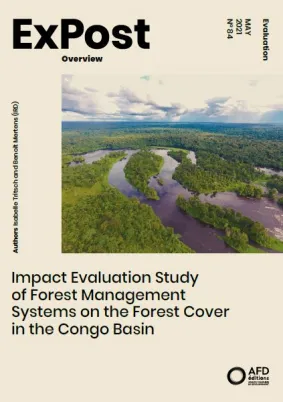
Impact Evaluation Study of Forest Management Systems on the Forest Cover in the Congo Basin
Given the extent of production forests, which is much larger than protected areas, sustainable logging, through timber concessions with forest management plans, can be a valuable tool for forest conse...
Published on
Fight against coastal erosion in New Caledonia
Ouvea is listed as World Heritage by UNESCO and is one of the largest Pacific atolls (54 km long, 132 km²). It has a population of 3,400. The island is particularly vulnerable to climate hazards and g...
Published on
Biodiversity: Reconciling Development with Nature
Scientists maintain that ecosystems and natural resources are the foundations on which the future of all societies will be built. It is therefore crucial to preserve their integrity, diversity and cap...
Published on
México's partnership for biodiversity
For 10 years, AFD has supported the Mexican authorities in defining innovative models for the enhancement of territories and protection of biodiversity. Explanations and sharing of experiences with :...
Published on
Reporting Climate Bond AFD 2019
The climate is a key focus area for AFD Group’s work. In 2019, AFD continued working towards the objectives set by its new climate strategy (2017-2022), which reflects its aim to help implement the Pa...
Published on
Climate - Development 2017-2022 Strategy: Midterm review
This midterm review confirms that AFD is on track to meet, or has already met, many of the targets set in the 2017-2022 climate strategy. Significant progress has been made in relation to the volume o...
Published on
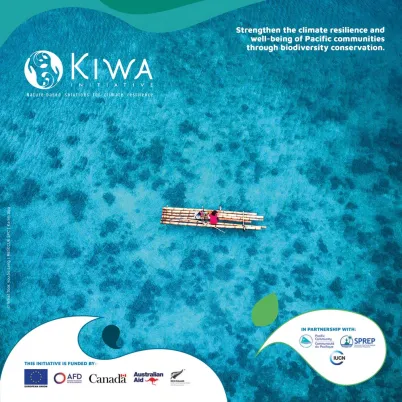
Kiwa Initiative
The Pacific Ocean is a world heritage region that needs to be preserved with its outstanding land and marine biodiversity that affords priceless services to communities. Located in one of the world’s...
Published on
2050 Facility
Low-carbon, resilient development, in line with the objectives of the Paris Agreement, is inconceivable unless we design long-term trajectories for an economic, social, technological and institutional...
Published on
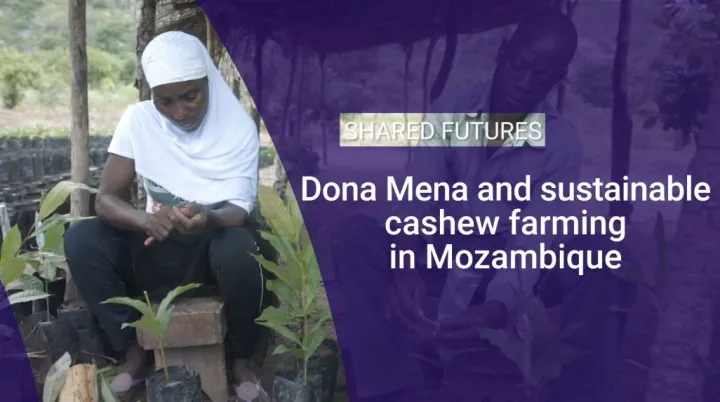
Dona Mena and sustainable cashew farming in Mozambique
Dona Mena is a cashew producer in the Gilé reserve in Mozambique. AFD is funding a project there which aims to contribute to strengthening the cashew nut sector in order to allow a sustainable improve...
Published on
Data opportunities and challenges for calculating a global Strong Environmental Sustainability (SES) index
The Environmental Sustainability Gap (ESGAP) framework sets the basis to measure countries’ environmental sustainability performance, based on standards meant to represent the situation at which natur...
Published on
Dr. Thu Zar Myint Than and the knowledge for better disease control in Myanmar
The ECOMORE II project, coordinated by the Institut Pasteur and funded by the AFD, is investigating changes in the environment and in the human activities behind the emergence of infectious diseases i...
Published on