
- Read more about Managing Urban commons in Brazil by drawing on Italian legal and participatory tools
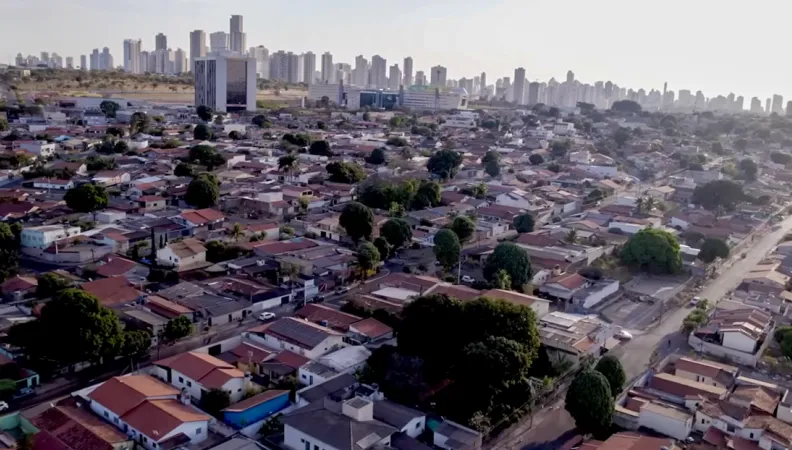 This project aims to adapt legal and participatory tools developed in Italy to the Brazilian context in order to support citizen-led initiatives for managing urban commons. It is based on field studies and pilot initiatives in the cities of Goiânia and Goiás, with the objective of strengthening institutional recognition of local cooperative practices.
Context
In many Brazilian cities, residents spontaneously organize to collectively manage spaces, services, or resources: community gardens, building occupations, and cultural or solidarity-based initiatives. These practices, often referred to as “urban commons,” reflect strong civic engagement in Brazil, yet they remain insufficiently recognized by institutions. The current legal framework primarily favors public–private partnerships, often associated with the privatization of urban services.
In Italy, several cities have found concrete responses to this challenge. Since the 2000s, municipal regulations have enabled citizens to officially collaborate with authorities to take care of urban commons (public spaces, facilities, and heritage). More than 200 cities have adopted this model, which provides a legal framework without commodifying the spaces, resources, and services concerned.
It is within this context that this research project takes place. It is conducted in two cities in the state of Goiás, where strong community dynamics already exist (associations, rural communities, and cultural initiatives). More broadly, the project aligns with AFD’s research priorities on commons and citizen participation. It also contributes to AFD’s broader priorities related to strengthening local governance, citizen participation, social cohesion, and sustainable development.
Read also : How can the Commons approach transform Brazil?
Objectives
The central research question is: how to create an institutional framework that recognizes and supports these citizen-led practices without turning them into purely market-based services?
To address this, the project seeks to understand how residents in the cities of Goiânia and Goiás collectively take care of their spaces and resources. It also aims to equip local stakeholders with solutions—particularly legal tools—inspired by the Italian experience but adapted to the Brazilian context.
This will take the form of a mapping of local initiatives, the organization of workshops with relevant stakeholders, and the development of a proposed municipal regulation on urban commons. These outputs can help local authorities better support grassroots initiatives, strengthen citizen participation, and develop more inclusive public policies at lower cost.
Method
The project is based on an action-research approach: in addition to fieldwork, interviews, and observations, the research teams organize participatory workshops with residents, associations, and local authorities. A collaborative mapping exercise will document existing practices, while case studies will enable comparisons between Brazilian and Italian experiences. In a second phase, workshops will support the co-construction of concrete initiatives with local stakeholders, and seminars will foster dialogue between researchers, citizens, and policymakers.
The project draws on the expertise of two partners, the Federal University of Goiás and the Polytechnic University of Turin (Politecnico di Torino — PoliTo), as well as the experience developed within the Italian laboratory LABSUS, which specializes in regulations on commons. Local partners (civil society organizations and municipalities) are fully involved.
Expected results
In addition to scientific outputs, the project includes capacity-building activities for local partners through workshops and collaborative work. It will also deliver several outputs directly useful for local authorities:
- A collaborative mapping of urban commons practices
- A practical guide with a toolkit for local stakeholders
- A pilot project co-constructed with a citizen initiative
- A policy brief proposing a regulation on urban commons
A range of activities will support the dissemination of these tools and results: exhibitions and public events, an online platform, publications.
These outputs will provide local authorities with concrete levers to better support urban commons and will contribute to the broader debate on participatory urban policies in Brazil.
The teams are engaged in a collective dynamic led by La Coop des Communs, the Casa Comum platform, and AFD. The objective is to build a transnational learning community by sharing ongoing work, capitalizing on each other’s experiences, and producing knowledge on the links between commons, citizen participation, and the transformation of public action.This network brings together complementary profiles—researchers, civil society actors, and public decision-makers involved in these initiatives—from Brazil, Colombia, and Europe. Supported by meetings held in Brazil and Italy, this dynamic will lead to a collective publication, currently in preparation, which will compare and contextualize the various research projects undertaken.
Want to stay up to date with AFD’s research news?

Contact
-
Stéphanie LEYRONAS
Research Officer