
Share the page
Peru
Peru, a dynamic South American country with significant natural resources, has strong growth potential despite structural challenges such as territorial disparities, poverty, political instability, and climate vulnerability. For more than 10 years, AFD Group – through its subsidiaries Proparco and Expertise France – has financed projects aimed at improving living conditions, protecting biodiversity, combating climate change, and promoting gender equality, through credit lines, technical assistance, private sector financing, and support for civil society.
Context
Peru, Latin America’s fourth-largest country, has a population of 34 million and is marked by major socioeconomic and cultural disparities across its three main regions. The Costa region concentrates 60% of the population and 70% of GDP thanks to dynamic sectors such as agribusiness and international trade, but remains highly vulnerable to natural hazards such as earthquakes and the El Niño phenomenon. The Sierra, the Andean region inhabited by Quechua and Aymara communities, is characterized by high levels of rural poverty. Although rich in mineral resources, the economic benefits are unevenly distributed and provide limited gains for local communities, while traditional agriculture remains vulnerable to climate change. The Selva region, which covers 60% of the country’s territory, is home to exceptional biodiversity and many Indigenous populations, but faces increasing deforestation linked to illegal agriculture.
Over the past 20 years, Peru has experienced sustained economic growth that has significantly reduced poverty and inequality. However, recurring political crises since 2016 have slowed the country’s development, and the COVID-19 pandemic exposed weaknesses in basic public services.
Despite relatively controlled public debt, the post-COVID recovery remains fragile due to the impact of El Niño episodes, political tensions, and growing insecurity linked to drug trafficking and illegal gold mining. In this context, the National Development Plan 2050 sets out an ambitious roadmap focused on climate change mitigation and risk management, strengthening family farming, social inclusion and gender equality, the development of sustainable infrastructure, and the country’s institutional and economic transformation.
Since 2015, AFD Group has built a significant portfolio in Peru. AFD supports the non-sovereign public sector through investments in Fondo MiVivienda (€365 million) and several municipal savings banks (Cajas Municipales, more than €60 million). Proparco supports the private sector through a dual mandate focused on protecting the planet – reducing CO2 emissions, lowering natural resource consumption, and protecting biodiversity – and reducing inequalities. Since 2010, €205 million in loans have been granted across 21 projects, mainly in the financial institutions and renewable energy sectors. Expertise France supports regional programs on social cohesion through Eurosocial+ and climate policies through Euroclima+.
For the 2026–2029 period, AFD Group’s strategy aims to help the country better include its regions and population in all their diversity. By strengthening institutions and communities, Peru is improving its ability to respond to crises. AFD Group’s work is structured around three priorities:
- supporting public safety in response to natural disaster risks and the different forms of insecurity affecting the population,
- developing sustainable, low-carbon cities,
- providing affordable financing solutions for populations excluded from financial systems.
AFD activities in Peru are overseen by the Andes regional office.
Our approach
AFD and Peru: taking up the challenges of urbanization and climate change
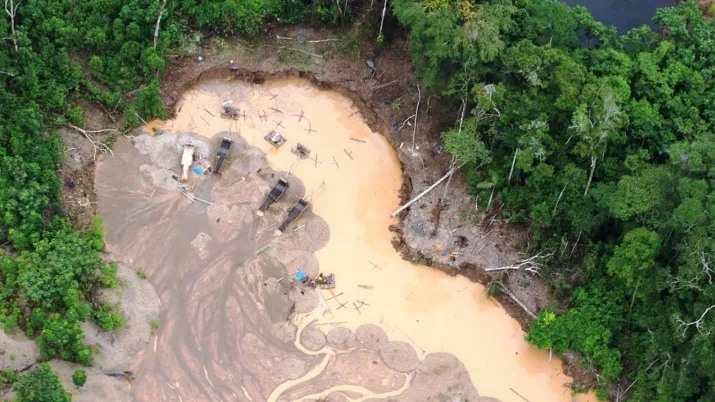
Rich in natural resources, Peru faces high levels of illegal gold mining and illicit crop cultivation, which have spread through informal and sometimes violent networks. Unlike other countries in the region that have faced these challenges for decades, Peru has only recently begun implementing responses to this complex situation.
The economic, human, and environmental consequences – including deforestation and accidental pollution – are significant. They undermine both individual and social development, as well as the integrity of protected areas and the country’s exceptional natural heritage and biodiversity, particularly in the Amazon region.
In response to these challenges, Expertise France provides direct support linked to the country’s criminal justice system through the El PAcCTO project, financed by the European Union. AFD also works with public institutions to develop multi-level responses aimed at reducing the impacts of insecurity.
Peru is also highly exposed to natural disaster risks, including earthquakes, floods, and droughts. AFD supports the Peruvian state through a contingency loan mechanism that enables the government to rapidly access substantial financial resources in the event of natural disasters, helping manage emergencies and initiate reconstruction efforts. At the same time, technical assistance implemented by Expertise France will begin in 2026 to strengthen the capacities of national institutions responsible for disaster prevention, crisis response, and civil protection.
In Peru, AFD has long supported the development of environmentally sustainable social housing. Since 2015, AFD has worked with Fondo MiVivienda (FMV) to finance housing with improved energy and water efficiency. The MiVivienda program accounts for up to 20% of all formally built housing in the country. Since AFD financing began in 2015, the program has supported the construction of more than 82,673 housing units. By 2024, the MiVivienda Verde program had already enabled 45,000 housing units to meet ambitious environmental standards. Supported by a strong partnership with the German development bank KfW, the project led by AFD has also generated a broader transformation across Peru’s construction sector.
In addition, through the Social Housing Initiative (SHI), AFD supports the Ministry of Housing, Construction and Sanitation (Ministerio de Vivienda, Construcción y Saneamiento – MVCS) in strengthening Peru’s public policies on social housing.
Working with the same ministry, AFD has also been active in the water and sanitation sector since 2018 to strengthen institutional capacities and support the development of a sustainable sectoral public policy framework. In practice, AFD contributes to the design and financing of infrastructure projects aimed at reducing deficits in access to drinking water and sanitation in the country’s major cities. With support from the European Union through the Euroclima+ program, AFD has also promoted projects based on nature-based solutions in two Andean cities. Working directly with local populations in both highland and lowland areas, these projects have implemented measures to address long-term water stress – including glacier retreat and droughts – exacerbated by climate change.
Since 2015, AFD has also supported Peru in preparing sustainable investments in the urban transport sector, particularly outside the capital region. By financing studies and providing French experts to the Ministry of Transport, AFD helps intermediate cities strengthen public services and prepare long-term transport projects. Together with Proparco, urban bus operators are also being encouraged to transition toward electric mobility.
Finally, AFD Group promotes the deployment of renewable energy. Proparco has contributed to financing more than 170 MW of renewable energy capacity through four projects across the country.
AFD Group invests in microfinance and green finance to strengthen the resilience of vulnerable populations to climate change. In Peru, micro and small enterprises generally lack financing solutions tailored to their specific needs.
To help address this gap, AFD has built long-term strategic partnerships with several municipal microfinance institutions in Peru – including Caja Huancayo and Caja Cusco – as well as with their national federation, FEPCMAC (Federación Peruana de Cajas Municipales de Ahorro y Crédito). The CMAC system (Cajas Municipales de Ahorro y Crédito) is a major player in inclusive and sustainable finance in Peru. AFD works with municipal savings banks through innovative financial instruments, including subordinated loans and local currency financing, while also mobilizing dedicated technical assistance. This support aims to integrate climate action and gender equality into the day-to-day practices of partner institutions.
With Caja Huancayo, AFD has provided a loan of around €18 million, combined with technical assistance, to support financing for micro, small, and medium-sized enterprises while encouraging the development of green financial products. With Caja Cusco, a €20 million loan primarily targets women’s entrepreneurship and access to finance in rural Andean areas. Finally, through its partnership with FEPCMAC, AFD is committed to supporting the strengthening of the entire national network of Cajas over the long term, including through the professionalization of the sector, stronger risk management practices, the development of sustainable financial products, and the promotion of innovation in green finance.
These partnerships reflect several of AFD’s cross-cutting priorities. The first is gender equality, with a strong commitment to improving women entrepreneurs’ access to financial services. The second is climate action, through the development of “green” loans designed to finance low-carbon projects and support climate adaptation for vulnerable populations. Finally, financial inclusion for micro, small, and medium-sized enterprises remains central to AFD’s work, with the goal of strengthening local productive sectors and contributing to more sustainable and equitable growth.
Across the three areas of AFD Group’s work in Peru, and as part of its Amazon strategy – of which Peru represents 13% – AFD Group supports several initiatives focused on environmental and biodiversity protection. This commitment is reflected notably through the regional Amazonia+ program implemented by Expertise France, as well as through three major projects:
- TerrAmaz, which supports Amazonian territories in developing policies to combat deforestation and transition toward low-carbon development,
- TerrIndígena (phase 2), which aims to strengthen the governance of Indigenous communities, protect their rights, and promote the sustainable management of natural resources,
- Cacao BioAndino (CBA2), which supports the sustainability, traceability, and market integration of organic cacao produced through equitable agroforestry systems.
Other projects supported by AFD focus on protecting environmental defenders through the PIDDA project, as well as community-based forest conservation and the development of sustainable economic alternatives through the ConBosque project.
In addition, AFD finances several projects aimed at promoting agroecological practices. By combining biodiversity conservation and restoration measures with the promotion of sustainable resource management, these initiatives provide particularly effective strategies for climate change adaptation. They also help address major inequalities such as food insecurity and rural poverty, supporting the prosperity of rural areas while contributing to the preservation of natural ecosystems.
Finally, in 2025 the French state launched the Amabio program, implemented by AFD Group, to support the preservation of the Amazon rainforest and biodiversity in Brazil, Colombia, Ecuador, and Peru. The program aims to help local communities protect ecosystems while improving living conditions through financing for projects that enable local populations to farm, raise livestock, or develop sustainable economic activities. By engaging actors from the financial sector and raising awareness of the region’s key challenges, the program contributes to preserving natural resources, combating deforestation, and promoting sustainable livelihoods for local populations.
In the field

News & Press Releases
Key figures
-
46 projects executed/in progress
-
868 million in loans committed
-
82,673 environmentally sustainable social housing units built