
Share the page
Togo
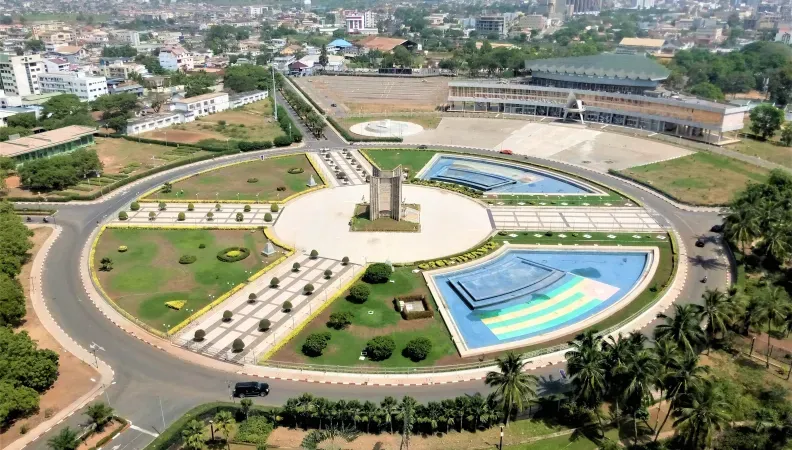
Present in Togo for over 60 years, Agence Française de Développement (AFD) supports the country in implementing public policies aimed at fostering sustainable growth, strengthening social cohesion, reducing poverty and inequalities, and protecting the environment.
Context
Togo is a West African country with a territory of 56,600 km². Its population, estimated at around 8 million, is predominantly young, with 40% under the age of 15, and largely rural, with 56% living in rural areas. Classified as a country at moderate risk of debt distress, Togo has maintained steady GDP growth of around 5% on average, despite a slowdown linked to COVID-19. The country relies heavily on its phosphate mining sector. The establishment of a free zone at the port of Lomé, the capital, has made it a dynamic and strategically important port hub for regional operators.
The government’s current development policy, to which AFD is fully aligned, is set out in the National Development Plan (PND) for 2017–2022, updated by the Government Roadmap 2025. It outlines six priority reforms and 36 projects to be implemented by 2025. The objective is to structurally transform the economy to foster strong growth, social inclusion, job creation, and the modernization of institutions, particularly through the development of digital technologies.
Togo is a priority country for French development cooperation. AFD has been present in Togo for more than 60 years, and the entire AFD Group (AFD, Proparco, Expertise France) is now active in the country. The Group’s active portfolio has grown, notably following the resumption of sovereign lending operations in 2017, after the signing of the IMF program (2017–2020), and the continued high level of EU delegated funding.
The Group focuses its activities on meeting the population’s basic needs through:
- developing basic infrastructure, including waste management, access to water and sanitation, and upgrading the energy network;
- advancing social sectors, including education and vocational training, health, and social protection;
- expanding rural transport infrastructure;
- supporting the productive sector, including national and regional development banks;
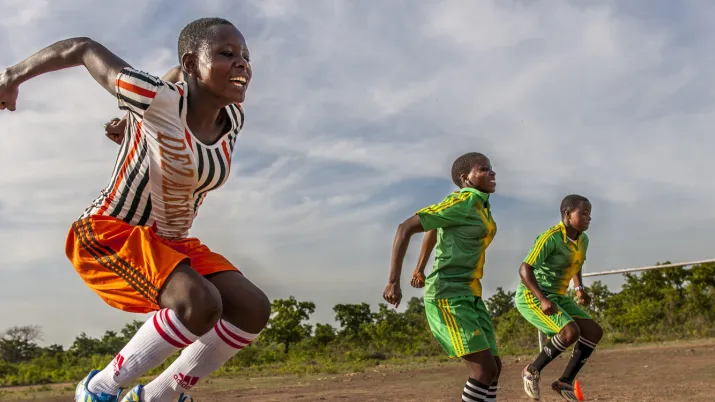
- working with civil society and non-governmental organizations in areas such as health, sport, agriculture, and human rights.
The AFD office in Togo reports to the Gulf of Guinea Regional Office.
Our approach
AFD and Togo: supporting the transition to a growth-driven economy
To improve living conditions and ensure access to water for all in Togo, Agence Française de Développement (AFD) supports water supply projects in both urban and rural areas. AFD also works with Greater Lomé to strengthen its capacity to manage solid waste and contributes to the resilience of the country’s coastal ecosystems and the communities that depend on them.
Since 2006, AFD has been assisting the Autonomous District of Greater Lomé to enhance its governance and performance in solid waste management. The Lomé Urban Environment Project (PEUL) aims to improve the structure of the waste management sector, secure the former landfill site, and optimize operations at the current disposal facility in Aképé.
As the main donor in Togo’s water sector, AFD co-finances, alongside the European Union, efforts to improve access to safe drinking water in Greater Lomé. This support includes the implementation of the national water sector master plan and the construction of water distribution infrastructure across the country. In the Kara and Savanes regions, AFD has been supporting a program since 2012 to improve hygiene and living conditions. The program includes the construction of boreholes and latrines in schools, health centers, and villages.
AFD also supports efforts to restore the coastal ecosystem and strengthen its resilience. In partnership with the World Bank, it is helping reduce coastal erosion and mitigate the risks associated with extreme weather events, while also enhancing the resilience of local populations.
AFD is involved in the development of the Greater Lomé sanitation master plan and the construction of rainwater drainage infrastructure. With EU-delegated funding, AFD financed stormwater drainage systems and the construction of the Fourth Lake, which now protects communities in the northeastern outskirts of Lomé from flooding.
To improve living conditions and expand access to water for all in Togo, AFD supports urban and rural water supply projects and works with Greater Lomé to improve the management of its solid waste sector. It also contributes to strengthening the resilience of coastal ecosystems and communities.
AFD has been supporting the Autonomous District of Greater Lomé since 2006 to improve governance and performance in solid waste management. The Lomé Urban Environment Project (PEUL) aims to strengthen the structuring of the waste sector, secure the former landfill site, and improve operations at the Aképé sanitary landfill.
As the leading donor in the water sector in Togo, AFD, in co-financing with the European Union, contributes to improving drinking water supply in Greater Lomé. It supports the implementation of the sector master plan and the development of water distribution infrastructure nationwide. In the Kara and Savanes regions, AFD has supported since 2012 a program to improve living conditions and hygiene through the construction of boreholes and latrines in schools, health centers, and villages.
AFD also contributes to restoring the proper functioning of coastal ecosystems. Alongside the World Bank, it supports efforts to strengthen the resilience of the coastline and its communities, with a view to reducing coastal erosion and risks linked to extreme climate events.
AFD supports the implementation of the Greater Lomé sanitation master plan and finances stormwater infrastructure. Through EU delegated funding, it has built drainage systems and a fourth retention lake, protecting residents in the northeastern outskirts of Lomé from flooding.
Togo remains highly dependent on its neighbors for energy and struggles to meet steadily growing domestic demand. To address this challenge, the country has been implementing an electrification strategy developed in 2018 with the support of the international community.
As the leading donor in the sector, AFD supports the rollout of the investment master plan of the Compagnie Énergie Électrique du Togo (CEET). Its interventions focus on improving both the quality and the scale of access to energy for households and economic activities. Two projects are currently underway, co-financed with the German development bank KfW and the European Union:
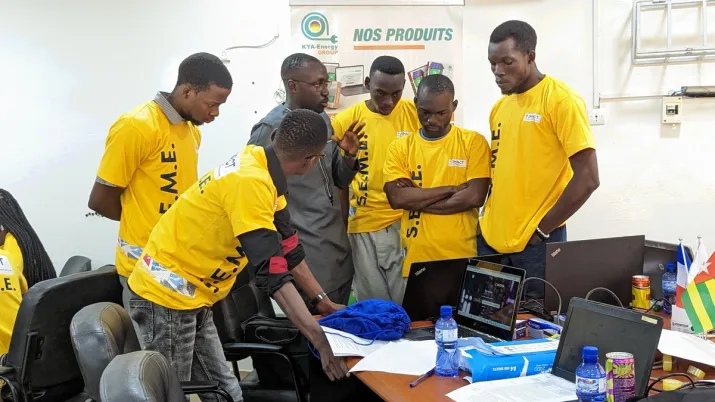
- Expansion of the electricity distribution network in Greater Lomé. This project will strengthen energy systems, reduce inequalities by developing peri-urban areas, expand renewable energy capacity, and increase access to reliable electricity for both households and economic activities, while supporting the financial recovery of CEET;
- A similar program outside Greater Lomé. This initiative aims to rehabilitate, extend, and densify the electricity network in 53 cities. It will provide more than 500,000 people with access to reliable and sustainable electricity.
AFD makes the development of human capital a priority of its work in Togo, enabling each learner to reach their full potential and helping the country build a skilled and qualified workforce.
- Supporting basic education: AFD contributes to the secondary school reform program, which aims to reduce regional disparities in access to education while improving teaching quality and promoting gender equality at the lower secondary level;
- Promoting workforce integration: AFD supports the integration of young graduates into the labor market by modernizing the country’s agricultural and rural training centers, as well as strengthening and ensuring the sustainability of the Industrial Training Center (CFMI).
The agriculture and rural development sector, currently experiencing strong growth, is hosting several major projects aimed at making agriculture a driver of economic growth and job creation. Two rural road development programs are underway, co-financed with the German development bank KfW:
- The first program contributes to reducing the isolation of rural agricultural areas and improving access for family farms to markets and basic public services. More than 600 km of cotton and cocoa feeder roads have been built and rehabilitated in the Savanes and Plateaux regions, improving the living conditions of over 500,000 farmers;
- The second phase continues support for the development and construction of rural infrastructure, as well as for strengthening maintenance capacity for infrastructure networks.
AFD also plans to support the rehabilitation of irrigated land and the development of 55 hillside reservoirs for agropastoral use, in partnership with KfW, as well as the promotion of women’s entrepreneurship in the agricultural sector.
AFD is a leading partner of the regional development banks operating in the country
With more than forty years of partnership, AFD is among the main donors supporting the West African Development Bank (BOAD). Since July 2020, it has supported BOAD in implementing a response strategy to address the impacts of COVID-19 and climate change for the benefit of countries in the WAEMU region.
Since July 2020, AFD has also supported the West African Development Bank Group (EBID) in strengthening subregional economic and financial integration, through the financing of economic recovery investments benefiting both member states and the private sector across the ECOWAS region.
Through its private sector arm, Proparco, AFD also promotes public-private partnerships. Proparco operates through a range of financial instruments, including credit lines, equity investments in holding companies or regional investments involving Togo, and the deployment of bank guarantees in support of SMEs.
Strengthened by the integration of Expertise France (EF), AFD Group now offers a more comprehensive and complementary range of financial and technical solutions. Expertise France primarily operates through funding from the European Union, AFD, the Ministry of the Economy, Finance and Industry, the Ministry for Europe and Foreign Affairs, and the French Ministry of Health and Solidarity.
In the field
Projects


News & Press Releases
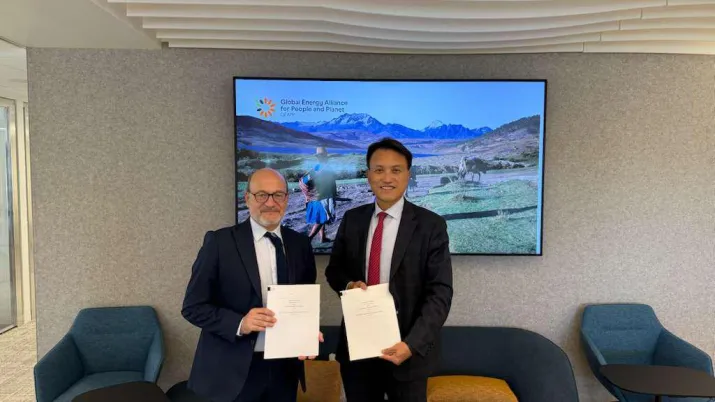
AFD and Global Energy Alliance sign agreement to develop energy storage in Togo
Published on October 17, 2025

Key figures
-
14 ongoing projects for a total amount of €310.8 million
-
€263 million committed over six years, including €34 million in EU delegated funds
-
53 cities benefiting from expanded and densified electricity networks