Share the page
Feminist foreign policy: What tangible progress has been made on the ground?
Published on
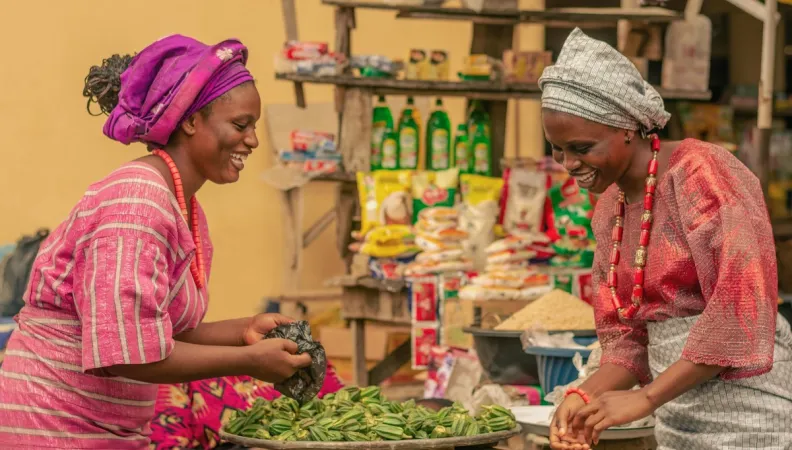
Across the world, women and girls are the primary victims of inequality, crises, and violence – but they are also powerful drivers of solutions. On the occasion of International Women’s Day on 8 March and the 70th session of the Commission on the Status of Women (CSW70), held from 9 to 19 March in New York, a closer look at several concrete actions supported by AFD Group.
Article written on 22 October 2025 and updated on 3 March 2026.
Just four years before the deadline for achieving the Sustainable Development Goals, the global situation is cause for alarm: according to UN Women, at the current rate of progress, it would take another 300 years to achieve full gender equality. Nonetheless, investing in gender equality is not only a moral imperative but also an effective economic strategy. For example, providing equal access to employment could increase global per capita income by 20%.
Physical security coupled with economic and political power
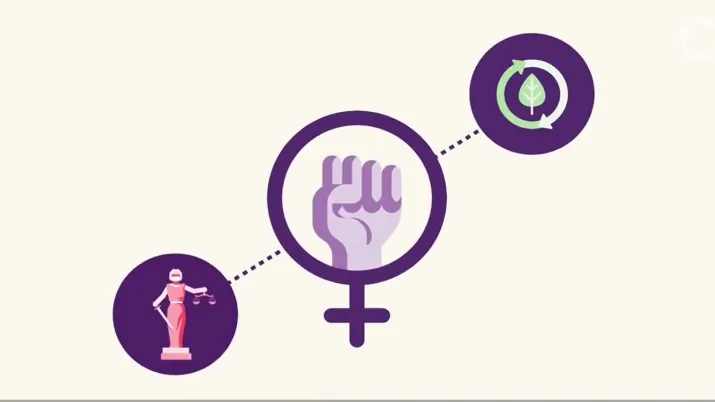
Adopted in 2019, France's Feminist Foreign Policy is focused on promoting and defending the rights of women and girls. AFD Group exemplifies this commitment through its projects on the ground, working in more than 160 countries to promote three types of autonomy for women:
- Physical autonomy, ensuring women's right to control over their own bodies and to live without fear of violence.
- Financial autonomy, giving women greater capacity to generate and manage their own income.
- Political autonomy, enabling women's full participation in shaping policy that affects their lives.
Concrete commitment
In 2025, 68.5% of AFD's investments around the world (of which 90% in loans) contributed to reducing gender inequality and empowering women and girls.
The Support Fund for Feminist Organizations (FSOF), co-managed with the Ministry for Europe and Foreign Affairs, is one of the flagship mechanisms of France's feminist foreign policy. Since 2020, it has supported over 1,400 organizations in 75 countries.
Whether AFD's projects involve access to healthcare, food security, training, entrepreneurship, or adaptation to climate change, they promote development that benefits all citizens equally.

Building the capacities of feminist organizations
The Feminists in Action initiative was the first program financed by the FSOF and has helped build the capacities of 200 organizations in 30 countries. These organizations defend the rights of all women to have agency over their own bodies, to have a fulfilling sexual life, to choose whether or not to have children, and to live in safety, free from violence and oppression. They also promote women's economic empowerment. The final evaluation of this project demonstrated its effectiveness in supporting small organizations in particular, which often struggle to access financing. A second phase is now in development to build on these promising results.
Financing female entrepreneurship
Since 2022, AFD has been supporting a program in Egypt to promote women's entrepreneurship, implemented in collaboration with the MSMEDA public agency.
This project has facilitated the launch or development of over 7,000 MSMEs (Micro, Small or Medium Enterprises) led by women, creating nearly 43,000 permanent jobs.
By stimulating both supply (access to financial support and loans) and demand, the program is bolstering women's economic empowerment over the long term.
Supporting women in conflict zones
Twenty-five years after the adoption of Resolution 1325 by the UN Security Council, France and AFD remain committed to lasting peace, through several flagship programs:
- The Minka Fund, an instrument for peace and resilience launched in 2017, which has financed more than 140 projects that defend the rights of women and children in crisis zones;
- Three FSOF projects, led by the Euromed Feminist Initiative, Equipop and the Fund for Congolese Women, which have strengthened the capacities of 75 local feminist organizations in 13 countries in Africa and the Middle East;
- The Women Lead in Emergencies project, implemented by Care France, which supports around 80 women's groups in Bangladesh, Ethiopia and Ukraine, to take a lead role in crisis prevention and response.
- Finally, over a five-year period, the Nengo project (meaning “dignity”) co-financed by AFD and the Pierre Fabre Foundation, has provided care to nearly 11,000 women in Bangui, Central African Republic, who are survivors of sexual violence, gender-based violence, or severe gynecological conditions. Implemented in partnership with the Panzi RDC Foundation, the Mukwege Foundation, and the Francophone Institute for Justice and Democracy, the project replicates the holistic care model developed by Dr. Mukwege in the Democratic Republic of the Congo.