Share the page
Health: how can we prevent another pandemic?
Published on
As funding for health systems is reduced, the risk of another pandemic is growing. With the One Health Summit bringing together Heads of State from around the world in Lyon, France, from 5 to 7 April, Pierre Crozier, coordinator and public health specialist in AFD's Health and Social Protection Division, discusses the resources the AFD Group has acquired to prevent and confront a new international health crisis.
Can we reduce the likelihood of another pandemic?
Pierre Crozier: International action remains more focused on responding to crises than on anticipating them. One of the aims of the One Health Summit is precisely to strengthen prevention by mobilizing development banks around a more integrated approach.
The One Health approach brings together human, animal, and ecosystem health to identify risks earlier and limit the conditions that lead to new pandemics. Despite strong political commitment, these three dimensions are still not systematically integrated. For example, it remains difficult to establish surveillance systems and laboratories capable of integrating and sharing multisectoral data in real time. There is still significant scope to strengthen the operational implementation of this multidisciplinary approach.
Today, beyond zoonotic diseases, which highlight the direct links between animal and human health, environmental health is also becoming increasingly important. Issues such as pollution, climate change, and biodiversity loss must be fully integrated into the One Health framework. This is one of the key challenges addressed by the summit.
Did investments during the COVID-19 period strengthen the capacities of AFD Group partner countries?
Pierre Crozier: Yes, clearly. AFD’s support, structured from April 2020 under the Santé en commun initiative, was a major response to the COVID-19 crisis, with nearly €1.8 billion committed in 2020 and 2021. It primarily targeted countries in Africa, as well as Southeast Asia, notably through the ECOMORE network of the Institut Pasteur, and ocean regions where France has territories, including the Indian, Pacific, and Atlantic Oceans.
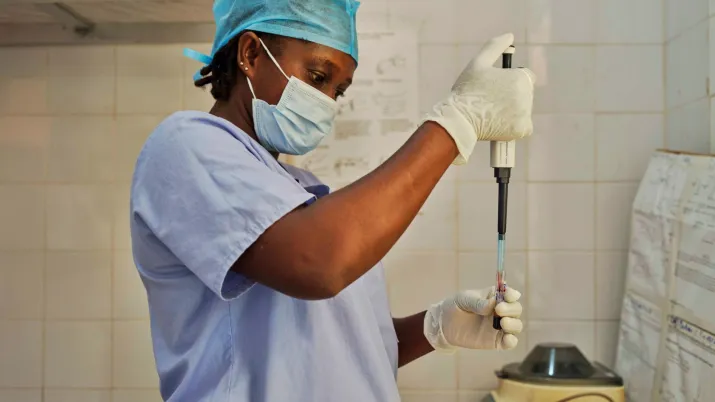
This support helped rapidly strengthen laboratory diagnostic capacity and epidemiological surveillance, particularly for genomic sequencing of COVID-19 variants. This was a key factor in reinforcing the health sovereignty of these countries.
In Central Africa, the Democratic Republic of the Congo relied on external laboratories to identify circulating SARS-CoV-2 variants. Through the Afroscreen project funded by AFD, the National Institute for Biomedical Research in the Democratic Republic of the Congo, supported by the French National Research Institute for Sustainable Development, was able to carry out sequencing independently from 2021. This information has major implications, including economic ones, as authorities may decide on lockdowns or restrict travel and trade depending on the variant identified. Within 6-10 months, these countries acquired this capacity, marking a significant step forward.
However, results have been more limited on the prevention side. This requires, in particular, the ability to rapidly mobilize vaccine stocks against the pathogen responsible for a pandemic. Funding has focused more on preparedness and strengthening response capacities.
English subtitles available
Is AFD Group now better equipped to respond rapidly to a health crisis?
Pierre Crozier: Provided that financing is available, AFD is now better equipped. The COVID-19 pandemic led to the introduction of a full set of procedures that enabled funding to be mobilized and deployed more quickly. These mechanisms can be reactivated in an emergency. This includes procurement procedures adapted to crisis contexts, which remain clearly defined and operational.
In terms of organization and mobilization, everything will again depend on the financial and human resources available. During the pandemic, teams were strengthened and additional resources were mobilized. AFD can now act very quickly, for example by mobilizing French operators that are already well established and prepared to support epidemic response in partner countries. This is made possible by long-standing partnerships with AFD, including the Institut Pasteur, the French National Research Institute for Sustainable Development, ANRS Emerging Infectious Diseases, Fondation Mérieux, and Santé publique France.
Depending on available resources, additional funding could be mobilized for existing projects, particularly those supporting laboratories and national or regional public health institutions such as Africa CDC, CARPHA in the Caribbean, and the Pacific Public Health Surveillance Network. This makes it possible to support partner countries and regional health organizations more rapidly in implementing their response.
More reading
“One Health”: Responding to Pandemics with a Holistic Approach to Human, Animal and Environmental Health
Published on July 3, 2023