
Share the page
One Health: a summit to prevent health risks
Published on
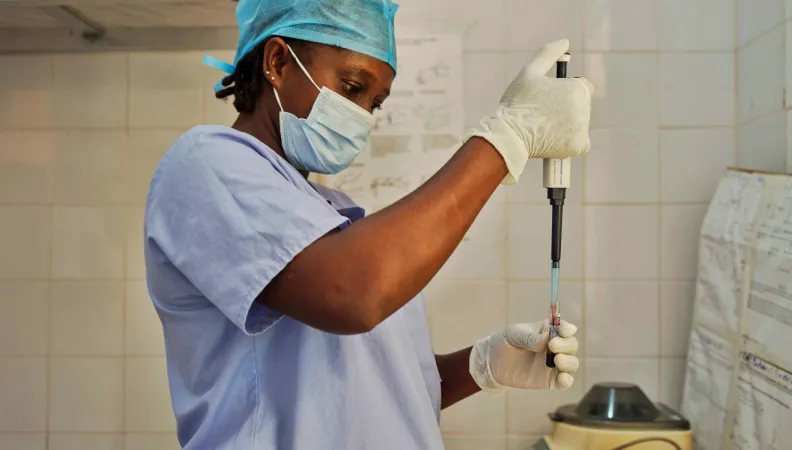
The One Health Summit will take place in Lyon, France, on 7 April 2026. By linking human, animal, and environmental health, this approach is proving critical in a context of heightened pandemic risk. Agnès Soucat, Head of the Health and Social Protection Division at Agence Française de Développement (AFD), explains why it is a strategic priority for AFD.
World Health Day 2026 comes at a time of growing health, climate, and environmental crises, alongside major reforms to global health governance. The One Health Summit will bring together heads of state and government for the first time to advance this agenda at both political and operational levels.
“The COVID-19 crisis, as well as Ebola and H5N1 outbreaks, show that pandemics must be addressed across their multiple dimensions, whether human, animal, or environmental,” says Agnès Soucat, who is leading AFD teams at the summit. “We need to strengthen international and interdisciplinary dialogue by promoting concrete cooperation in research, surveillance, and prevention.”
An approach tailored to today’s challenges
The One Health Summit promotes a shared and integrated approach within global health governance. It aims to mobilize public and private stakeholders, scientists, and civil society to support concrete solutions, including strengthening health systems, improving pandemic preparedness, ensuring food security, and protecting ecosystems.
“In a context deeply shaped by climate change, biodiversity loss, pollution, pandemic threats, and increasing budget constraints, investing in integrated and preventive One Health approaches is both a strategic necessity and a sound economic choice,” Soucat adds.
The COVID-19 pandemic demonstrated that every euro invested in preparedness and prevention can generate more than €10 in economic benefits for countries, according to a report submitted to the G20 in 2022. “Investing through a One Health lens therefore delivers multiple benefits, spanning health, environmental, and economic outcomes,” she says.
AFD mobilizing investment
Through the Finance in Common system, AFD aims to mobilize investment from other public development banks. The objective is to strengthen their capacity to support countries in implementing national strategies based on this multifactorial approach.
“Our strength lies in our ability to finance integrated, sustainable projects that deliver multiple co-benefits, particularly for the climate. In 2024, more than 70% of our health projects explicitly incorporated this dimension,” Soucat notes.
She adds: “We believe in promoting systems that work for health. This is how One Health can address the challenges of planetary health. We support stronger health systems, increased public and private investment in global public goods, and enhanced global and regional cooperation.”
One Health in action on the ground
In the Democratic Republic of the Congo, AFD supports the National Institute for Biomedical Research in strengthening disease surveillance and tackling antimicrobial resistance. In Guinea, Tunisia, and Morocco, pilot projects focus on monitoring pathogens in wastewater.
French research organizations are also mobilized, including the French National Research Institute for Sustainable Development (IRD), Institut Pasteur, CIRAD, and Fondation Mérieux, with a focus on strengthening local institutions.
At the regional level, AFD supports initiatives such as the AFROSCREEN network, which monitors emerging pathogens across 13 African countries. In the Indo-Pacific region, AFD supports tools to predict epidemic risks by integrating environmental data and zoonotic disease prevention.
“These challenges also directly affect people in France. Viruses do not respect borders, so collective action and international cooperation are essential,” Soucat concludes.