Share the page
Mexico: integrating gender equality into climate action
Published on
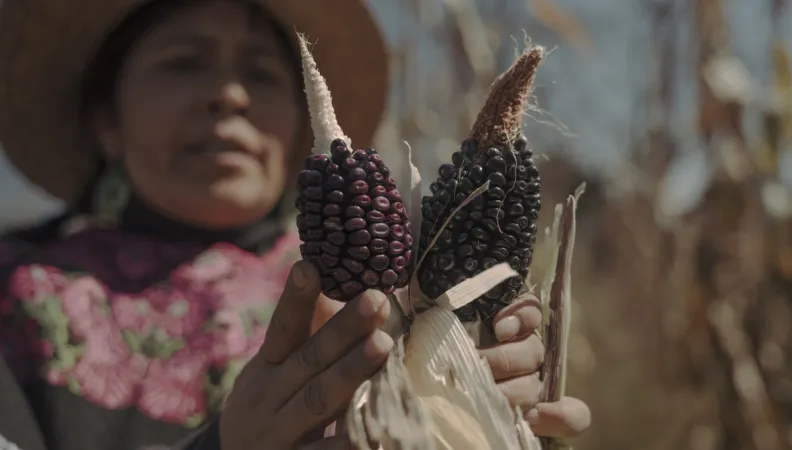
From agriculture and energy jobs to financial services, Mexico has developed public policies that link the ecological transition with women’s rights, aiming to reduce inequalities and strengthen women’s voices.
The impacts of climate change typically affect the most vulnerable populations first. Since 2022, Mexico has implemented a National Action Plan on Gender and Climate Change that incorporates gender equality and social justice considerations.
Present in Mexico for more than 16 years, AFD supports public institutions in this approach that combines action on climate change with gender equality: “one perspective cannot exist without the other,” explains Andrea Morales, AFD Gender and Sustainable Development Advisor for Latin America.
How climate impacts deepen gender inequalities
In Latin America, women own only around 30% of agricultural land, and only 10% of women farmers have access to financing. These inequalities limit their capacity to cope with droughts, hurricanes, or crop losses.
In addition, care-related activities involving children, older people, and domestic tasks still fall largely on women. This burden reduces their access to employment, income, and decision-making spaces.
According to analyses by Gender Climate Tracker, integrating gender considerations into climate policies improves access to resources and the effectiveness of adaptation strategies. However, in Mexico, implementing climate policies that incorporate gender equality, such as the Nationally Determined Contributions (NDCs), still faces several obstacles: limited data, institutional resistance, and insufficient budgets.
Cooperating for a just and equitable transition
For Andrea Morales, “identifying existing inequalities is a first step. The next is to design public policies that benefit the entire population.”
After Hurricane Otis, in the state of Guerrero, work was carried out with the Ministry of Finance and Public Credit (SHCP). The objective was to strengthen women’s financial capacity, as they are often active in the informal sector and particularly exposed to crises.
AFD also supports the Ministry of Energy (SENER) in promoting a just energy transition and better access for women to renewable energy jobs. A long-standing partnership of more than 10 years with the Federal Electricity Commission (CFE) also aims to support the development of internal policies in favor of gender equality and to reduce occupational stereotypes.
In 2021, AFD launched, with FIRA, Mexico’s main public bank for the agricultural sector, a technical assistance program to facilitate women’s access to financial services. More than 10,000 women benefited from the institution’s first social bond issuance dedicated to gender equality.
Women at the center of decision-making
Women’s participation in climate policies remains a central issue. In November 2025, a meeting in Mexico City brought together women defenders of territories from different regions of the country. This dialogue, organized with the Ministry of Environment and Natural Resources (SEMARNAT) and the United Nations Development Programme (UNDP), helped connect local experiences with national climate and gender equality policies.
The participants shared initiatives carried out in their territories to protect natural resources, adapt agricultural practices, and strengthen communities’ capacity to cope with climate change. These testimonies echo the conclusions of the UNDP report "Voces de mujeres desde los territorios" (Women’s Voices from the Territories.)
In 2026, the bicentennial of diplomatic relations between France and Mexico offers an opportunity to consolidate this shared agenda between the two countries and strengthen AFD’s role as a platform for dialogue between civil society and the state.
See also
Feminist foreign policy: What tangible progress has been made on the ground?
Published on March 2, 2026