Share the page

BALADNA – Economic recovery in conflict-affected areas in Lebanon
Project
This project is carried out with the support of the European Union


-
Project start date
-
Status
Ongoing
-
Project end date
-
-
Project duration
-
4 years
-
AFD financing amount
-
€ 2 000 000
-
Global financing amount
-
€ 32 150 000
-
Country and region
-
Location
-
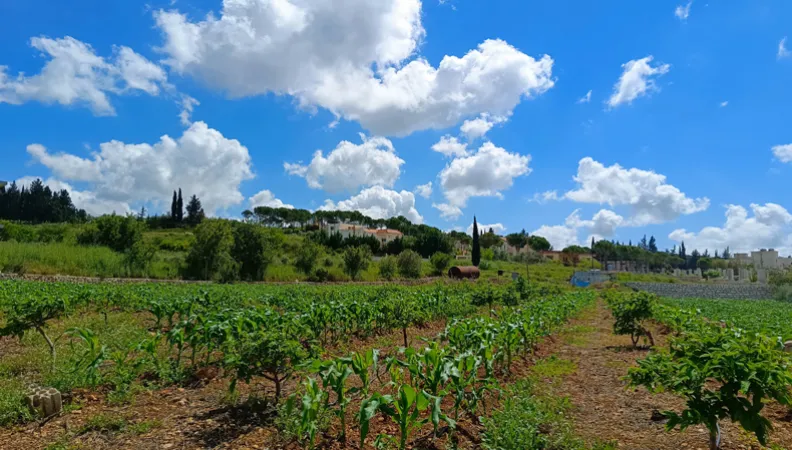
Conflict-affected areas in South Lebanon and The Bekaa Valley
-
Type of financing
-
Beneficiaries
-
Lebanese institutions / Vulnerable populations
-
Type of beneficiary
-
State
This project is carried out with the support of the European Union
The content of this project information sheet falls under the sole responsibility of the AFD and does not necessarily reflect the opinions of the European Union.
Funded by the European Union, the Danish Ministry of Foreign Affairs, and AFD, this EUR 32 million grant supports the economic recovery of Southern Lebanon and the Bekaa Valley. It aims to strengthen public institutions, revive sustainable agriculture and local economies, and enhance employment opportunities for vulnerable populations.
Contexte
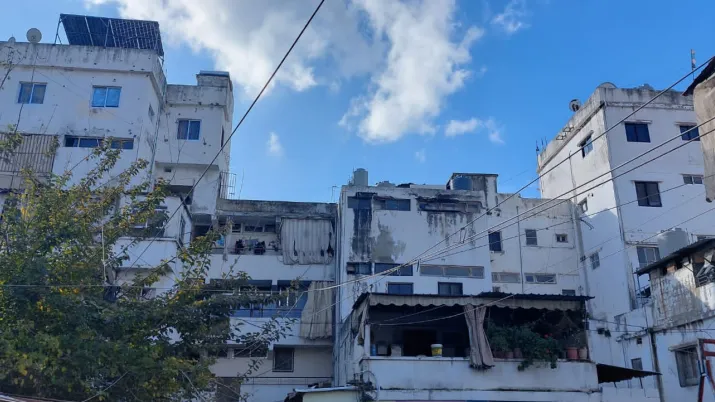
The escalation of hostilities across Lebanon in 2024 followed by a renewed phase of war in 2026 came on top of long-standing institutional and governance weaknesses, compounded by years of economic and social crisis. State capacity, service delivery, and coordination between national and local institutions remain constrained, limiting the ability to plan and implement recovery, particularly in conflict-affected areas of South Lebanon and the Bekaa, where institutional presence remains uneven. The agricultural sector, a key pillar of rural livelihoods, has suffered major damage to land, irrigation systems, ecosystems, and productive assets, further aggravated by environmental challenges and climate-related pressures such as drought and resource depletion. Local economies have also been heavily affected, with widespread business losses and declining employment opportunities, particularly for youth, women, and vulnerable groups.
The Baladna (our country in Arabic) project aligns with national reconstruction frameworks, emphasizing both stronger institutional governance and the revitalization of productive sectors – agriculture, MSMEs, and employment – as mutually reinforcing drivers of inclusive economic recovery. It also aligns with the Minka Middle East initiative, contributing to climate resilience, social cohesion, gender, economy, and governance.
This project has been finalized under conditions of ongoing instability and heightened tensions, which in 2026 have once again driven mass displacement and acute humanitarian needs, requiring a flexible, conflict-sensitive approach that prioritizes community safety.
Description
The overall objective is to contribute to inclusive, sustainable, and climate-resilient recovery in conflict-affected areas of Lebanon. Through a dual approach, it strengthens local and national governance structures, while improving livelihoods, restoring farmlands and revitalizing local economies. The project is guided by a state-led, citizen-centered approach that strengthens state sovereignty and aligns recovery with local needs.
The specific objectives are:
Strengthen governance capacities at local and national levels to enable effective, equitable and inclusive recovery, ensuring that women and men have equal agency, access to and influence on recovery decision making and resource management.
Support climate-smart agricultural and eco-system restoration practices to contribute to improve gender-equitable access to livelihood and environmental conservation.
Support vulnerable populations (including women and displacement-affected population) to improve employability and entrepreneurship opportunities.
Impacts
Expected impacts include strengthening of local and national governance structures, support for agricultural value chains, and revitalization of the local economy. The project will have positive impacts on biodiversity and contributes to the dimensions of climate resilience, social cohesion, gender, economy, and governance. The overall goal is to restore trust between institutions and the population and ensure basic services in the targeted areas.
Sustainable Development Goals
Peace, Justice and Strong Institutions
Goal 16 focuses on three closely related issues: rule of law, quality of institutions, and peace.
For France, key concerns include access to justice, insecurity and crime, and restoring public trust in institutions.