Share the page


Improve the safety and environmental footprint of textile factories
Project
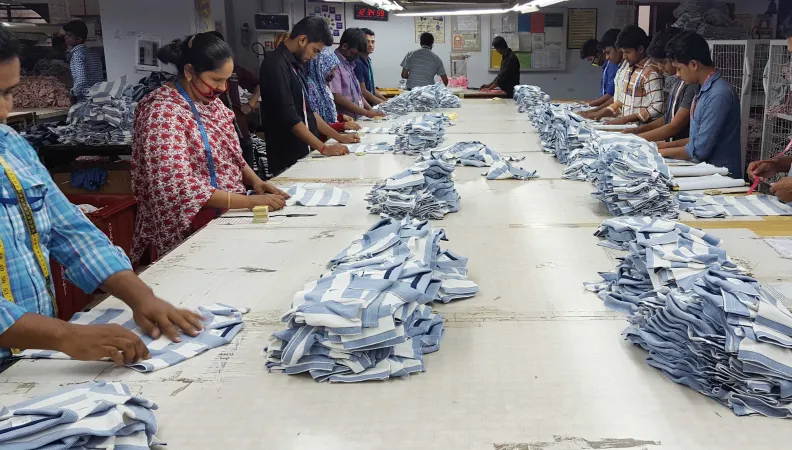

-
Project start date
-
Status
Ongoing
-
Project end date
-
-
Project duration
-
20 years
-
AFD financing amount
-
€ 50 000 000
-
Country and region
-
Location
-
Dhaka
-
Type of financing
-
Partners
-
European Union
-
Beneficiaries
-
Bangladesh Bank

Following the Rana Plaza incident in 2013, AFD is helping to upgrade the Bangladeshi textile sector’s security standards, as well as to improve working conditions and the environmental impact of factories.
Context
Bangladesh is the second largest exporter of ready-made garment (RMG) in the world today. Textile manufacturing accounts for 80% of the country's exports and the sector employs 4.5 million workers, mainly women.
The collapse of the Rana Plaza building, resulting in the deaths of more than a thousand people, highlighted the working conditions in Bangladeshi factories where major Western apparel brands are outsourcing their production.
To maintain the competitiveness of its economy, Bangladesh needs to upgrade its safety standards and also anticipate its customers’ environmental requirements.
Description
A 50 million Euro line of credit will enable exporting factories to finance the work necessary to bring buildings up to safety standards (electrical and fire safety, structural soundness). Investments to improve working conditions, limit pollution and improve the environmental footprint of RMG factories, including better effluent, water and energy management, will also be eligible.
As an incentive, the European Union and KfW are financing an investment bonus scheme, paid at the works completion, which will soften the loan conditions for factories.
Finally, a GIZ technical assistance program is aimed at supporting the factories in their investment plan, as well as in helping commercial banks to develop a service offer adapted to funding these investments and in strengthening their capacities for this purpose.
Impacts
- Improved safety conditions and environmental performance of 150 factories
- Improvement of the welfare of women workers at the work site
- Continued competitiveness of the Bangladeshi textile sector in export markets
Sustainable Development Goals
Decent Work and Economic Growth
Goal 8 acknowledges the importance of sustained, inclusive, and sustainable economic growth in providing everyone with decent and quality employment.
It aims to eliminate exploitative work and ensure protections for all workers. It promotes access to training and employment opportunities for younger generations, with a focus on developing skills for “green jobs.”
SDG 8 also calls for enhanced international cooperation to support growth and decent work in developing countries, through increased aid for trade, development-focused policies, and a global strategy for youth employment.