Share the page


Technical cooperation between the Robben Island Museum and Paris Musées
Project

-
Project start date
-
Status
Ongoing
-
Project end date
-
-
Project duration
-
3 years
-
AFD financing amount
-
€ 440 975
-
Country and region
-
Location
-
Robben Island Museum, Cape Town
-
Type of financing
-
Beneficiaries
-
Robben Island Museum


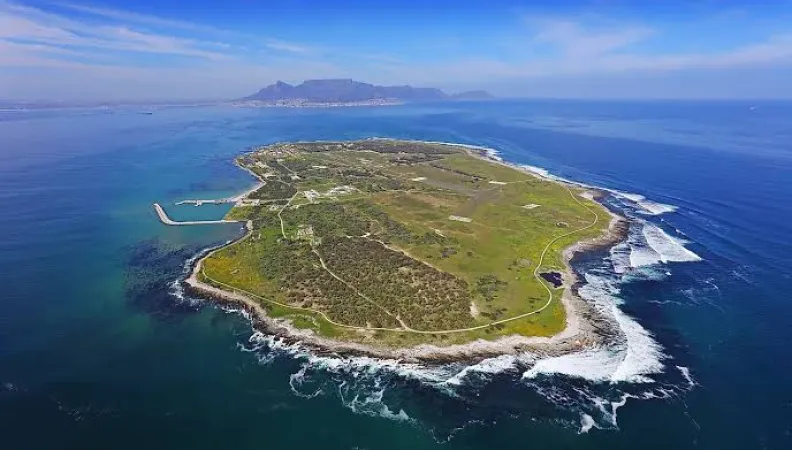
This project aims to modernise the museography and strengthen the tourist appeal of the Robben Island Museum, an emblematic site of South African memory, thanks to the expertise of Paris Musées in promotion, mediation and cultural management.
Context
The Robben Island Museum (RIM) is a public institution located in Cape Town, which manages the national heritage site of Robben Island, the historic site of the "Maximum Security Prison" where the vast majority of political prisoners under the apartheid regime served prison sentences. This site is of great political and symbolic importance for South Africa but also for Africa and the world. This emblematic place of memory of the struggle against apartheid welcomes more than a million visitors per year and has been classified as a UNESCO World Heritage Site since 1999. In a context of a rising Cultural and Creative Industries (CCI) sector (3% of South African GDP) and cultural tourism in the region, Robben Island, beyond its memorial scope, is a major player in cultural tourism in Cape Town and contributes to local economic development. The Robben Island Museum is also one of the pillars of national identity and social cohesion in South Africa, especially for the inhabitants of the city of Cape Town.
Description
The project will aim to strengthen the skills of the RIM teams through training, workshops and exchanges with Paris Musées, ensuring those skills are sustainably embedded within museum staff. The project will focus on three areas:
- The enhancement of historical archives – partly digitized as part of a previous technical cooperation project between RIM and the National Audiovisual Institute financed by AFD;
- The design of a cultural offer adapted to different audiences;
- The development of new sources of own revenue (pricing, patronage, privatisation).
Impacts
The departments involved within RIM (Archives and Exhibitions, Marketing, Operations, Finance) will benefit from professional and personalised training in the CCI sector. At the end of the project, RIM will be able to offer a modernised museographic offer adapted to the visit on the island as well as in the Cape Town marina for several audiences (South African visitors and international tourists). Finally, visitors to Cape Town and its inhabitants will benefit from improved access to RIM's cultural facilities and the enhancement of its unique heritage.
Sustainable Development Goals
Decent Work and Economic Growth
Goal 8 acknowledges the importance of sustained, inclusive, and sustainable economic growth in providing everyone with decent and quality employment.
It aims to eliminate exploitative work and ensure protections for all workers. It promotes access to training and employment opportunities for younger generations, with a focus on developing skills for “green jobs.”
SDG 8 also calls for enhanced international cooperation to support growth and decent work in developing countries, through increased aid for trade, development-focused policies, and a global strategy for youth employment.
Industry, Innovation and Infrastructure
Goal 9 promotes the resilient and sustainable development of infrastructure, industrialization, and innovation. These sectors must be drivers for poverty reduction and improved quality of life worldwide – while limiting environmental impact.
SDG 9 calls for financial, technological, and technical support to industries, and for promoting innovation and scientific research. Achieving this goal requires strengthened international cooperation in R&D, and effective technology transfer to developing countries.
Reduced Inequalities
Goal 10 calls on countries to adapt policies and legislation to increase the income share of the poorest 40% and to reduce wage inequalities based on gender, age, disability, social or ethnic origin, or religion. This includes promoting greater representation of developing countries in global decision-making.