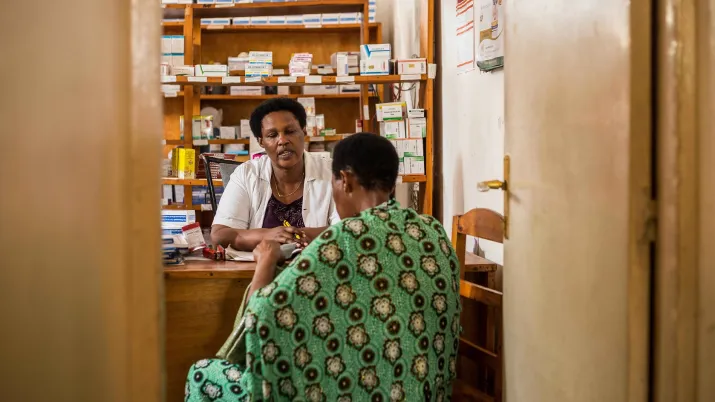
 This project developed a simple method to improve the monitoring and evaluation of initiatives that seek to inform public action through research. This method enables a better understanding of the actual effects of these approaches on public decision-making, strengthens their governance, and promotes a more concrete use of scientific findings in the development of public policies.
Context
Public decision-makers are increasingly encouraged to rely on research-based evidence to design effective policies. However, in practice, scientific findings struggle to circulate beyond the academic world: they often arrive too late, are written in language that is not easily accessible outside academic circles, or are poorly suited to the concrete challenges faced by public actors.
At the same time, projects that foster dialogue between researchers and policymakers are complex to implement and evaluate: they must constantly adapt to shifting political contexts and produce diffuse or indirect effects that are not easily measured. Traditional monitoring and evaluation tools, centred on quantitative indicators, rigid frameworks and logical matrices, fail to capture these dynamics effectively. They are primarily used for accountability to donors, rather than for collective learning or project adaptation.
AFD supports numerous research projects aimed at informing public action. Observing this gap between researchers and policymakers, it sought to develop a monitoring and evaluation method that is more useful, more flexible, and better suited to these projects, in order to improve the measurement of their real impact and strengthen the influence of research on public policy.
Objectives
The project consisted of designing a monitoring and evaluation method specifically tailored to initiatives that connect research and public action. It addresses a twofold challenge: tracking the real effects of these projects over time, and helping stakeholders in managing them more effectively in uncertain and shifting contexts.
Rather than limiting itself to a purely accounting-based quantification of activities or formal outputs (number of reports, workshops or publications), the method focuses above all on the changes the project has helped set in motion: have trust-based relationships been built? Are the knowledge outputs being mobilised? Are practices and modes of collaboration evolving? Underlying this is a threefold objective: to better understand what truly works by identifying relevant signals of change; to produce useful information for adjusting strategies during project implementation (identifying obstacles, reinforcing effective actions); and to improve the formulation of public policy recommendations.
This approach contributes to enhancing the quality of public decisions by promoting a more concrete, more practical, consistent, and targeted use of scientific knowledge.
Results
The project resulted in a research paper, a technical report, and a monitoring and evaluation toolkit designed for development practitioners.
This method was tested on real-world research projects and co-developed with the various types of stakeholders involved, in order to capture their respective needs and constraints: researchers and public institutions, but also local organisations, civil society actors, and donors.
The approach is intentionally light and adaptable, allowing it to fit the time and resource constraints of partners, particularly in countries of the Global South. Local stakeholders are fully involved in data collection, interpretation, and the adjustment of actions. In practice, the method combines collective workshops, simple data collection tools (interviews, testimonials, observations), and moments of shared analysis. It draws in particular on the "theory of change", a tool that enables a team to clarify the expected outcomes of a project, the intermediate steps required, and the conditions for success.
Resources

Application Cases
The monitoring and evaluation method was tested across around ten projects in North Africa, Madagascar and the Sahel region, before being deployed across other geographies. It led to the following results:
- Exchanges between researchers, policymakers and local partners enabled the dissemination of findings and the sharing of lessons learned.
- Institutional and academic partners strengthened their capacities in monitoring and evaluation, policy dialogue facilitation, and project impact analysis.
- In several cases, the approach helped adjust strategies during implementation and improve the formulation of recommendations for policymakers. In doing so, it contributed to a more structured, better informed and more sustainable dialogue between research and public action.
FOCUS ON… COMMONS FOR CARE IN COLOMBIA
Applied in January 2025 as part of the Public–Commons Partnerships in Health in Colombia project, the method helped recalibrate the project’s level of ambition by aligning initially mismatched objectives and activities, while also informing its ongoing management during implementation.
Next steps
This approach advances thinking on the use of research in public action by demonstrating that effective monitoring and evaluation can serve as a strategic management tool, rather than merely a control mechanism. It highlights the need to strengthen local capacities in monitoring and evaluation, as well as skills in facilitating dialogue between science and public decision-making.
However, some questions remain regarding the sustainability of the observed effects and the ability to scale up the approach. Further experimentation is underway to consolidate the methodology and adapt it to other contexts. The toolkit will also soon be deployed in the context of macroeconomic modelling projects, illustrating the approach’s strong thematic adaptability—one of its key added values.
Contacts
- Stéphanie Leyronas
- Camille Tchounikine
- Annabelle Moreau Santos
- Sophie Salomon
Discover other research projects



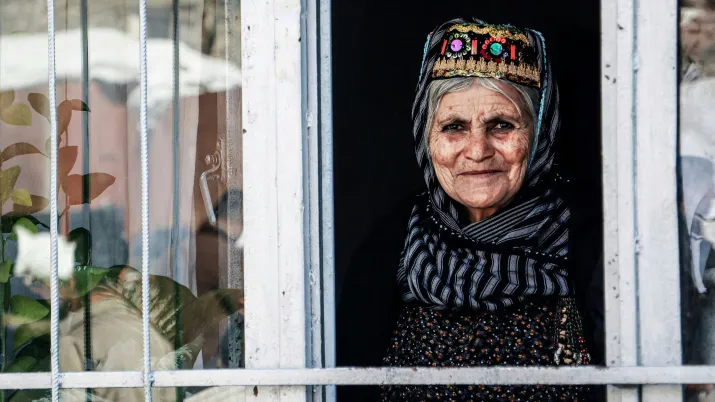
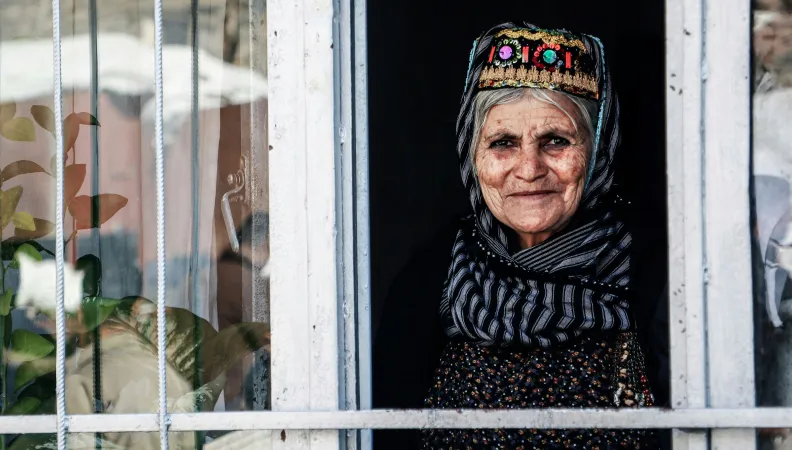 © Public domain Focusing on three countries in the Western Balkans (Albania, Bosnia and Herzegovina, North Macedonia), this multidisciplinary research project will explore the challenges of demographic aging and how they impact socio-economic and climatic contexts, as well as current and future public policies in each country studied.
Context
According to the United Nations, aging is an “unprecedented event in human history.” The year 2020 marks a historic turning point: the curves showing the proportion of people aged 65 and over on the one hand, and people under the age of five on the other, are crossing and heading in sharply divergent directions.
These changes, already underway in Europe and the Balkans, herald major health, social, and economic challenges in the coming decades, as well as a demographic decline that is already underway. To address these challenges, it will be necessary to confront inevitable changes in lifestyles, increase investment in social protection policies, reform institutions, and encourage technological innovation. Without specific public policy actions, the decline in the working-age population will make it more difficult to support retirees, age-related health problems will worsen, and the quality of life of older people will be reduced.
Objectives
This research project aims to identify, describe, and clearly analyze the links between demographic dynamics and socio-economic issues in three countries in the Western Balkans.
To this end, it focuses on population dynamics (mortality/morbidity, aging, migration) and patterns of (de)population and land use planning (territorial identities, urbanization/rural areas, particularly in relation to natural environments). It will also analyze their impacts and interactions with current and future socio-economic issues in each of the three countries concerned (women's access to the labor market, migrant remittances, changes in social protection systems, etc.).
The aim is to clearly identify, describe, and analyze these links, both to inform academic research and to inform public policy choices in the three countries concerned. AFD will also be able to use these results in its discussions with public authorities in Albania, Bosnia and Herzegovina, and North Macedonia.
Method
The project is led by a scientific partner, the Center for Research and Policy Making (North Macedonia), who assembled a multidisciplinary team of experts in demography, migration, economics and financial policy, employment and labor mobility, gender equality, the environment, and social protection policies (health and retirement).
Expected results
This multidisciplinary project (sociology, political science, economics) is structured around three components:
- Production of an academic literature review on the challenges of aging in the Balkans region (advances and scientific knowledge on the socio-economic, territorial, and migratory challenges related to aging at the regional level);
- Three country studies;
- Publications and promotional activities to disseminate knowledge on the one hand and fuel dialogue between AFD and its public partners on the other.
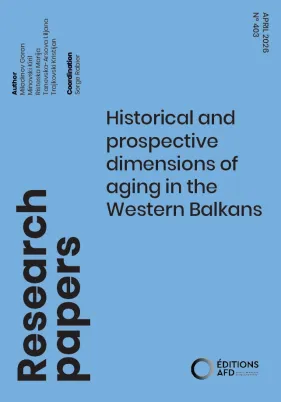
Read the literature review: Historical and prospective dimensions of aging in the Western Balkans (April 2026)
Want to stay updated on AFD’s latest research?

Contact
-
Serge RABIER
Research Officer, Social Demographer