
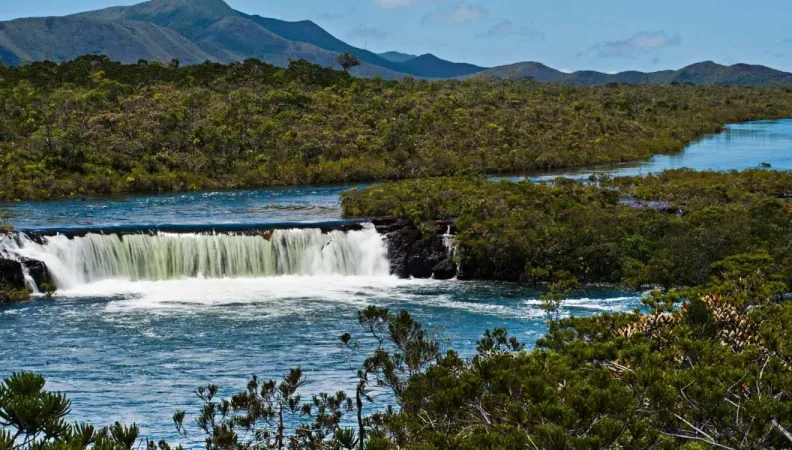
 Measuring the environmental impact of economic activities can be a complicated business. A new pilot project, assesses New Caledonia's environmental sustainability, based on the Environmental Sustainability Gap methodology. ESGAP measures the gap between the current state and a sustainable state, taking into account a dozen factors. The final report is out now.
Context
New Caledonia is a land of contradicting forces. It is a lush biodiversity hotspot, containing a high level of endemic wildlife. The local economy on the other hand, particularly the mining and metallurgy industries, has an impact on the environment. The stakeholders responsible for public development and environmental protection policies need to monitor the shifting state of the environment using the most effective tools available.
The Environmental Sustainability Gap methodology, or ESGAP uses a scoreboard and a number of detailed criteria to monitor environmental conditions. It provides information on changes in the state of different components of the environment, emphasizing the gaps that exist between these changes and the objectives of maintaining or achieving "good environmental status" for each component, or between how things are and how they should be. ESGAP in its current form was conceptually developed taking the European Union as a case study. This assessment was carried out by the Ecological Accounting Chair, in partnership with WWF France's “Conserving Natural Capital” program.
Goal
This pilot project implementing the ESGAP scoreboard in New Caledonia aims to assess the operationality of this tool, in territories where environmental data are lacking and fragmented. If effective, the project can be enriched and implemented in New Caledonia, in order to inform public decision-making.
The project is based on an initial study carried out Europe-wide, which resulted in the creation of a methodology and scoreboard with the SES (Strong Environmental Sustainability) and SESP (Strong Environmental Sustainability Progress) indicators.
Method
The methodology used in this project was based on the work of Paul Ekins’ team at the Institute for Sustainable Resources, University College London. The ESGAP method assesses the sustainable use of natural resources, critical pollution loads for ecosystems, biodiversity, and human health and well-being, and identifies the territory's overall level of sustainability with regard to these four components. It was adapted for New Caledonia, its institutional constraints and regional ecological specificities.
As part of a field study, some 30 stakeholders responsible for environmental management (including decision-makers, managers, research centers, NGOs and the private sector) were consulted in order to:
- Provide information on the four environmental components and adjust them to the local context
- Define the environmental objectives to be achieved or maintained, as well as the associated indicators in the New Caledonian context
- Collect the data required to build the indicators
Statistical analysis was then performed to develop the ESGAP composite indicators from the databases provided.
Results
The project made it possible to calculate New Caledonia's environmental sustainability score: the aggregate sustainability score was 43%, which represents a gap of 57% compared to an ideal of 100% sustainability.
Despite the scattered, fragmented data, the analysis reveals the critical load of pollution on ecosystems function in New Caledonia. Greenhouse gas emissions, burnt areas and bathing water quality have an increasingly heavy toll.
On the other hand, biodiversity and human health measures are in a relatively sustainable state. The ESGAP analysis shows, for example, that fish resources and outdoor air quality have reached their sustainability objectives and can now be maintained.
Implementing ESGAP also reveals the lack of data on the state of the environment in developing countries and territories. Coordinated efforts on international frameworks could improve the quality and availability of environmental data. Consultation around ESGAP has also revealed a lack of regulatory frameworks, as well as of quantifiable environmental and scientific objectives.
Nevertheless, the ESGAP framework makes it possible to summarize the state of natural capital, and can be used for environmental management, even when only certain indicators are used.
Finally, the project has provided insights into how ESGAP could be implemented in other countries, and has established connections with other international sustainability monitoring frameworks.
The final report is available on the Chair and WWF France websites.
Contact :