 Legal notice EU (project) The CEQ Assessment is a tool that analyzes the impact of taxation and social spending on inequality and poverty, allowing governments to assess the redistributive and poverty-reduction impact of their fiscal policy.
 In the first phase of the project (2018-2020), Agence Française de Développement (AFD) and the Global Development Network (GDN), in partnership with the Commitment to Equity (CEQ) Institute as well as local universities and local authorities, joined forces to implement the CEQ assessment in four African countries: Morocco, South Africa, Cameroon and Kenya.
In order to document its five-year planning process, Senegal requested the support of AFD and GDN to study the impact of fiscal and social reform scenarios. A second phase of the project, focusing on Senegal but also on methodological issues, is thus taking place over the 2023-2024 period.
Context
In the first phase of the project, Morocco, South Africa, Cameroon and Kenya were selected to participate in the research, analysis, and policy recommendations program, which significantly enhanced the evidence base for efficient and thoughtful redistributive fiscal policy that protects poor and vulnerable households from further impoverishment. Each of these countries learned from, and in some cases incorporated, the successful programmatic experiences from the others. The work program that the AFD-CEQ partnership encompasses also promoted skills sharing and capacity building between countries.
This project was part of the first phase of the Research Facility on Inequalities, coordinated by AFD and funded by the European Union over the 2017-2020 period. The first phase of the Facility has led to the conduct of 22 research projects and the publication of around 100 research papers and policy briefs.
Part of the second phase of this project focuses on Senegal, which is facing a number of important, sometimes contradictory challenges, likely to bring about lasting changes to the social contract and the redistribution of national income, such as:
- the development of gas and oil deposits (and the collection of the associated tax revenues),
- the implementation of a just energy transition partnership (JETP), which at the same time calls for the decarbonisation of growth,
- the desired extension of social protection schemes (health, retirement) to accompany a demographic transition that is still underway,
- the dismantling of energy subsidies to finance more infrastructure and develop better-targeted subsidies for poor households.
There is strong social demand for policies to reduce inequality, but this is taking place against a backdrop of regional instability, increased conflict, global inflation and global warming.
This analysis will be conducted in partnership with the Directorate General of Planning and Economic Policies of the Senegalese Ministry of Planning and the World Bank.
Objectives
The development of the CEQ Assessments, which are the centerpiece of the AFD-CEQ Institute partnership, accomplish two major objectives simultaneously:
- The implementation of CEQ Assessments builds an empirical evidence base (country by country) of the redistributive and poverty-reduction impact of fiscal policy broadly, as well as of individual fiscal elements (revenues or expenditures).
- The implementation of CEQ Assessments together with local research teams completes a knowledge and skill transfer to researchers and policy officers who will remain close to the ongoing policy debate and policy-making bodies who benefit from having this information at their disposal.
The AFD-CEQ Institute partnership therefore leaves in place the basic human infrastructure necessary for additional fiscal incidence analysis, including forward-looking policy simulation.
As part of the second phase of the project, the aim is for Senegal to master the CEQ tax incidence analysis tool and study a series of pro-poor reforms to reduce social and/or regional inequalities.
The expected deliverable is a report quantifying the impact of 5 areas of reform (cost, effects, financing).
Method
The CEQ Assessment is a comprehensive and rigorous tax and benefit incidence analysis which enables to have an active engagement with the policy community.It is designed to address the following four questions:
- How much income redistribution and poverty reduction are being accomplished through fiscal policy?
- How equalizing and pro-poor are specifics taxes and government spending?
- How effective are taxes and government spending in reducing inequality and poverty?
- What is the impact of fiscal reforms that change the size and/or progressivity of a particular tax or benefit?
In order to address these questions, experts from the CEQ working along with AFD researchers and local researchers teams implemented the CEQ methodology in Morocco, South Africa, Cameroon and Kenya, and will do so in Senegal.
Once done, the objective is to mainstream the use of CEQ Assessments:
- By reaching out to the policy community through partnerships and policy forums;
- By disseminating findings through an active communication and advocacy program, undertaken in conjunction with key partners in the research, philanthropic and social activist communities.
Results
You can find below the various publications related to this research project.
Fiscal incidence analysis reports:
- Fiscal incidence, inequality and poverty in Kenya: a CEQ assessment
- The impact of taxes and transfers on poverty and income distribution in South Africa 2014/2015
- Les effets de la politique budgétaire sur la pauvreté et les inégalités au Maroc (in French)
Policy briefs:
- Fiscal Incidence and Public Spending: Public Policy Scenarios for Colombia (January 2024)
- Distributional Impact of Fiscal Policies: A Survey of Methodological Approaches (October 2024)
- Analyse de l’incidence de la fiscalité et des dépenses sociales sur la pauvreté et les inégalités au Sénégal (January 2025, in French only)
Contacts
-
Anda DAVID
Economist, scientific coordinator of the EU-AFD Facility on Inequalities

Discover other research projects



 Legal notice EU (project) Inequality has emerged as the social challenge of the decade. Empirically, a series of influential studies of the available international evidence suggest that global inequality has been falling in the last quarter century. However, this encouraging trend appears to have been driven entirely by convergence in GDP per capita across nations and the consequent decline in inequality between countries, with the average inequality within countries remaining constant until the about 2000 but increasing thereafter.
Context
The picture within Africa is more complex, and often obscured by problems with unreliable and non-comparable data, both over time and across countries. The most careful African data analysis suggests that, measured in monetary terms, African inequality is very high, Africa being the most unequal continent. There is, however, huge variation in the magnitude, changes and texture of this inequality across the continent.
This implies a double danger. Africa first needs to ensure that it is included in the international measurements. At least as importantly, the continent must also ensure that the particular contexts of its societies are considered in the analysis both of the factors causing inequality and the consequences of inequality. This analysis is absolutely crucial because it is the basis for policy interventions and civil society action, which are necessary to reverse the trend.
Given this context, a research project focusing on the development of diagnostic tools and capacity building was launched in partnership with the African Center of Excellence on Inequality Research (ACEIR) in the framework of the first phase of the Research Facility on Inequalities. The initial study (2018-2020) led to an in-depth analysis of inequalities in four countries: South Africa, Ghana, Kenya and Cote d’Ivoire. A Handbook on Inequality Measurement, which serves as a foundational guide for multidimensional inequality analysis, was also developed by ACEIR. The Handbook outlines key dimensions and indicators of inequality and provides guildelines for measuring income and beyond income inequalities.
This project was part of the first phase of the Research Facility on Inequalities, coordinated by AFD and funded by the European Commission's Directorate-General for International Partnerships over the 2017-2020 period. The first phase of the Facility has led to the conduct of 22 research projects and the publication of around 100 research papers and policy briefs.
Following the success of this research project:
- A fifth analysis was launched in Mozambique over the 2022-2024 period;
- A research project aming to expand and update the Handbook by incorporating methodologies for assessing vulnerabilities related to climate change and ecological transitions has also been launched over the 2024-2025 period.
Find out more

Goals
The main objective of this research project was to advance the analysis of African inequality and the policy discussion on strategies to overcome inequality in Africa through a series of country-level engagements. The project was given structure and impetus through the development of a diagnostic tool that was implemented in a limited number of pilot countries. This diagnostic tool consists of a thorough analysis of the various inequalities in a given country which enables the government to identify the priorities and policy options in order to reduce them.
In order to build the diagnostic tool, a Handbook was also developed to set up a common base which enabled country comparisons. To extend its use and improve accountability, it was backed with a central data hub and strong data centres in each partner country that allowed and facilitated further inequality analysis.
Existing multidimensional inequality analyses primarily concentrate on examining inequalities within the social and economic domains. While many low-income countries are severely impacted by climate change, there is a notable research gap in the analysis of inequalities related to climate vulnerabilities and their interactions with other socio-economic and environmental factors. The extension and updating of the Handbook, carried out over the period 2024-2025, aims to address this gap and provide the guidelines for integrating the analysis of climate-related inequalities in future diagnostics.
Method
The diagnostic tool is based on three pillars :
- a conceptual and empirical review of the studies on inequality in Africa, allowing us to have a baseline for the development of future projects, as well as a better comprehension of the specificities of inequalities in Africa and of their measurement;
- a Handbook which contains the framework proposed for the country inequality diagnostics, the methodological issues around the measurement of inequalities and their analysis and the important issues linked to policies;
- the support to the implementation of the country diagnostic, in collaboration with the pilot countries’ local research teams and the creation of the data hub.
In order to expand and update the Handbook, researchers will thoroughly examine and synthesise existing literature that addresses the measurement and analysis of climate-related vulnerabilities. This approach will help identify gaps in current research and propose a minimal set of indicators for measuring vulnerabilities linked to climate change and the imperatives of the ecological transition and detail appropriate data and measurement methods to enable their inclusion as part of an inequality diagnostic report.
Results
In practical terms, the country diagnostic takes the form of a report which overviews the inequality within a country, across all relevant dimensions, for a given time and over time. Alongside this, it summarises the main policies passed, or in place, expected to have an impact on inequalities. Each country will use their diagnostic as a platform:
- for policy engagements on strategies to overcome inequality,
- for the stimulation of national dialogue and a national research focus on inequality,
- to lead the national discussion through further, high impact research papers from the country node on inequality.
- The Handbook on Inequality Measurements for Country Studies: in order to insure a certain degree of comparability among all the country studies and to support researchers and statisticians in conducting inequality diagnostics, a Handbook was developed by the African Centre of Excellence for Inequality Research (ACEIR). An updated version with key metrics of climate change's impact on inequality is available.
- A review on inequality in Sub-Saharan Africa: this research paper takes stock of what we know about African inequality both to promote better analysis and better policymaking in addressing inequality in Africa.
- The diagnostic of inequality in South Africa, carried out by Statistics South Africa in partnership with the Southern Africa Labour and Development Research Unit (SALDRU), ACEIR in the EU-AFD Facility framework: Inequality trends in South Africa: a multidimensional diagnosis of inequality
This report was presented at a workshop involving all actors working to reduce inequality (11 February 2020 in Philippi, Cape Town), on the occasion of the 30th anniversary of the release of Nelson Mandela. You will find here the synthesis of the workshop here: Stakeholder engagement on inequality trends in South Africa.
- The diagnostic of inequality in Ghana, conducted by ISSER and the University of Ghana in partnership with the ACEIR in the EU-AFD Facility framework: Inequality Diagnostics for Ghana
- The diagnostic of inequality in Kenya, conducted by University of Nairobi in partnership with ACEIR in the EU-AFD Facility framework: Inequality Diagnostics for Kenya
- An in-depth analysis of inequality in Côte d'Ivoire (in French)
Several analyses have been conducted in partnership with local research centres:
- An analysis on the dynamics of social inequalities in Mozambique, conducted by Instituto de estudos sociais e economicos (IESE) and the University of Cape Town in partnership with ACEIR in the EU-AFD Facility framework
- The multidimensional diagnostic on inequalities in Colombia, conducted in close collaboration with Fedesarrollo and DANE
- The multidimensional diagnostic on inequalities in Indonesia, conducted in close collaboration with LPEM and BPS-Statistics.
The research project aiming to expand and update the Handbook resulted in:
- A research paper that conceptualizes the links between inequalities, climate change and the ecological transition in low and middle income countries: Inequality and Climate Change Measuring Interlinkages to Inform Equitable Climate Policy
- An updated edition of the Inequality Handbook that integrates key metrics of climate change's impact on inequality.
Contacts
- Anda David, Research Officer, AFD
- Rawane Yasser, Junior Research Officer, AFD
 Legal notice EU (project) Burkina Faso has enjoyed relatively strong economic growth throughout the past ten years (more than 5% per year on average). Nevertheless, a non-negligible portion of the country’s population lives below the poverty line (40% in 2014). Thorough analysis is needed to better understand the many challenges posed by this level of inequality.
Context
Between 2007 and 2013, the average annual growth rate of Burkina Faso’s gross domestic product (GDP) was approximately 7% per year in real terms, representing one of the best economic performances in West Africa. If we take into account the country’s strong population growth, the average rate of per-capita GDP rose by 3% per year during this same period. Meanwhile, the poverty rate grew from 45% in 1994 to 47% in 2009. Despite signs of a decline (40% in 2014), considerable inequalities remain.
This project is part of the first phase of the Research Facility on Inequalities, coordinated by AFD and funded by the European Commission's Directorate-General for International Partnerships over the 2017-2020 period. The first phase of the Facility has led to the conduct of 22 research projects and the publication of around 100 research papers and policy briefs.
Goal
The initial objective of this research program on inequalities in Burkina Faso is to create an inequality diagnostic in the country. In a second phase, scientific studies will be carried out on three themes:
- The dynamics of inequalities and of multidimensional poverty;
- Educational trajectories; and
- What happens to graduates of the educational system.
The objective here is to examine how school graduates become integrated into society later, and to what degree they put into practice the skills acquired at school.
The research will mainly concern the cities of Ouagadougou and Nouna, in western Burkina Faso.
Method
The diagnostic on inequalities will take stock of the situation in Burkina Faso through a literature review and analysis of data from national surveys. The dynamics of inequalities and of multidimensional poverty in Burkina Faso will be understood through the experiences of one of the partners of this project, the Ouagadougou and Nouna Observatories. Analysis of trends in inequalities and in multidimensional poverty over time will be carried out in urban, semi-urban, and rural areas, according to the demographic, social, and economic characteristics of households and to the degrees of poverty. Research on the educational trajectories and on what has become of people having graduated from the educational system will use the same data. The idea is to monitor cohorts of school graduates to study their trajectories and their integration into the society in the longer term.
Results
This research will give rise to conferences and workshops. Various publications are also planned: a report, policy briefs, and research articles.
You may find the research papers here (in French) :
- Etat des lieux des inégalités multi-dimensionnelles au Burkina Faso
- Les inégalités au Burkina Faso à l'aune de la pandémie de la Covid-19: quelques réfléxions prospectives
- Dynamique des inégalités et de la pauvreté multi-dimensionnelle à Nouna
- Dynamique des inégalités de la pauvreté multi-dimensionnelle à Ouagadougou : données de l'Observatoire de population de Ouagadougou
You may also find the policy briefs:
- Meeting the equity challenge in Burkina Faso: regional policies to reduce economic inequalities
- Improving access to education in Burkina Faso: a major condition for benefiting from the demographic dividend
And the policy dialogue: Improving access to education in Burkina Faso: A major condition for benefiting from the demographic dividend
Contacts:
- Linda Zanfini, Research Officer, AFD
- Rohen d'Aiglepierre, Research Officer, AFD
 Legal notice EU (project) Despite a democratic governance, well-established judicial, financial and human rights institutions and a positive policy framework, poverty and inequality are still largely cast along historical lines and in racial dimensions in contemporary South Africa. It remains highly unequal in its distribution of wealth, living standards, employment opportunities and household incomes. There is widespread discontent with the actual implementation of policy and the quality of delivered public services.
Context
The inauguration of President Ramaphosa in February 2018 has offered the country an opportunity to put the South African project of Nelson Mandela back on track. But this will require confronting, head-on, the lack of progress towards a more balanced distribution of opportunities and incomes and the difficult political and economic questions that this raises. Will the benefits of political change be limited to a narrow elite or is more broad-based equitable development possible? What kinds of social, economic or institutional change might contribute to more rapid transformation of opportunities for the bottom half of the household income distribution? What kinds of constraints on power and privilege might contribute to fairer outcomes at the top tail of the distribution?
These difficult questions are of interest both in South Africa and internationally, and they are economic and institutional questions of considerable complexity. It is not just that a continued widening of inequality is unacceptable morally, it seems likely also that it threatens growth, social order and sustainability. Inequality reduction is under the spotlight in many countries and much work has been done internationally and in South Africa on understanding inequality.
This project is part of the first phase of the Research Facility on Inequalities, coordinated by AFD and funded by the European Commission over the 2017-2020 period. The first phase of the Facility has led to the conduct of 22 research projects and the publication of around 100 research papers and policy briefs.
Objectives
This project will draw on and consolidate this evidence-base and then fill some important, policy-relevant gaps that remain. By design, the research programme outlined below seeks to address distributional issues in both the bottom half and the top of the distribution. The work programme recognises from the outset that there are several dimensions of human development and wellbeing, and progress in some measures might be accompanied by deterioration in others. It recognises that economic growth does not necessarily lead to equitable outcomes – both poverty and inequality have self-reinforcing characteristics that are hard to counter.
The project will be undertaken in formal partnership with South Africa’s national statistical office, Statistics South Africa. Also, as important steps in the proposed research programme, a series of dialogues will be held between the researchers and key stakeholders, including representatives of government, business, organised labour and civil society – to seek advice, test ideas and contribute to consensus on possible policy reforms.
Method
The research project will be developed across three work streams:
- The implementation of the inequality diagnostic under the form of a report summarizing existing knowledge on South African inequality trends and policies. It will further add to this knowledge using available data, explore the implications of this new work and then take stock of data needs in order to make further progress in framing policies to overcome inequality.
- A paper on the role of earnings in the household inequality dynamics. It builds off preliminary evidence that a key aspect of the lack of support from the labour market into households is the volatility of employment and therefore earnings for the self-employed and other vulnerable workers.
- A paper on the interlinkages between population dynamics and spatial inequality. This paper is responsive to an often-expressed opinion from the policy community that migration is being driven by differences across provinces and regions in the quality of schooling, health, and other services.
Results
The diagnostic of inequality in South Africa, carried out by Statistics South Africa in partnership with the Southern Africa Labour and Development Research Unit (SALDRU), the African Centre of Excellence for Inequalities Research (ACEIR) within the EU-AFD Facility framework is available online: Inequality trends in South Africa: a multidimensional diagnosis of inequality.
This report was presented at a workshop involving all actors working to reduce inequality, held on 11 February 2020 in Philippi, Cape Town, on the occasion of the 30th anniversary of the release of Nelson Mandela. You will find here the synthesis of the workshop, including the presentations, discussions and debates held this day: Stakeholder engagement on inequality trends in South Africa.
You may find the research papers here:
Contact
-
Anda DAVID
Economist, scientific coordinator of the EU-AFD Facility on Inequalities
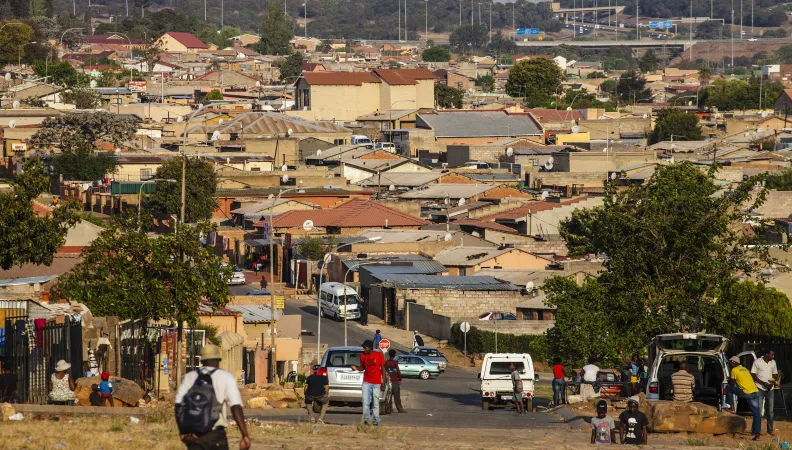 Legal notice EU (project) Twenty years on since independence and the end of Apartheid, South Africa is yet to emerge as a socially cohesive nation. The proposed research project aims to formulate a relevant approach for social cohesion in the case of South Africa and analyze the link between social cohesion and ethnic and racial inequalities.
Context
Twenty years on since independence and the end of Apartheid, South Africa is yet to emerge as a socially cohesive nation. South Africans still live apart – geographically and socially – except within a few groups where the constituents share common identities such as race, ethnicity and class. Moreover, inequality continues to provoke tension – between the rich and the poor, between racial groups, between the urban metropoles and former homelands, and between farm owners and their workers. Economic growth, to the extent it has occurred, has not brought with it greater equality and cohesion in South Africa, the essential ingredient of inclusive growth.
Scholars, policy makers, opinion leaders, and citizenry of the country have been extensively debating issues surrounding the cohesiveness of South African society. Yet, the term “social cohesion” has been used loosely in academic literature and political discourse, and its meaning and its mutual dependence with economic development have not been well understood. We do not yet have a clearly defined concept – and hence definition – of social cohesion as relevant for inclusive development in South Africa. Without definition and measurement, we cannot conclusively ascertain if social cohesion has improved. Without knowing a few key levers (i.e., determinants of social cohesion), it would be difficult to formulate policies that can materially improve social cohesion and effectively achieve inclusive development.
Objectives
Against this background, the proposed research project aims to contribute to addressing social cohesion and inclusive development, two of the most fundamental challenges facing South Africa. More specifically, the objectives are to:
- formulate a relevant approach for social cohesion in the case of South Africa;
- construct and measure social cohesion indicators;
- conduct an in-depth analysis of ethnic and racial inequalities in South Africa;
- shed light on the linkages between social cohesion and inequalities and their implications for policies.
The research will combine the wealth of knowledge of top South African scholars about history, society, politics and economy of the country with the expertise of a Japanese researcher and that of the AFD’s research officers on global practices and analytical tools.
Research findings
Preliminary results from the Social Cohesion Index research suggest:
- We can operationalise a definition of social cohesion and measure it using available national data.
- There is a large degree of consistency in trends in the index and its constituent components over time across four national data sets.
- Social cohesion in South Africa increased between 2008 and 2011, although the trend thereafter is less clear and a longer time series is required.
- Higher levels of per capita income and employment are positively associated with higher social cohesion.
- Poverty, unemployment, and service delivery protest are negatively correlated with social cohesion.
- Municipal policy and competence are closely associated with higher social cohesion.
Our research shows that social cohesion hinges on overcoming prevailing prejudices, interracial mistrust, and negative attitudes towards integration. How people perceive inequality (or not) determines the likelihood of inter-racial interactions.
High levels of inequality and the perception that our inequality has not improved in the post-apartheid period are the key impediments to social cohesion in South Africa. This importance remains even when inequality is analyzed alongside other clearly critical influences such as racial, spatial, and educational factors.
There are two minimum requirements for building a cohesive society in South Africa:
- Prioritize a defined and monitored agreement to overcome poverty, inequality and social exclusion; and
- Do it in a way that actively and legitimately ensures voice and agency for marginalised individuals and communities.
Our studies of social cohesion show that these bold policies to address socio-economic challenges must include behavior and practices in everyday life that demonstrate evidence of a society that is actually committed to overcoming remaining prejudices, interracial mistrust, and negative attitudes.
To build, track, and improve social cohesion we should start by operationalising a shared definition of social cohesion that includes five dimensions (inclusion, belonging, social relationship, participation and legitimacy).
Publications
Contact
-
Anda DAVID
Economist, scientific coordinator of the EU-AFD Facility on Inequalities
Discover other research projects on inequalities
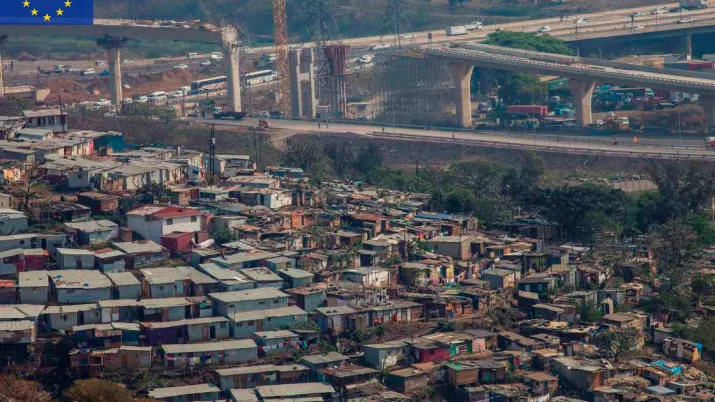
Analyzing the employment effects of the “green economy” transition in South Africa
Completed
2023 - 2024