
 Legal notice EU (project) The fear that cash transfer programs (or social grants) can discourage labor market participation is common among policymakers locally and around the world, including in South Africa. To refute or confirm this fear, the Extension of the EU-AFD Research Facility on Inequalities worked with the Development Policy Research Unit (DPRU) of the University of Cape Town to analyze the impacts of the Covid-19 grant on labor market recovery and investment in productive activity in South Africa.
Context
In South Africa, the social grant system is relatively comprehensive in scope, directly benefiting one in three individuals, and mainly empowering the most vulnerable such as children, the elderly and people with disabilities from poor households. Despite the progressiveness of this system, there remains a lack of assistance to the unemployed, who are presumed to be able to support themselves through the labor market (Ferguson, 2015). However, such a view overlooks the widespread and structural nature of unemployment in South Africa, where over 70% of the unemployed have been unemployed for more than a year.
In this light, the expansion of the country's social grant system in response to the Covid-19 pandemic played an important role in filling this gap. On the margins of the system, a special Covid-19 grant of R350 was introduced to support this previously unreached and important group of unemployed adults. With one of the highest official unemployment rates in the world (32.6 percent in the first quarter of 2021), the grant was an important form of support for millions of vulnerable adults and was the first to use an explicit labor market eligibility criterion that could be considered a "labor market vulnerability transfer."
This project is part of the Extension of the EU-AFD Research Facility on Inequalities. Coordinated by AFD and financed by the European Commission, the Extension of the Facility will contribute to the development of public policies aimed at reducing inequalities in four countries: South Africa, Mexico, Colombia and Indonesia over the period 2021-2025.
Objectives
Conducted by the UCT-DPRU team, the objective of this research project was to quantitatively study whether the Covid-19 grant acted as a source of labor market recovery by leading to increased investment in productive labor market activities.
To do this, the research aimed to provide a detailed and quantitative descriptive analysis of transitions in labor market outcomes among Covid-19 grant recipients (measuring whether individuals moved from vulnerable to more productive activities, for example), as well as an analysis of the correlation between grant receipt and labor market outcomes. Finally, it estimated the causal effects of subsidy receipt on a range of productive labor market activities.
Method
The analysis exploited representative survey data collected during the pandemic in South Africa (from the National Income Dynamics Study: Coronavirus Rapid Mobile Survey, NIDS-CRAM) to answer the following cross-sectional and longitudinal questions about the role of the subsidy:
- What is the correlational relationship between receipt and job-seeking behavior, labor market participation, and the probability of finding a job ?
- What is the correlation between receipt of the subsidy and the transition from a relatively unproductive labor market state to a more productive state over time?
- Does this relationship vary across different groups and subgroups of recipients?
Research findings
You will find below the research paper related to this project:
Contact
-
Anda DAVID
Economist, scientific coordinator of the EU-AFD Facility on Inequalities

Discover other research projects


 Legal notice EU (project) It is critical to assess how, and the extent to which, projects and programmes supported by development agencies contribute to the goal of reducing within country inequalities. A methodology (Morabito et al. 2021) proposes a set of analytical tools identifying potential distributional impacts of development programmes or projects by focusing on whether programmes’ beneficiaries belong to the bottom 40% of the wealth distribution through a mix of analytical tools.
Context
Addressing persistent inequalities in income and other dimensions of wellbeing is a key policy objective of the Sustainable Development Goal 10. Multilateral and bilateral donor agencies have been directing their efforts towards promoting good governance, human and economic development, fighting hunger and reducing inequality.
The increase in development funding towards inequality reduction is accompanied by a need to monitor progress on the SDG 10 but most importantly, by the need to evaluate the contribution of development towards achieving this goal. However, measuring the distributional impacts of development cooperation projects is a challenging task due to a myriad of factors, including the effects that domestic redistributive policies, the structure of labour markets and other factors, such as institutions, have on inequality. The methodology developed by Morabito et al. enables the analysis of the potential contributions of development projects on inequality by looking primarily at the extent to which they disproportionally benefit the most vulnerable through a mix of analytical tools (a scoreboard, a statistical analysis of development projects based on the Equity Tool, a fiscal incidence analysis).
This methodology has first been tested on three development projects funded by AFD in Cameroon, Colombia and Tunisia as part of the first phase of the Research Facility on Inequalities.
This project was part of the first phase of the Research Facility on Inequalities, coordinated by AFD and funded by the European Commission over the 2017-2020 period. The first phase of the Facility has led to the conduct of 22 research projects and the publication of around 100 research papers and policy briefs.
A second phase of the research project was launched in 2022 with the aim to extend the initial phase, to further test the validity of the methodology with respect to income and other forms of inequalities and to develop the guidelines for an inequality marker.
Objectives
The initial phase of the project aimed at piloting the application of the methodology developed by the researchers on three projects funded by the AFD:
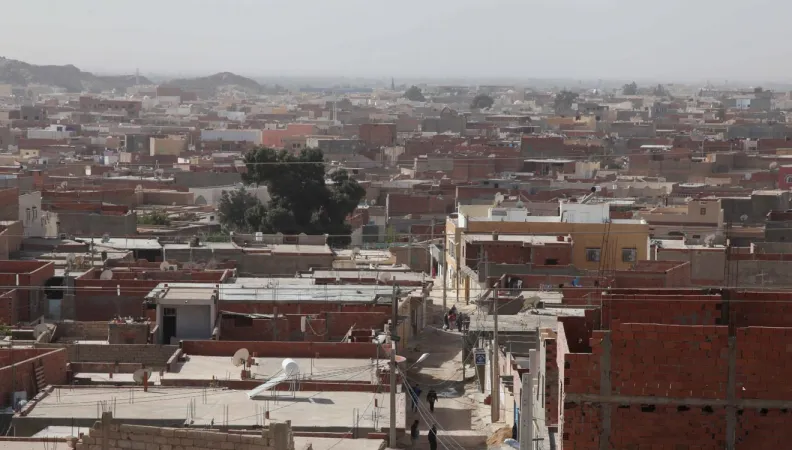
- A programme supporting urban housing improvements in Tunisia;
- A programme focusing on capacity-building of Small- and Medium-Sized Enterprises in Cameroon;
- A budget support operation aimed at supporting a health sector reform in Colombia.
The objective was to test the methodology and evaluate the relevance of its results, and, based on these findings, to review and adjust the methodology itself.
The second phase of the project aimed:
- To develop the guidelines for an inequality marker for development cooperation;
- To further test the methodology on four AFD and EU development programmes: a programme promoting sustainable access to electricity for the unserved poor rural populations in Benin; a programme improving the health and living conditions of the inhabitants of the rural district of Isingiro (Uganda) and its refugee camps; a programme facilitating trade between Ethiopia and Djibouti and enabling businesses and producers, as well as the most vulnerable populations, to benefit from these improvements; and a programme contributing to the adaptation of the communities to climate change in Vietnam.
Method
The initial study identified whether programmes’ beneficiaries of the three selected interventions belonged to the Bottom 40% of the wealth distribution, through a mix of analytical tools:
- First, a scoreboard that assessed whether or not inequality reduction was a central objective of development programmes;
- Second, the Equity Tool, which helped assess the position of direct beneficiaries within the national (urban or rural) wealth distribution;
- Third, the Commitment for Equity Tool, which helped estimate the distributional impact of general or sectoral budget support.
The methodological steps of the second phase of the research project were the following:
- Refining and upgrading the inequality markers and the scoreboard to provide clear benchmarks and indicators, aligned with evaluation approaches used by the European Commission, to assess whether development interventions focus on the poorest bottom 40% individuals, households or vulnerable groups that are targeted by specific development policies;
- Extending the scope of the Equity Tool questionnaire to include questions that capture the distribution of projects beneficiaries among vulnerable groups (women, ethnic, religious minorities, etc.);
- Applying the revised methodology to the four case studies.
Results
Results of the first phase of the project
Overall, the results underscore the importance of considering a pro-poor targeting ex-ante when designing development cooperation interventions that explicitly (or implicitly) aim to contribute to the reduction of inequalities in partner countries. The main strength of the methodology is that it allows an assessment of the potential reach of interventions for the bottom 40 percent of the income distribution. Therefore, the information provided thanks to this methodology can be critical to fine-tune policies before they are implemented and maximize their redistributive impact.
You may find the research paper here: The distributional impacts of development cooperation projects
Results of the second phase of the project
The second phase of this project resulted in:
- The elaboration of guidelines for the implementation of the methodology, which were used to develop the European Commission's Inequality Marker. The I-Marker assesses whether, and to what extent, inequality reduction is an objective of development intervention. For this purpose, a set of criteria has been developed to establish if: - I-0: Inequality reduction is not targeted; - I-1: Inequality reduction is a significant objective; - I-2: Inequality reduction is the principal objective. The I-Marker focuses on the bottom (poorest) 40% or socio-economically disadvantaged individuals, households or groups. Watch the video on the Inequality Marker for more information.
- A report on the testing of the methodology on the four case studies : Assessing the distributional impacts of development interventions - the Inequality Marker
Research findings
This project highlighted the importance of identifying direct and indirect beneficiaries of the projects, but also, more broadly, of having a complete understanding of the development cooperation interventions, which are being analyzed, especially their objectives and conditionalities.
Equally important is the involvement of key stakeholders to communicate the objectives, scope and limitations of the studies. In some cases, the inclusion of a qualitative component in the form of interviews, consultations, or eventually field missions, may be required to ensure the successful implementation and completion of studies.
Contact
-
Anda DAVID
Economist, scientific coordinator of the EU-AFD Facility on Inequalities
Related research publications
Discover other research projects
Analyzing the employment effects of the “green economy” transition in South Africa
Completed
2023 - 2024
 Legal notice EU (project) AFD, AECID and Oxfam are committed to reverse rising inequality in order to reduce poverty in a significant and lasting manner through a human right approach. The research process will conduct a regional analysis, in west Africa and Central America, of the multidimensional inequality based on an innovative inequality framework which is being developed by Oxfam. The study will focus as well on the impact on inequality of a sample of public policies implemented in the regions in the last decade.
Context
The world has seen a significant reduction in the extreme poverty levels in the past decades, led by strong economic growth from emerging economies. Despite the economic growth, the incomes of the poorest people all over the world are not keeping up. Eight out of ten people in developing countries live in nations where the income of the bottom 40% has grown slower than the rest of the economy (Hoy & Samman, 2015) and 7 out of 10 people live in a country where inequality has risen in the last 30 years.
Regarding Latin American and the Caribbean, although the region achieved considerable success in reducing extreme poverty over the last decade, its still-high levels of income and wealth inequality have damaged sustainable growth and social inclusion.
In West Africa, the sub-region had the largest average economic growth at 6.2 percent between 2010 and 2014 among Africa's regions, and compared with 4.4 percent for Africa during the period. However, there is growing concern that the benefits of this impressive growth have not been inclusive and equitably shared. The combination of high economic growth and stubbornly high income inequality rates remains a puzzle.
This project is part of a European facility for a research program on inequalities in developing and emerging countries which is coordinated by the AFD. Financed by the Development Cooperation Instrument of the European Union, this facility enables to implement 20 research projects over the period 2017-2020, in partnership with donors and research centers from the South to the North.
This project is part of the first phase of the Research Facility on Inequalities, coordinated by AFD and funded by the European Commission over the 2017-2020 period. The first phase of the Facility has led to the conduct of 22 research projects and the publication of around 100 research papers and policy briefs.
Objectives
Even if we know less unequal societies are desirable given their beneficial economic, social and political outcomes, there is still uncertainty on which are the best routes to understand and tackle inequalities through a multidimensional perspective. To contribute to this global conversation on inequalities, Oxfam, the International Inequalities Institute at the London School of Economics and the School of Oriental and African Studies of the University of London, are joining efforts to develop a conceptual and measurement framework on inequalities. The purpose of the framework is to provide analysts and practitioners with a theoretically-grounded means by which to gain a clear understanding of the nature of inequality and to use this information to develop and devise effective policy responses with the long-term goal of reducing inequalities, tackling deprivation and improving well-being.
Method
The framework is designed to capture the multidimensional nature of inequality, which is experienced across a number of 7 life domains, and given that there are many different forms of inequality (such as concentrations of wealth, pay gaps, dispersion of income, social gradients in mortality, and greater social isolation experienced by the elderly). The framework is based on Amartya Sen's capability approach. The focus of this approach is an assessment on what life we lead and what we can or cannot do, and can or cannot be; the quality of life that individuals are able to achieve. Equally important, this framework should enlighten the discussion on inequalities in a way that allows for context-specific diagnosis and policy recommendations, so that it can support the strategic work of practitioners and key stakeholders of the development arena.
See this project's 2 minutes pitch from Ana Claver, Project Manager on Inequalities at Oxfam Intermón:
Research findings
Evidence from more than 150 countries, rich and poor alike, spanning more than 30 years, shows that overall, investment in health, education and social protection reduces inequality. Nevertheless, we still need to know more about what are the concrete mechanisms that make these inequality reductions happen, and how certain policies should be designed so that they tackle spatial, gender and ethnic inequalities in an effective manner. We expect to draw lessons from those different scenarios by this comparative research.
The researchers involved in this project anticipate that active citizenship is a means to achieve development, because it enables women and men living in poverty to raise their voice in defence of their rights (health, education, jobs, dignity). Moreover, they presuppose that public policies amplify their effectiveness when citizens are involved in their cycle. They also presume that women and girls plus youth are the groups especially impacted by multidimensional inequality and thus, they should be carefully considered in the research.
Find the presentation of the research paper "Multidimensional inequality in Western Africa" by Ana Claver Muñoz and Cristina Rovira Izquierdo, project manager on inequalities and inequality programme advisor at Oxfam Intermón during the fifth webinar of the Research Facility on Inequalities:
You may find the deliverables linked to this project here:
West Africa Report:
- Analysis of multidimensional inequalities in West Africa and a strategy for inequality reduction (in English)
Central America and Dominican Republic Report:
- Analysis of multidimensional inequalities in Central America and Dominican Republic, and a strategy for inequality reduction (in English)
Policy briefs:
- A strategy for reducing inequalities in West Africa (in English)
- A strategy for reducing inequalities in Central America and the Dominican Republic (in English)
You may also find a short presentation video of the Multidimension Inequality Framework (MIF) used in this research project (in English).
Contact
-
Anda DAVID
Economist, scientific coordinator of the EU-AFD Facility on Inequalities