
 Legal notice EU (project) The Extension of the EU-AFD Research Facility on Inequalities in partnership with Fedesarrollo and in close collaboration with the Ministry of Finances implemented the methodology of the Commitment to Equity (CEQ) to analyze the country's fiscal structure and its impact on inequalities specially after major changes caused by the Covid 19 pandemic and the fiscal reform passed at the end of 2022.
Context
Prior to the pandemic caused by COVID - 19, Colombia had shown positive results with respect to the reduction of poverty and inequality. For example, total poverty was reduced by 6.1 percentage points between 2012 and 2018 from 40.8% to 34.7% as was extreme poverty, which went from 11.7% to 8.2%, according to official statistics. Likewise, although Colombia is among the most unequal countries in the region, it reduced its Gini index by about 0.03 units from 0.539 in 2012 to 0.508 in 2017, according to data from the National Administrative Department of Statistics (Departamento Administrativo Nacional de Estadísticas, 2021).
However, with the public health contingency, many people lost their jobs or had their incomes reduced due to pandemic containment measures that affected both aggregate supply and aggregate demand. Naturally, according to official statistics, poverty levels increased significantly and inequality rebounded to the levels of five years ago. In fact, by 2020, the country was, according to the latest ECLAC Social Panorama, the most unequal in Latin America (Economic Commission for Latin America and the Caribbean, 2021).
In this sense, the country's tax structure plays a fundamental role to the extent that direct, indirect and in-kind transfers are transformed into support for the most vulnerable households so that they can meet their basic needs and balance these inequalities to some extent. In addition, taking into account that progressivity is one of the principles of the tax system, those with higher incomes should pay higher taxes to finance social spending. In this sense, the tax reform that began to take effect in 2018 and now the Fiscal Reform adopted at the end of 2022 made some major modifications to the corresponding statute with the objective of increasing revenues.
This project is part of the Extension of the EU-AFD Research Facility on Inequalities. Coordinated by AFD and financed by the European Commission, the Extension of the RFI will contribute to the development of public policies aimed at reducing inequalities in four countries: South Africa, Mexico, Colombia and Indonesia over the period 2021-2025.
Objectives
The methodology developed by the Commitment to Equity institute (CEQ) has been used to carry out this study. The CEQ methodology allows to do a fiscal incidence analysis, that is, to analyze the redistributive impact of public policy instruments, on the tax side, as well as on the social spending side, on poverty and inequalities. In this sense, based on household surveys, it is possible to assess the redistributive capacity of taxes and transfers (whether direct or indirect) to guide public policy in this area.
The aim of the study was to identify which policies, either from the tax side or from the expense side, allow a greater impact (negative or positive) on inequalities. This then gives us, and the government, a clearer picture of the effects of the fiscal structure.
In addition, the project sought to build a tool that parameterizes the tax structure and social spending and allows making microsimulations that are useful for policy discussions. In this sense, this project sought to accompany the teams of the Ministry of Economy, providing them with a tool that allows them to carry out the necessary simulations to evaluate the impacts of different policies. The recently adopted tax reform was also analyzed through the lens of this tool.
Research findings
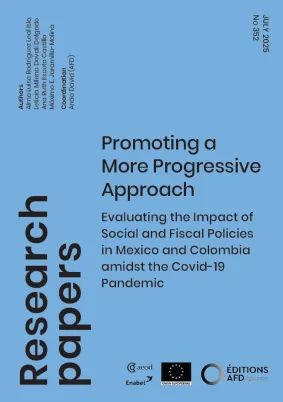
You will find below the research paper related to this project:
Contact
-
Anda DAVID
Economist, scientific coordinator of the EU-AFD Facility on Inequalities

Discover other research projects

Reducing spatial inequalities through efficient public service delivery in Colombia
Completed
2024 - 2025


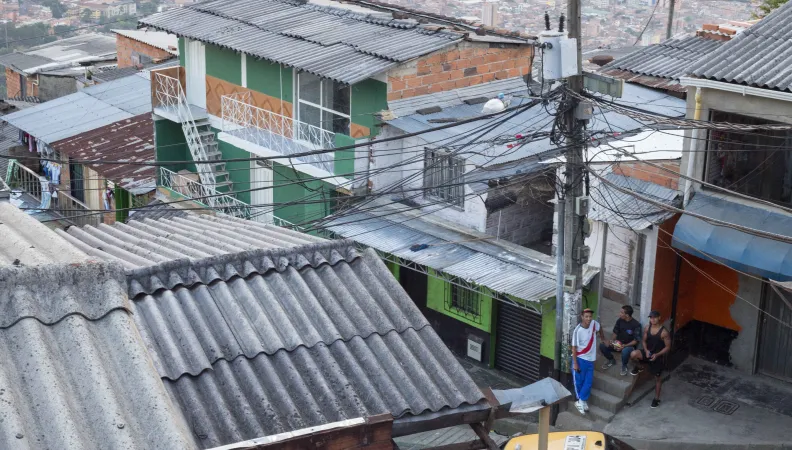 Legal notice EU (project) This research project conducted by the Extension of the EU-AFD Research Facility on Inequalities in close collaboration with DANE and DNP, and in partnership with Fedesarrollo, conducted a comprehensive analysis of inequalities in Colombia through the implementation of the diagnostic on inequalities. It also aimed, together with DANE, to strengthen statistics on inequalities in the country.
Context
In Colombia, and in other countries, the objective of the Extension of the EU-AFD Research Facility on Inequalities is to provide analysis, methodologies, and statistics that allow understanding the state of inequalities in the country, the dynamics and interrelationships with the different areas, sectors, and regions of the economy. The objective is to provide robust and updated data, to provide evidence for the construction of public policies, but also to identify areas where data collection can be improved, and those where research can be deepened to better understand the context and support the construction of public policies aimed at reducing inequalities...
In Colombia, DANE has made great progress in recent years in the collection and availability of data in order to analyze and better understand the reality of the country. Several studies have been carried out with some of these data, but, for several years, there has been no comprehensive analysis of inequalities at the national level using several databases to get a complete picture of the country's situation. Since mid-2021, AFD has been working hand-in-hand with DANE and Fedesarrollo to carry out a multidimensional diagnostic on inequalities, based on an innovative reference methodology created by AFD. It provides a comprehensive view of the country's situation as it covers a wide range of aspects (health, education, incomes, etc.) all under the prism of inequalities and using different indicators and databases.
This project is framed in a context in which inequalities acquire crucial relevance in the public policy of the current government and in the agreements adopted by it within the framework of the 2030 agenda, as well as in its entry into the OECD.
This project is part of the Extension of the EU-AFD Research Facility on Inequalities. Coordinated by AFD and financed by the European Commission, the Extension of the Facility will contribute to the development of public policies aimed at reducing inequalities in four countries: South Africa, Mexico, Colombia and Indonesia over the period 2021-2025.
Objectives
The project aimed to support and strengthen the production of national statistics on inequalities, promoting exchanges and interoperability between DANE and other national and international institutions. More specifically, the main objectives were:
- To implement the methodology of the multidimensional diagnostic on inequalities, and therefore create the first national diagnostic on inequalities in Colombia. For this, AFD worked hand in hand with Fedesarrollo and in close collaboration with DANE.
- To accompany DANE's technical teams in the production, updating and improvement of statistics on inequalities based on the inequality diagnostic methodology. These data will be used to monitor over time the evolution of the indicators considered relevant, and, depending on the outcome of the data collected, to advance in analyses that integrate elements related to climate change and the environment.
- To support DANE’s technical teams in implementing new methodologies and initiatives to obtain statistics that allow a better understanding of the distribution of income of individuals and households in the country. Workshops and seminars served to share experiences and establish practices that allow high-quality data for decision-making.
Find out more about the methodology

Research findings
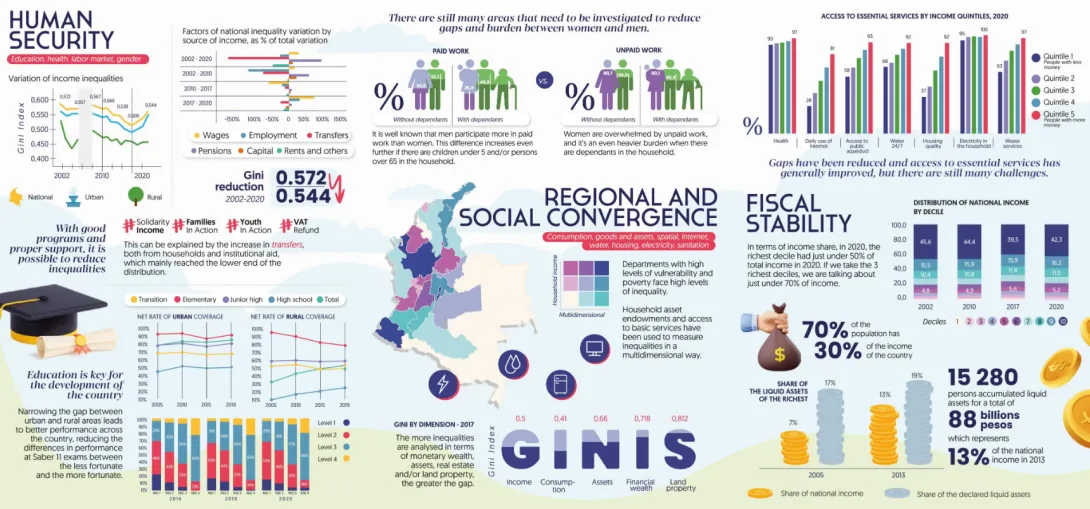
The research project led to the publication of the multidimensional diagnostic on inequalities in Colombia. It takes into account multiple dimensions of inequality: income distribution, consumption, labour income, household assets and services, level of wealth in land and financial assets, access to and quality of education and health, access to basic services... This document is key to understanding the gaps that exist in Colombia, and allows for evidence-based decision-making and progress towards reducing inequalities.
To go further

Contact
-
Anda DAVID
Economist, scientific coordinator of the EU-AFD Facility on Inequalities
Discover other research projects
Analysis of Colombia’s fiscal policy and public spending impact on inequalities
Completed
2022 - 2023


Reducing spatial inequalities through efficient public service delivery in Colombia
Completed
2024 - 2025
 Legal notice EU (project) The Extension of the EU-AFD Research Facility on Inequalities in partnership with CEEY will design proposals for the design of care systems at level of federal states and of municipalities, which will further support the progress in reducing the inequalities and foster social mobility.
Context
This project is a follow-up of the research project developed by CEEY and El Colegio de México in the first phase of the EU-AFD Research Facility on Inequalities. The results showed the need for structural changes to break the bottlenecks of social mobility and reduce inequality in Mexico.
Based on the above, the new phase of the project focuses on the knowledge base that will inform the setting up of care systems in the states of Guanajuato and Nuevo Leon and in the municipality of San Pedro Garza Garcia.
Guaranteeing the right to care in the Constitution is essential to advance on the basis of social consensus. In order to define the articulation mechanisms in a law, it is necessary to understand the care systems at different levels as transversal and multipurpose policies that are worth discussing collectively, as they imply much more than the already great challenge of expanding the existing infrastructure of services and social spending. The Care Economy also implies creating fiscal strategies to redistribute paid and unpaid work, adapted policies for those who require care and for caregivers, social co-responsibility and co-responsibility of the private sector.
Therefore, it requires more and better statistical information, strengthening surveys and data systems, as well as developing studies to make visible the interdependence of care with multiple agendas, identifying care needs and their characteristics, available supply and unmet demand, allowing for strategic planning and follow-up from the short to the long term, starting with priority groups that include children, people with disabilities, the sick and elderly, and their caregivers.
This project is part of the Extension of the EU-AFD Research Facility on Inequalities. Coordinated by AFD and financed by the European Commission, the Extension of the Facility will contribute to the development of public policies aimed at reducing inequalities in four countries: South Africa, Mexico, Colombia and Indonesia over the period 2021-2025.
Objectives
Given the above context, the objective of this project is the construction of two products that address two identified needs:
- a design proposal for a state and municipal-level care system: it is necessary to develop a care system designs that address the structural inequalities for which their creation is sought. In this sense, it is necessary to establish a complete, functional and sustainable design.
- a proposal for the collection and systematization of primary information for the design and/or monitoring of the care system: a second need arises from the above in terms of systematization of primary and administrative information that feeds, as far as possible, the original design of the care systems, as well as their monitoring over time.
Research findings
You will find below the research papers related to this project:
- Social mobility, care policies and social protection (August 2024)
- Social mobility, care policies and social protection policies in Nuevo León (September 2024)
Contact
-
Anda DAVID
Economist, scientific coordinator of the EU-AFD Facility on Inequalities
Discover other research projects

 Legal notice EU (project) Does the use of stimulus programs and social grants by beneficiaries have an impact on the South African economy? Conducted by Infusion Knowledge as part of the Extension of the EU-AFD Research Facility on Inequalities, this research project examined the purchasing habits of stimulus beneficiaries and analyzed how the new "post-stimulus" environment impacts the trade and decision-making of commercial entities and some of their customers.
Context
In July 2019, Infusion Knowledge Hub conducted a study on opportunities for wholesale in Stock Road in Philippi in the Western Cape Province on behalf of a large South African supermarket chain. The purpose of the study was to understand the trading environment in the informal and small business market to elicit a value-added cash and carry shopping proposition (Vawda, Prinsloo and Prinsloo, 2019).
In June 2022, as part of a research program launched by the Presidency of South Africa and Agence Française de Développement, funded by the European Union, Infusion Knowledge Hub replicated the study to determine whether there are shifts in purchasing behaviour amongst the informal and small traders that participated in the 2019 research. In doing so, the study aimed to provide granular data on shifts in the informal and small traders’ operating environment around Stock Road in Philippi between July 2019 and June 2022. In addition, the research investigated the spending patterns of 30 Social Relief Distress (SRD) grant recipients and 31 Basic Education Employment Initiative (BEEI) participants.
This project is part of the Extension of the EU-AFD Research Facility on Inequalities. Coordinated by AFD and financed by the European Commission, the Extension of the Facility will contribute to the development of public policies aimed at reducing inequalities in four countries: South Africa, Mexico, Colombia and Indonesia over the period 2021-2025.
Objectives
This new research project aimed to contribute to the body of knowledge on the impact of social protection and employment stimulus measures on the formal and informal economies.
Two studies analysing the local effects of the South African Presidential Employment Stimulus Initiative (PES) and the national social grants programme were produced:
- One study, presented in note form, that builds on Infusion's long-standing relationship with Shoprite to allow SALDRU to use Shoprite's customer data to explore the shopping habits of stimulus beneficiaries. The focus was on unpacking purchasing data related to beneficiaries who receive the Distressed Social Relief Grant and those who are part of the school assistants programme managed by the Department of Basic Education (DBE).
- A research paper that details through descriptive and inferential statistical analysis the transfer to a mobile application, called NECTA, of a landmark study by Infusion and Shoprite conducted among informal vendors and "Spaza" stores in Philippi. This data provides an overview of what has been happening in these businesses since July 2019 (the date of the initial project), as well as an opportunity to see how the new "post-stimulus" environment is impacting the trade and decision-making of these business entities as well as some of their customers.
Research findings
You will find below the research paper related to this project:
Contact
-
Anda DAVID
Economist, scientific coordinator of the EU-AFD Facility on Inequalities
Discover other research projects
Redesigning the South African “Social Relief Distress” grant program for higher impact
Completed
2023 - 2023


Analyzing the employment effects of the “green economy” transition in South Africa
Completed
2023 - 2024
 Legal notice EU (project) What have been the impacts of the Covid-19 national stimulus package's social assistance on local economies and informal sector workers in South Africa? The Extension of the EU-AFD Research Facility on Inequalities program sought to answer this in collaboration with CSDA.
Context
In South Africa, informal work is a feature of the labor market - one in six South African workers is employed in the informal sector. During the pandemic, millions of workers without legal or social protection were disproportionately affected by the negative impacts of measures to prevent the spread of Covid-19 (loss of jobs, hours of work and income...). As a "forgotten" sector in many ways, it should not be forgotten that the informal sector provides livelihoods, employment, and income for millions of workers and business owners, and contributes significantly to the country's Gross Domestic Product (GDP).
In response to the social and economic effects of the pandemic on vulnerable groups, the South African government has further developed its social protection system. As part of the social assistance component of the Covid-19 stimulus package, it introduced a new Social Relief of Distress (SRD) grant in April 2020. This social assistance grant is for the first time targeted at many informal workers on the basis of their employment status.
While the positive links between the subsidy and economic activity had already been studied, as well as the limits to this interaction, it remained to be understood whether and how the SRD had been used by informal workers and what economic effects had been generated. This project was conducted by CSDA as part of a larger program to analyze various components of the South African government's Covid and recovery stimulus package.
This project is part of the Extension of the EU-AFD Research Facility on Inequalities. Coordinated by AFD and financed by the European Commission, the Extension of the Facility will contribute to the development of public policies aimed at reducing inequalities in four countries: South Africa, Mexico, Colombia and Indonesia over the period 2021-2025.
Objectives
To better understand the effects of the Covid-19 and recovery public policy stimulus on reducing inequality, this study qualitatively analyzed the interactions and impacts of the SRD (as well as other subsidies, and the stimulus package more broadly) on local economies.
In particular, it focused on the experiences of women and men traders in the informal sector, who represent a significant proportion of informal sector workers. Through the data collected, differentiated patterns by gender, location, and level of the informal worker in his or her work organization have also been revealed.
Research findings
You will find below the research paper related to this project:
Contact
-
Anda DAVID
Economist, scientific coordinator of the EU-AFD Facility on Inequalities
Discover other research projects
Evaluation of local stimulus effects in South Africa: Jobs and grants programmes
Completed
2022 - 2023

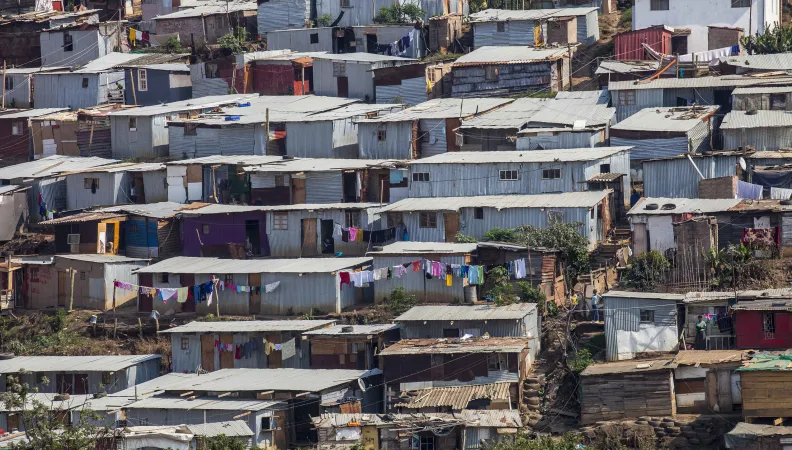 How can we better understand local realities and more particularly socio-economic outcomes at the community level? The Extension of the EU-AFD Research Facility on Inequalities in partnership with the Southern Africa Labour and Development Research Unit (University of Cape Town), and in close collaboration with local and national government entities, seeks to answer this question.
Context
South Africa’s spatial inequality translates in significantly different lived experiences among members of different communities across the country. Statistics South Africa gathers data on a range of socio-economic outcomes of individuals and households through an array of national surveys; these data can be analysed at the national, provincial, district and sometimes municipal level, and provide us with a sense of well-being, deprivation and inequities in these, between these different geographies. However, there is not yet one standardised set of data that would allow for a coherent, systematic and longer-term understanding, visualisation and tracking of a broad set of indicators on well-being, that allows for a better understanding of socio-economic outcomes at the community level. Yet, understanding this local context is important, as it is within that local reality that policies and interventions aim to make a difference. South Africa’s government has recognised this too and, with the introduction of its District Development (DD) Model, aims to see different spheres and departments of government work together for larger impact, “higher performance and accountability for coherent service delivery and development outcomes”. A consolidated, central point of information that is accurate and regularly updated, would provide a strong basis for the implementation South Africa’s DD Model.
This project therefore proposes the development of an interactive, online Community Explorer that would allow researchers, policy-makers and civil society members to build a stronger understanding of well-being at the community (or main area) level in South Africa. Such an understanding is crucial to inform development efforts implemented at that community level. We suggest drawing on the local level information for the Steve Tshwete municipality to pilot the Community Explorer approach.
The local municipality of Steve Tshwete is part of the Mpumalanga province, an area that is home to one of the country's largest coal mining areas and accounts for 83% of the coal produced in South Africa. Steve Tshwete can be considered as one of the commercial centers of this province, with one of the largest local economies in the district dominated by the mining, manufacturing and financial sectors. As such, coal mining and the three coal-fired power plants currently in operation are by far the largest contributor to local employment, accounting for 40% of it.
This project is part of the Extension of the EU-AFD Research Facility on Inequalities. Coordinated by AFD and financed by the European Commission, the Extension of the Research Facility will contribute to the development of public policies aimed at reducing inequalities in four countries: South Africa, Mexico, Colombia and Indonesia over the period 2021-2025.
Objectives
This project proposes to leverage the data and tools already available on the South African Youth Explorer (and the related WaziMap tool). The SA Youth Explorer is a SALDRU-led project that constructs and maps a range of indicators that measure key dimensions of well-being among young people, at various geographical levels. Using Census 2011 data, these indicators are currently constructed for the following domains: demographics, education, living environment, economic opportunities and youth poverty (including income poverty and multidimensional deprivation). In addition, the project has begun the construction, verification and maintenance of a central database of service provision, that allows for government-provided services to be mapped down to the main area level. Finally, it is the project’s aim to explore the possibilities of adding a third layer of knowledge with local labour market demand side information. As such, the overall aim of the proposed project is to provide “an understanding of the functionings of geographical areas as economic and social systems” and thereby “to promote the construction of an integrated and effective” approach to policy and planning that would ultimately contribute to the social betterment of all.
In addition, the project will use the administrative South African Revenue Service (SARS) and National Treasury (NT) Firm-Level (SARS-NT) Panel data developed as a joint SARS–National Treasury–UNU-WIDER initiative which gives matched employee-employer level information and thus allows computing labor market demand indicators. The greatest advantage of the administrative SARS–NT Panel data over other firm-level surveys is that it allows us to have employee-related information such as income, age and gender, as well as firm-level information such as labour costs, gross sales, industry sector, firm age, productivity, firm size, learnership and training cost . Another advantage of the administrative SARS–NT Panel data which is important for the project is that the worker and firm information can be aggregated to four different geographical levels, namely: province, district municipality, local municipality, and main place . With these geographical levels, it is possible to create local averages of various worker and firm variables that can then be mapped alongside Higher Education Institutes present at the local level.
Research findings
You will find below the two research papers related to this project:
- Developing a Youth Labour Market Index for South Africa at the sub-national level
- Youth and the just transition. A profile of young NEET in Mpumalanga
Contact
-
Anda DAVID
Economist, scientific coordinator of the EU-AFD Facility on Inequalities
Discover other research projects

 Legal notice EU (project) How do inequalities influence biological and social outcomes in MPAs in Indonesia? The Extension of the EU-AFD Research Facility on Inequalities program sought to answer this question in collaboration with SMERU to integrate inequality assessments and indicators into existing MPA policies in the country at all levels of governance.
Context
MPAs are often associated with high poverty, being by design targeted at relatively untouched areas with low economic potential. Establishing an MPA can thus create a financial and social burden on resource-dependent communities, even if the benefits of doing so would bring higher yields or revenue in the future. Some stakeholders may benefit greatly from commercial activities (e.g., tourism, sale of higher-value products), while at the same time others are left out of the management processes, sometimes even those having most at stake.
Because MPAs will most likely affect user groups disproportionately, inequality issues among stakeholders can easily arise. Some aspects of MPA design, implementation, and management may contribute to positive ecological and well-being outcomes, while others will require tradeoffs. This coexistence of both co-benefits and trade-offs among stakeholder groups leads to tricky questions of equity, justice, and power in the design, implementation, and management of MPAs. There is a general lack of knowledge regarding how inequalities influence MPA outcomes.
In brief, MPAs are a driver of inequalities in communities that rely heavily on marine resources, and a powerful tool to help reduce them. While being an important aspect of the well-being of the people involved and of the success of MPAs, inequality assessments and metrics are currently largely absent in the design, implementation and management of MPAs. This research project aimed at a deeper understanding of the inequality dynamics in MPAs in Indonesia, drawing upon existing data and specific case studies. It helped us gain better knowledge of how inequalities influence biological and social outcomes in MPAs, and brought insights on how to integrate inequality assessments and indicators in existing MPA policies in the country, at every level of governance.
This project is part of the Extension of the EU-AFD Research Facility on Inequalities. Coordinated by AFD and financed by the European Commission, the Extension of the Facility contributes to the development of public policies aimed at reducing inequalities in four countries: South Africa, Mexico, Colombia and Indonesia over the period 2021-2025.
Objectives & results
This project first went through a scoping phase which enabled to better understand the role of MPAs and its link to inequalities. It then aimed to develop a framework for analyzing inequalities and their dynamics in MPAs in Indonesia, and a toolbox for mainstreaming inequalities in the design, implementation and management of MPAs. It has also fed into the policy dialogue conducted by the EU and AFD on marine resource management and environmental protection.
This project therefore resulted in:
- A working paper summarizing the current knowledge on marine protected areas and inequalities in Indonesia (carried out by LPEM).
- An in-depth research project on the links between inequality reductions and the management of marine protected areas, including cases studies of three MPAs (performed by the SMERU Institute).
- Training and capacity building activities with practitioners and MPA managers on the inclusion of inequalities in MPA management practices.
Research findings
You will find below the different publications related to this project :
- The benefits of Marine Protected Areas in fighting inequality and fostering environmental sustainability in Indonesia
- Balancing conservation and community welfare: Enhancing the management of Marine Protected Areas in Indonesia
- Can social inclusion benefit ecosystems?
Watch the replay of the "Research Conversations" webinar on this topic (July 2023):
Contacts
-
Oskar LECUYER
Economist

Other research projects supported by the Extension in Indonesia


 Legal notice EU (project) How to effectively reduce inequality in Indonesia? To answer this question, the Extension of the EU-AFD Research Facility on Inequalities is working with the local research center LPEM and the national statistical office BPS to produce a diagnosis that is essential to guide policy interventions towards reducing inequalities.
Context
In Indonesia, poverty has been declined since 2006 from 17.75% to 9.41% in 2019 due to strong economic growth and other poverty reduction efforts. The inequality, however, remains considerably high. Since 2010, Indonesia’s Gini ratio remains above 0.38. The poverty and inequality situation has been worsen post-pandemic. Indonesia’s headcount poverty rate back to double digit, 10.14% in 2021, while the Gini ratio climbed to 0.384, its highest rate since 2018. While focus on economic inequality is important, the picture of inequality in Indonesia should be assessed through a multi-dimensional aspect, not limited to households income or expenditure.
Indonesia is a fourth most-populous and also the largest archipelagic country in the world. It makes any policy context should be assessed carefully throughout population groups, income class, and geographical location due to the difference in the provision of public infrastructure and policy efforts within the country. As such, a comprehensive inequality diagnostic report is needed to assess overall condition of inequality in Indonesia not only using monetary indicator (income or expenditure), but also social assets, in terms of access to education, health, water and sanitation, employment, and other basic infrastructures needed for households.
The Extension of the Research Facility on Inequalities will cooperate with leading research center, LPEM FEB UI, and national statistical office, BPS, to conduct comprehensive inequality assessment and produce an inequality diagnostic report as the basis for launching a national dialogue about inequality and stimulate policy interventions to overcome inequality.
This project is part of the Extension of the EU-AFD Research Facility on Inequalities . Coordinated by AFD and financed by the European Commission, the Extension of the Facility will contribute to the development of public policies aimed at reducing inequalities in four countries: South Africa, Mexico, Colombia and Indonesia over the period 2021-2025.
Objectives
The objectives of the Inequality Diagnostic Research in Indonesia are:
- to produce a working paper which will consolidate data and resources (papers) around inequality issues to profile the prevailing situation of inequality in Indonesia.
- to conduct capacity building activities for national research center and the national statistical office in performing data analysis for the Inequality Diagnostic Research Report.
- to introduce specific tools for multidimensional inequalities diagnostic in Indonesia.
This research has led to a comprehensive Inequality Diagnostic Research Report in Indonesia and contributes to public debate and discussion on Inequality in Indonesia. Indeed, this project performed a thorough analysis of multi-dimensional aspect of inequality in Indonesia and a comprehensive breakdown based on income groups, geographical locations, and gender. It also includes analysis of prior policies that have been taken by the government to reduce inequality and how it performs overtime. The output of this research will help government to identify priorities and policy options in order to further reduce them.
Research findings
You will find below the research publications related to this project:
Read the press release

Contacts
-
Oskar LECUYER
Economist
Other research projects supported by the Extension in Indonesia
Harnessing the benefits of inequalities reduction in marine protected areas in Indonesia
Completed
2022 - 2023