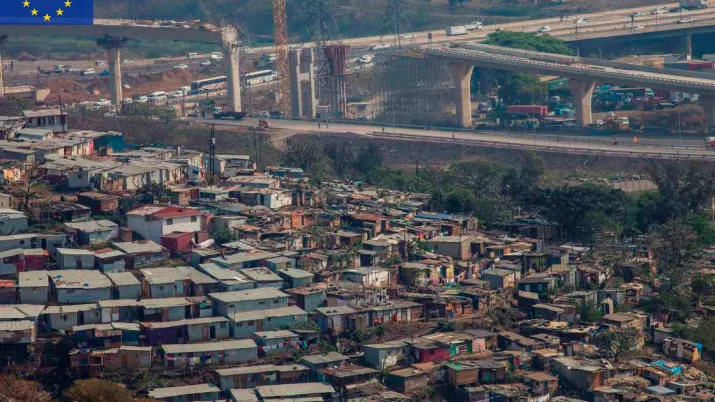
 Legal notice EU (project) South Africa has embarked on the necessary path of a just transition, which will result in job losses in the coal sector, at a time when unemployment in the country is already very high. AFD, in partnership with the REAL Centre of the Wits University, is conducting a detailed analysis of the skills ecosystem that could feed into the various initiatives to support local authorities and communities of the Nkangala district in meeting this challenge.
Context
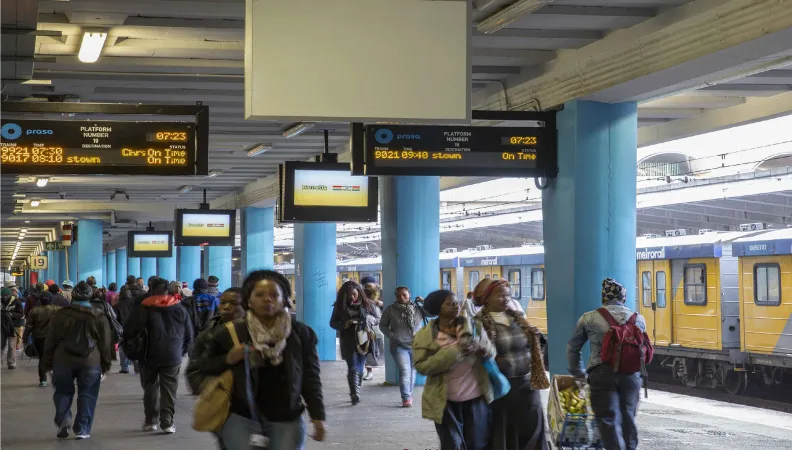
With one of the highest youth unemployment rates in the world, South Africa’s planning for a just transition needs to take into account the vulnerabilities of its youth cohorts, especially those that can be qualified as “not in education, employment or training” (NEET). For example, a recent study conducted in the framework of the EU-AFD Research Facility on Inequalities revealed that the Mpumalanga province, the region with the highest exposure to the coal exit, has had a NEET youth rate of over 37% for the past decade, with almost three-quarters of them living in income-poor households.
Since 2019, the National Business Initiative (NBI) has been spearheading a multi-faceted and multi-sector partnership, which focuses on expanding and growing pathways for young people to access Installation, Repair and Maintenance (IRM) occupations. The IRM initiative is strategically aligned to various initiatives of the government to drive inclusive recovery and revitalisation of the economy, particularly in the aftermath of the Covid-19 pandemic. It has subsequently been incorporated as part of the Presidential Youth Employment Intervention (PYEI). The Initiative works on the premise that, by supporting township-based IRM entrepreneurs to strengthen and grow their businesses, and by linking them to localised market opportunities, there will be a concomitant increase in the demand for skilled labour, which could lead to the creation of employment opportunities. Therefore, it is a direct response to the youth unemployment challenge.
Collaborating closely with the NBI, the Centre of Researching Education and Labor (REAL Centre) contributed its expertise to the comprehensive analysis of the four key regions identified in Phase 1 of the IRM skills ecosystem mapping project: Atlantis (Western Cape), Mandeni (KwaZulu-Natal), Mamelodi (Gauteng), and Kathorus (Gauteng). Building upon the success of this initial phase, the REAL Centre will now expand the project's scope to the Nkangala district municipality, which is one of the three districts of Mpumalanga province.
This project is part of the Extension of the EU-AFD Research Facility on Inequalities. Coordinated by AFD and financed by the European Commission, the Extension of the Facility will contribute to the development of public policies aimed at reducing inequalities in four countries: South Africa, Mexico, Colombia and Indonesia over the period 2021-2025.
This work is also part of AFD's dialogue with the South African authorities on the just transition and the reduction of inequalities.
Objectives
This research project will conduct a detailed analysis of the skills ecosystem that could feed into the various initiatives to support local authorities and communities in the Nkangala district, which concentrates the coal-fired power plants that will be closed as a result of just transition policies.
Phase 1 of the project revealed that an IRM skills ecosystem mapping project is crucial for addressing inequality by thoroughly analysing the socioeconomic and demographic profiles of diverse townships in South Africa.
By identifying specific skill gaps and understanding the challenges faced by Small, Medium, and Micro Enterprises (SMMEs) in these areas, the study can inform targeted interventions aimed at reducing inequality in access to employment and economic opportunities.
Furthermore, by examining the role of Technical and Vocational Education and Training (TVET) institutions and conducting a comprehensive literature review, the study ensures that proposed interventions are evidence-based and tailored to the needs of the communities studied.
Ultimately, the study's approach of generating actionable insights in collaboration with stakeholders aims to drive meaningful impact and promote inclusive economic development in underserved regions, contributing to efforts to reduce inequality, to advance the principles of just transition and to foster a more inclusive society.
Method
Building on Phase 1 of the IRM skills ecosystem mapping, researchers will apply the following method:
- They will set the context for the Nkangala district through desktop research and a few selected key informant interviews;
- They will collect primary data and set up fieldwork through stakeholder mapping workshops and key informant interviews to collect data;
- They will then provide an initial narrative on the overarching local skills ecosystem from the site mapping exercise and will draw on the document review and contextual work on the Nkangala district. Drawing on Spours’ (2019) work on ecosystems, they will use three core elements: the dimensions of verticalities, horizontalities and mediation to understand and analyse the skills ecosystem Nkangala district and to guide the cross-site analysis, building on the work undertaken during Phase 1.
Research findings
You will find below the different research papers related to this project:
Contact
-
Anda DAVID
Economist, scientific coordinator of the EU-AFD Facility on Inequalities

Discover other research projects

Evaluation of local stimulus effects in South Africa: Jobs and grants programmes
Completed
2022 - 2023
 Extreme weather events resulting from the effects of climate change coupled with a global call for countries to reduce their greenhouse gas (GHG) emissions imply that the transition to a “green” economy is non-negotiable. The societal and policy discussions have moved on to trying to understand the transition possibilities and the economic and social implications of these in each country’s context. This research project will focus on the case of South Africa.
Context
South Africa is one of the largest GHG emitting countries due to its heavy reliance on coal for most of its energy needs. The South African government is cognisant of the fact that shifting away from carbon-intensive forms of technology to more sustainable ways of production means that some jobs will be destroyed, and new ones will be created. A concern therefore for policy makers is ensuring that the transition is just and that it will not exacerbate existing inequalities.
South Africa comes into this employment transition discussion facing a triple challenge: persistent high unemployment, inequality, and poverty. This situation has worsened since the 2007-2008 financial crisis and was further exacerbated by the recent COVID-19 pandemic. This complicates the discussion of an optimal social transition to a “green” economy.
This project is part of a wider research program on the just transition in South Africa, conducted with several South African research centres and in close collaboration with the South African authorities.
FIND OUT MORE
Objectives
The project will carry out a study of the South African labour market with the aim of identifying the proportion and distribution of workers engaged in “green” jobs and “brown” jobs – in other words, jobs that are ecologically sustainable and jobs that are not. It will also examine the possibilities of transitioning labour from brown jobs into low emitting sectors.
Method
We will measure green intensity as the share of total tasks in an occupation that are green. We will also identify the share of workers in green jobs using employment information from surveys such as the Quarterly Labour Force Surveys (QLFSs) and the Census. Using industry level information on pollution, we will go further to identify occupations more likely to be in highly polluting sectors than in any other sectors. This will be described as brown jobs. Next, we will utilise occupational tasks, skills, and knowledge information from the O*NET dataset to identify important skills for brown and green jobs. This will enable us to estimate the probability of transitioning workers to green jobs. Finally, to map the location of green jobs, we will use employment information from the Census, the Community Survey, and the Spatial Tax data.
Contact
-
Anda DAVID
Economist, scientific coordinator of the EU-AFD Facility on Inequalities
Discover other research projects

 Legal notice EU (project) How can green transition policies impact labour market segmentation between formal and informal sectors in Colombia? What consequences on income inequality after retirement? The Extension of the EU-AFD Research Facility on Inequalities program seeks to explore these questions in collaboration with Universidad de los Andes.
Context
The design of the Colombian pension system exacerbates income inequality and poverty after retirement age. High informality rates (over 60% of total employment, according to OECD) imply that many workers in Colombia have a low probability of qualifying to get a contributory pension. Despite the targeted support provided to the vulnerable population through pension assistance programs, this support tends to be low compared to other countries in Latin America and the Caribbean.
The relationship between informality and inequality after retirement plays a central role in the discussion of policies affecting the labour market. One dimension that has not been explored in the public policy debate is how policies aimed to mitigate climate change (and more specifically the creation of green jobs) can affect the distribution of workers between the formal and informal sectors, and how it can have an impact income inequality after retirement.
This project is part of the Extension of the EU-AFD Research Facility on Inequalities. Coordinated by AFD and financed by the European Commission, the Extension of the Facility will contribute to the development of public policies aimed at reducing inequalities in four countries: South Africa, Mexico, Colombia and Indonesia over the period 2021-2025.
Objectives
This project seeks to contribute to the public policy debate by analysing the effects that scenarios of a green economic transformation may have on income inequality after retirement, via the reallocation of workers between the formal and informal labour markets.
The project will aim to answer following questions, in the Colombian context:
- What are the environmental properties of jobs?
- How can economic transformation towards a more sustainable economy change the composition and transitions between the formal and informal sector?
- What is the impact on inequality and fiscal viability of implementing those policy scenarios?
In addition, the project will evaluate prospective scenarios during the discussion of the pension reform in the Colombian Congress and will develop a simulation model for the use of the Ministry of Finance and Public Credit.
Method
The project will be implemented in three stages:
- The research team will first characterize the environmental properties of jobs in Colombia.
- In the second stage, the team will calibrate the transition matrices between employment states and wages to introduce to the microsimulation model. In this stage, the team will propose the economic transition scenarios to simulate.
- In the final stage of the project, the team will prepare a final report with the simulation results and policy discussion.
Research findings
You will find below the different research papers related to this project:
Contact
-
Anda DAVID
Economist, scientific coordinator of the EU-AFD Facility on Inequalities
Discover other research projects
Analyzing the employment effects of the “green economy” transition in South Africa
Completed
2023 - 2024
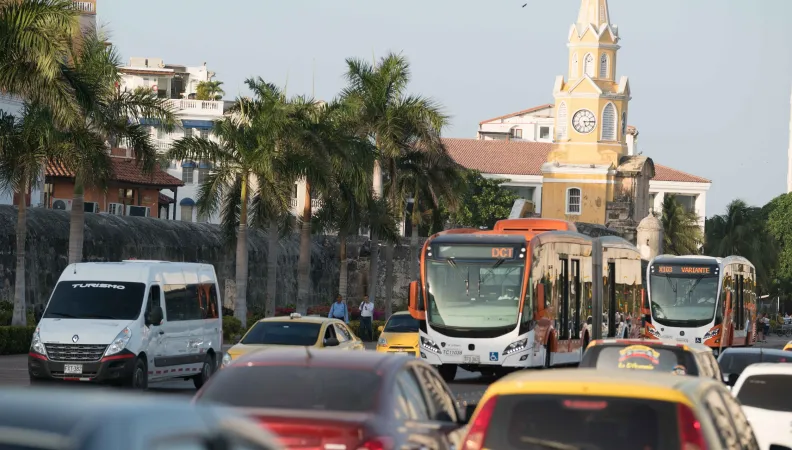 Legal notice EU (project) What has been the redistributive impact of social and fiscal policies in Mexico and Colombia, in the context of the policies implemented during the Covid-19 pandemic? The EU-AFD Research Facility on Inequalities will seek to answer this question in collaboration with the Institute for Inequality Studies (INDESIG).
Context
While there is mounting evidence that the Covid-19 pandemic has increased socioeconomic inequality, there is still a need to understand the exact channels of impact and what role the policy response has played in different contexts. It is also necessary for governments to be clear about the efficiency of the type of policies they have implemented throughout this period, in terms of the redistributive and/or regressive effect both from an inequality and poverty perspective. Indeed, we know that the amount of additional social spending (excluding health) implemented during the pandemic reached almost 3% of GDP in Colombia and only 0,2% in Mexico. However, research has not yet demonstrated whether the redistributive policies introduced by the Mexican and Colombian governments in response to the Covid-19 crisis have had any positive effect on the distribution of economic and social resources in these two countries.
This project is part of the call for research proposals “Advancing the inequality agenda through collaborative research: identifying the priorities for a global Team Europe approach on inequalities”, launched by the Strategic Committee of the Research Facility on Inequalities. It is coordinated by AFD and co-financed by the European Commission, AECID and ENABEL.
Objective
The project will seek to understand what has been the redistributive impact of social and fiscal policy in Mexico and Colombia, in the context of the policies implemented during the Covid-19 pandemic.
Method
This research project will be conducted as follows:
- Using the framework of the Commitment to Equity (CEQ) methodology, an analysis aiming to differentiate what has been the progressivity or regressivity of the policies implemented during the Covid-19 pandemic will be conducted. This analysis will take into account the main beneficiary groups of these policies and will include a comparison between the budget amount and the efficiency of the policies identified in terms of inequality and poverty reduction.
- A desktop analysis of the decision-making will also be carried out to understand how the redistributive effects of the policies implemented were envisaged by the governments.
Results
The results of this project are presented in the following research paper: Promoting a More Progressive Approach - Evaluating the Impact of Social and Fiscal Policies in Mexico and Colombia amidst the Covid-19 Pandemic (2025)
This research paper analyzes the redistributive impact of some fiscal policies and social programmes (direct taxes and transfers) before and after the pandemic Crisis in Mexico and Colombia, following the CEQ methodology.
Contact
-
Anda DAVID
Economist, scientific coordinator of the EU-AFD Facility on Inequalities
Discover other research projects
Analyzing the employment effects of the “green economy” transition in South Africa
Completed
2023 - 2024
 Legal notice EU (project) How could the Social Relief Distress grant be redesigned to maximize impact on poverty and unemployment reduction, while being sustainable in the longer term? The Extension of the EU-AFD Research Facility on Inequalities will seek to answer this question in partnership with SALDRU (University of Cape Town – Southern Africa Labour and Development Research Unit).
Context
South Africa’s Economic Reconstruction and Recovery Plan was launched in October 2020 by the Presidency in response to the economic impacts of the Covid-19 pandemic. Besides the Presidential Employment Stimulus program, it included emergency social protection measures, among which the introduction of a special Covid-19 Social Relief of Distress grant (SRD), providing ZAR350 per month for unemployed people not covered by any other form of support. The South African government now seeks to develop options for the future of SRD grant.
This project is part of the Extension of the EU-AFD Research Facility on Inequalities. Coordinated by AFD and financed by the European Commission, the Extension of the Facility will contribute to the development of public policies aimed at reducing inequalities in four countries: South Africa, Mexico, Colombia and Indonesia over the period 2021-2025.
Objectives
The objective of this research project is to produce motivated recommendations on how the SRD should be designed going forward into the longer term, in order to maximize the impact of the grant on employment outcomes and to ensure it effectively reduces poverty, while maintaining its cost to an acceptable level:
- To maximise the impact of the grant on employment, the project needs to understand how to design and label the grant to encourage its use for job search.
- To ensure the grant effectively reduces poverty, the project must figure out the most cost-effective way to target and assess the eligibility of recipients. Moreover, poverty reductions can be scaled up by determining measures that could encourage take up among the most disadvantaged.
Once these goals have been achieved, and in order to inform public decision-making, these findings must be communicated to a number of stakeholders in government and civil society.
This project is part of a wider research program conducted with several South African research centres and in close collaboration with the South African Presidency. Four other research projects analysing the externalities of the Covid-19 stimulus policy are currently being developed as part of the first pillar of the Extension's activities in South Africa.
Method
This research project uses the model generated to conduct the 2014/2015 fiscal incidence assessment and introduces updated data for 2019-2021. It simulates five scenarios around eligibility criteria, targeting mechanisms, value, disbursement model and conditionalities and computes the potential impact on poverty and employment outcomes.
Research findings
You will find below the research paper related to this project:
It is worth noting that another paper has been published on the implications of the SRD grant, funded by AFD outside the Research Facility on Inequalities: Systemic exclusion from a South African social assistance transfer (February 2024)
Contact
-
Anda DAVID
Economist, scientific coordinator of the EU-AFD Facility on Inequalities
Discover other research projects

Analyzing the employment effects of the “green economy” transition in South Africa
Completed
2023 - 2024
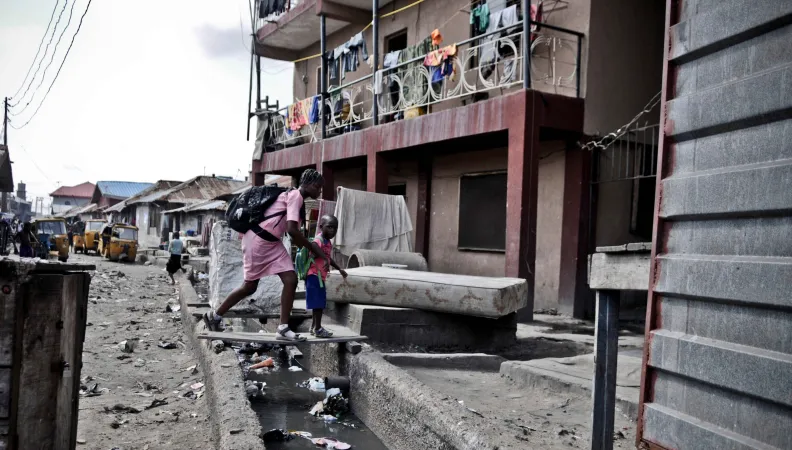 Legal notice EU (project) Through which channels did the Covid-19 pandemic impact inequalities in Togo? What have been the effects of the “Novissi” cash transfer program implemented by the Togolese government on the mitigation of income inequality? The EU-AFD Research Facility on Inequalities will seek to answer these questions in collaboration with the University of Lomé.
Context
Research has already shown that some population groups have been harder hit by Covid-19 than others and that the pandemic exacerbated existing inequalities in many areas, including health, education, work, and gender.
In this context, inequality has become a central issue for governments willing to fight the effects of the pandemic and to better prepare for future shocks. In April 2020, the Togolese government set up a cash transfer program called "Novissi", with the financial contribution of AFD, to support any eligible Togolese citizen who lost his or her income due to the adoption of the response measures against Covid-19.
This project is part of the call for research proposals “Advancing the inequality agenda through collaborative research: identifying the priorities for a global Team Europe approach on inequalities”, launched by the Strategic Committee of the Research Facility on Inequalities. It is coordinated by AFD and co-financed by the European Commission, AECID and ENABEL.
Objectives
Studies using updated data and capturing the potential effects of the Covid-19 pandemic on income inequality and poverty in Togo are relatively scarce. This research project aims to fill the gap in academic literature by analyzing the impacts of Covid-19 on inequality in Togo, and evaluating the effects of the Togolese social policy « Novissi » on mitigating the impact of Covid-19 on inequality.
Method
Using rich microeconomic data from a survey conducted by Togo's Institut National de la Statistique et des Études Économiques et Démographiques (INSEED) aimed at analysing the impact of the Covid-19 pandemic, the research team will estimate an econometric model based on the model developed by Dang and Nguyen (2021).
Results
Due to methodological limitations and data availability constraints, this project did not lead to a publication. Further information is available upon request.
Contact
-
Anda DAVID
Economist, scientific coordinator of the EU-AFD Facility on Inequalities
Discover other research projects
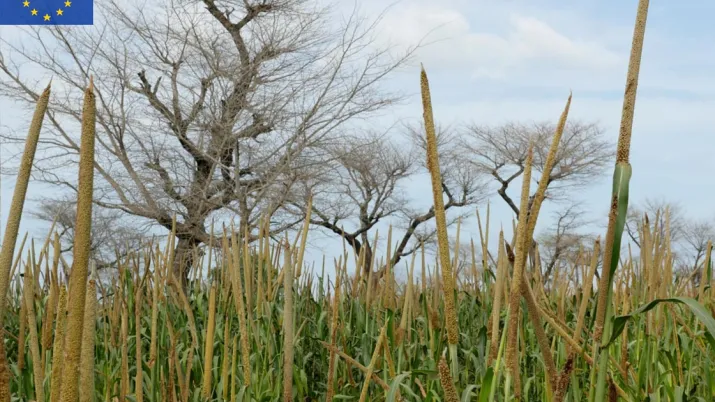
Agroecology public policies and income inequalities in rural regions in Senegal
Completed
2018 - 2020
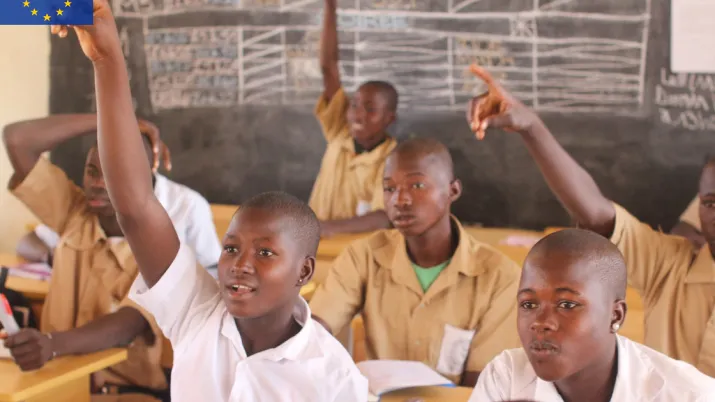
Inequalities in access to basic services and impact of public policies in Côte d'Ivoire
Completed
2018 - 2019
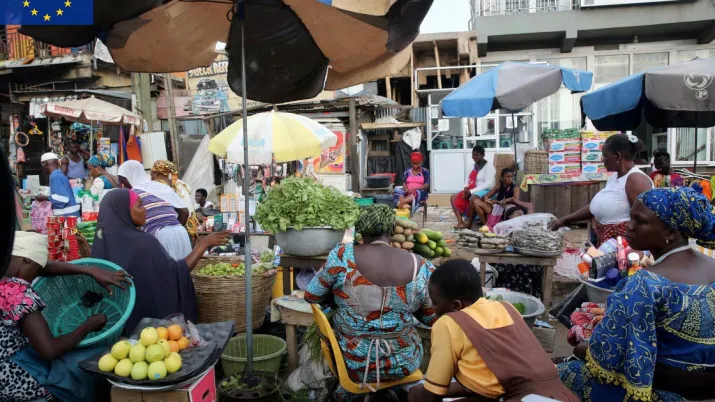
 Legal notice EU (project) How do spatial variation in inequality and quality of institutions interact to explain variation in subjective wellbeing in South Africa? The EU-AFD Research Facility on Inequalities will seek to answer this question in collaboration with the University of Cape Town (UCT).
Context
Despite several efforts to promote pro-poor growth, South Africa remains one of the most unequal countries in the world. While the country's colonial history and apartheid are known to have contributed to this inequality level, the nature and dynamics of its impact on society are yet to be fully understood.
Literature suggests that better institutions and lower level of inequality improve subjective wellbeing. However, evidence that examine how the interaction between these two variables explain variation in wellbeing is relatively scarce. This study will thus contribute to a deeper understanding of inequalities in South Africa.
This project is part of the call for research proposals “Advancing the inequality agenda through collaborative research: identifying the priorities for a global Team Europe approach on inequalities”, launched by the Strategic Committee of the Research Facility on Inequalities. It is coordinated by AFD and co-financed by the European Commission, AECID and ENABEL.
Objectives
This research project has two main objectives:
- Explore how variations in governance (such as audit outcomes) across South Africa's district municipalities explain the variation in the well-being of individuals.
- Investigate how the interaction between the variation in governance across local government municipalities and inequality among individuals explains variation in subjective well-being.
Method
To investigate the interactions between the quality of institutions and of the governance, the level of spatial inequality and the subjective wellbeing, researchers will use the National Income Dynamics Study (NIDS), a nationally representative survey of individuals across South Africa, which is repeated over five waves between 2008 and 2017. They will also use audit outcomes of local municipalities to proxy for the quality of governance.
Results
You will find below the research paper related to this project:
Contact
-
Anda DAVID
Economist, scientific coordinator of the EU-AFD Facility on Inequalities
Discover other research projects
Analyzing the employment effects of the “green economy” transition in South Africa
Completed
2023 - 2024
 Legal notice EU (project) How can we measure the efforts made by developing countries to combat the inequalities and the impacts of climate change while taking into account the socioeconomic structure of these countries? The EU-AFD Research Facility on Inequalities will seek to answer this question in collaboration with the Ghanaian research think tank Placefeet.
Context
Many of the measures on quantifying progress by countries towards reducing income inequality have focused on indices that measure trends in inequality over time (Gini coefficient for example) and compare countries without considering the differences between their socioeconomic structures.
However, these indices do not paint the complete picture about how countries are performing, especially when compared to one other in achieving Sustainable Development Goals and what policies and investments may be needed to support them. This research project will provide an alternative measurement of income inequality by taking into account the developing countries’ structural or predetermined conditions (mineral assets, type of institutions etc.) in assessing their progress towards reducing inequality and the impacts of climate change.
This project is part of the call for research proposals “Advancing the inequality agenda through collaborative research: identifying the priorities for a global Team Europe approach on inequalities”, launched by the Strategic Committee of the Research Facility on Inequalities. It is coordinated by AFD and co-financed by the European Commission, AECID and ENABEL.
Objectives
The project focuses on the following objectives:
- Firstly, it will compare each country with its potential to reduce income inequalities by measuring the scope for improvement for each country at every year. This will allow a better understanding of the key factors that hinder a country’s effort and performance in reducing inequalities and of the policy and investments that are needed to tackle inequalities more efficiently.
- Secondly, it will investigate how climate – temperature, precipitation and extreme weather events– influence the efficiency of countries in combining inputs to reduce inequality.
- Thirdly, it will look at adaptation or intensification effects across regions, particularly in LDCs and SIDS and will identify the needed scale of investments.
Method
Building on a panel database on 145 countries, including countries from Least Developed Countries (LDCs) and Small Island Developing States (SIDS) from 2000-2020, the project will use a stochastic frontier approach, an economic modelling technique, to estimate feasible frontiers for income inequality for each country and year.
Results
You will find below the research paper related to this project:
Contact
-
Anda DAVID
Economist, scientific coordinator of the EU-AFD Facility on Inequalities
Discover other research projects
Analyzing the employment effects of the “green economy” transition in South Africa
Completed
2023 - 2024
 Legal notice EU (project) What are the distributional effects of green taxes in Mexico and how can they be quantified? The Extension of the EU-AFD Research Facility on Inequalities program seeks to answer this in collaboration with RIBOS and the researches of the Laboratorio National de Politicas Publicas (LNPP) to provide to Mexican policymakers and stakeholders timely analyses of the effects of environmental tax policies on inequalities.
Context
This research project proposes to estimate the distributive effect of gasoline taxes using a fiscal incidence considering these effects in the context of Mexico´s fiscal system, including the principal tax and spending instruments.
In 2014, Mexico’s Finance Ministry (SHCP) introduced a special tax (IEPS) on carbon as a green tax aimed at reducing the green gas emission associated with fossil fuels, mainly gasoline and diesel. However, the tax revenue (4699 million pesos in 2014) and the environmental impact of this tax are marginal: in the past decade, until 2014, this tax had a negative value, thus working as a subsidy. Since that year, it became a tax, which has grown significantly in recent years, representing close to 300 billion pesos in 2019 and 2020. This is therefore in effect by far the most important green tax implemented in Mexico today.
This analysis is of particular interest for Mexico at present because the transition from fuel subsidies to fuel taxes represents in effect the principal tax reform implemented in Mexico over the last decade in terms of both tax revenue (from -300 to +300 billion pesos in tax revenue) and distribution. Gasoline taxes have significant impacts on all the population, both directly on middle- and higher-income households through private transport, but especially indirectly for lower income households through public transport and transport costs for all goods and services, notably food. Preliminary analysis at the Fiscal Policy Equity Lab (FPEL) reveals that the increase in the indirect tax burden for the poor associated to gasoline taxes may reverse the effect poverty-reduction effect of direct transfers, even after their recent expansion.
Quantifying these impacts precisely will allow the design of compensatory instruments to protect the poorest and most vulnerable groups from the regressive effects of these taxes.
This project is part of the Extension of the EU-AFD Research Facility on Inequalities. Coordinated by AFD and financed by the European Commission, the Extension of the Facility will contribute to the development of public policies aimed at reducing inequalities in four countries: South Africa, Mexico, Colombia and Indonesia over the period 2021-2025.
Objectives
This project is a joint undertaking between RIBOS, CEQ Institute and LNPP. It seeks to estimate the effect of green taxes in the context of the overall Mexican tax system through the international methodology developed by the Commitment to Equity Institute (CEQI), using INEGI data from the Encuesta de Ingresos y Gastos de los Hogares (ENIGH) for 2014-2020, among other data sources.
This methodology will allow an estimation the effect of green taxes in the context of the overall fiscal system. This methodology facilitates comparability in time and space, and generates a wide variety of incidence indicators, including effects on the income Gini coefficient as well as income poverty using national and international poverty lines.
This project ultimately aims to provide Mexican policy makers and stakeholders with timely analyses of the effects of tax policies on inequality and poverty. The research conducted will therefore result in:
- a research paper,
- a policy brief whose analysis is based on the collaborative intelligence technique. Two sessions in which the model calibration and hypotheses will be discussed following the collaborative modeling framework. Participants in the sessions will be members of the expert network and key tax policy makers.
Research findings
You will find below the research paper related to this project:
- Distributive impact of green taxes in Mexico (July 2024)
The policy brief related to this project will be published here soon.
Contact
-
Anda DAVID
Economist, scientific coordinator of the EU-AFD Facility on Inequalities