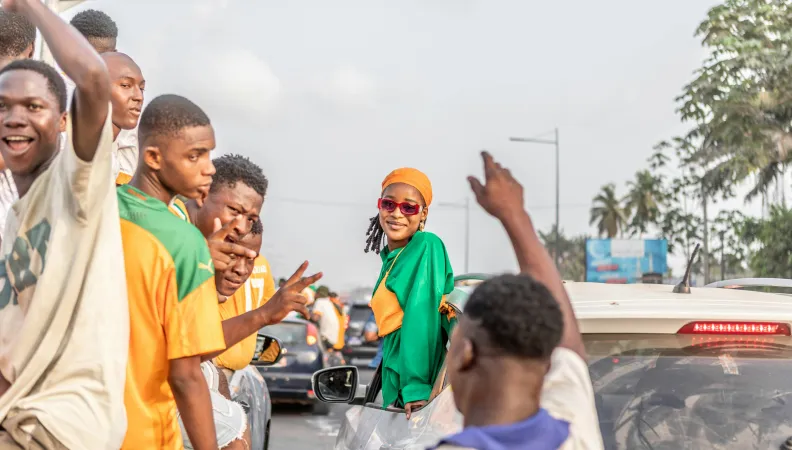
 This research, conducted in Senegal and Côte d’Ivoire, aims to better understand young people’s aspirations in order to improve AFD Group interventions in the fields of education, training, and employment. The researchers involved will examine youth models of success across different regions (urban areas, border regions, etc.), as well as the correlation between these aspirations and the life trajectories of those concerned. Particular attention will be paid to the role of education within these models and pathways.
Context
West Africa is a very young region: nearly half of its population is under the age of 20. Yet, young people’s dreams and aspirations remain poorly understood. This lack of data is particularly problematic given the significant challenges many of them face: some grow up in marginalized urban peripheries, while others live in border regions shaped by migration dynamics and security tensions. As they enter the labour market, young people are often confronted with a severe shortage of formal employment; at the same time, the impacts of climate change and the deterioration of public services affect their daily lives.
In this context, examining these aspirations is especially relevant, as the role of formal education in pathways to success is sometimes questioned, and young people are increasingly challenging the “dominant models” of success. As supporting youth is a key priority for AFD Group, it is important that its interventions be grounded in a deep understanding of the aspirations of the youth.
Objectives
This research project listens to young people in Côte d'Ivoire and Senegal to deepen understanding of their aspirations, models of success and life trajectories. More specifically, it seeks to answer three key questions:
- What are young people’s aspirations, given the range of possibilities available to them, and how do these vary according to their place of residence, gender, and living conditions?
- To what extent do their individual and family life trajectories shape their plans and their ability to achieve them?
- What role does education play in their aspirations and life paths?
The data collected is intended for direct operational use: it will help adapt AFD Group interventions in the areas of education, training, and decent employment.
Method
The research team, led by the Institute for Education, Family, Health and Gender (IEFSG) at Assane Seck University of Ziguinchor, brings together Peleforo Gon Coulibaly University (Côte d’Ivoire), Félix Houphouët-Boigny University (Côte d’Ivoire), IRD (France), and the University of Ottawa (Canada).
The IEFSG and the two Ivorian universities designed the survey methodology and will implement it with the support of their doctoral students across three main types of territories selected for their diversity:
- Urban areas (Ouakam and Pikine in Senegal; Yopougon and Abobo in Côte d’Ivoire)
- Border areas (Sindian and Samine in Senegal; Bouna and Ouangolo in Côte d’Ivoire)
- “Symbolic spaces” with strong community or religious identities (Touba in Senegal; “New Churches” communities in Côte d’Ivoire)
The methodology combines both qualitative and quantitative approaches:
- Qualitative survey: mapping of socio-educational services and youth support systems (interviews with local stakeholders and authorities, in situ observations); organization of focus groups with young people; in-depth individual interviews on their life trajectories.
- Quantitative survey: conducted with 3,000 young people in each of the two countries, based on the 2023 national census in Senegal and the 2021 census in Côte d'Ivoire. The questionnaire will be administered using the KoboCollect application.
Expected results
The results of this research project will be disseminated through several formats in order to reach a wide range of audiences:
- A collective publication or a contribution to a scientific journal, focused on Africa, will present the main findings of the surveys and consolidate the knowledge produced on young people and their aspirations.
- Decision-support tools (policy briefs, guidance notes, etc.) will target policymakers and development practitioners.
- The possibility of additional formats (podcasts, creations) will be explored to share the collected life stories beyond academic circles.
A final restitution event will also be organized.
Contacts
- Elodie RICHE, Research Officer at AFD
- Pr Jean-Alain Goudiaby, Sociologist at IEFSG
Want to stay up to date with AFD’s research news?

Discover other research projects
Inequalities in access to basic services and impact of public policies in Côte d'Ivoire
Completed
2018 - 2019
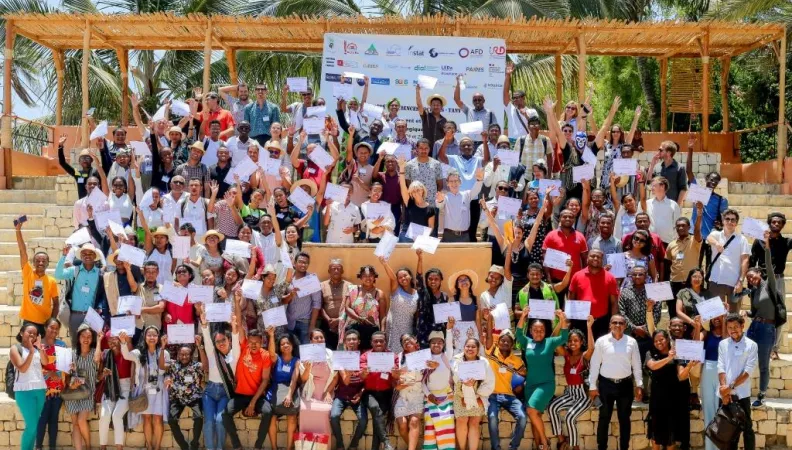 Closing ceremony of the Tany Vao 2022 summer school in Madagascar. PAIRES is a partnership between AFD and the French National Research Institute for Sustainable Development (IRD) that funds a series of impact assessments of development interventions supported by AFD, with a focus on research from the Global South.
 Context
A partnership between the French National Research Institute for Sustainable Development (IRD) and AFD was established in 2020 to identify and implement a series of impact evaluations of interventions supported by AFD. The IRD provides the expertise, networks, and operational capacity to carry out these evaluations with partners in the Global South. The partnership was extended in October 2024, allowing new projects to be selected for evaluation.
Impact evaluations aim to provide information on the effectiveness of projects in producing concrete development results. The objective is to estimate whether the effect observed following an intervention is actually attributable to that intervention, and to what extent. To do this, assessments rigorously measure the effects of interventions using quantitative, qualitative, or mixed methods.
This project takes place in a context when there are growing expectations for evaluations that provide a better understanding and measurement of the results and impacts of development interventions. It contributes to meet these expectations in the same way as other types of evaluation, particularly project evaluations carried out by French cooperation actors.
The IRD is recognized for its scientific excellence, its multidisciplinary approach, its experience in conducting impact evaluations, and its local presence, which enables it to develop close ties with university teams and national statistical institutes in the South with which it can collaborate. This collaboration is also part of a shared research agenda and is covered by an institutional partnership between AFD and the IRD.
Objectives
The PAIRES program funds impact evaluations of development projects financed by AFD Group, with three objectives:
- To enrich dialogue with public authorities and stakeholders on development projects and their results;
- To strengthen the role, skills, and practice of research in the South in the field of impact evaluation;
- To foster academic debate on key development issues.

Method
Impact evaluations use methods derived from social science research to identify and measure the effects that are strictly attributable to an intervention. Quantitative methods generally involve comparing changes in the situation of the population benefiting from the intervention with those of a population that has not been exposed to the intervention but is comparable to the beneficiary population. Impact evaluation, generally using counterfactuals, therefore makes it possible to isolate the causal effect of an intervention on a variable of interest and to quantify that effect.
Beyond promoting impact evaluations, the PAIRES partnership promotes multidisciplinary evaluations, combining quantitative and qualitative methodologies in order to strengthen the lessons learned about the mechanisms underlying change (or the absence of change).
In addition, the PAIRES program involves researchers from the countries of intervention in all its studies to ensure that the specificities of each context are taken into account and with a view to capacity building.
Results
Over its first five years of implementation, PAIRES has mobilized 6 French research laboratories and 10 laboratories in the Southern countries concerned. A total of 8 impact evaluations, 8 feasibility studies, and 4 training courses have been funded since the project began.
The ongoing impact evaluations cover 11 countries in Africa, Asia, and Latin America and span a range of sectors (health, energy, biodiversity, infrastructure, education, gender equality). They have enabled collaboration with several academic, public, and civil-society institutions in France and in Global South countries. Other evaluations are currently being identified.
In terms of capacity building, PAIRES has notably supported two summer schools and four training courses in geospatial impact evaluation in Madagascar. The program has also funded two joint doctoral contracts between the University of Antananarivo and Paris Saclay University.
Lessons learned from impact assessments
Find below the publications and blog articles related to the impact assessments funded under the PAIRES partnership.
The REDGAS assessment aimed to quantify the health, economic, and social impacts of access to gas cooking for households in Burkina Faso.
Publications :
- REDGAS : Retours sur l’enquête de situation de référence
- Mesures de l’exposition des personnes aux particules fines par méthode gravimétrique dans le cadre de l’étude REDGAS
- Pollution de l’air et consommation de bois au Burkina Faso
- Se baser sur le terrain pour mieux cibler l’intervention : Une étude socioanthropologique en baseline
- Seroprevalence and risk factors for SARS-CoV-2 infection in middle-sized cities of Burkina Faso: A descriptive cross-sectional study
- Reducing Pollution from Cooking Smoke: key lessons from the REDGAS randomized study in Burkina Faso
- Présentation du projet et de ses résultats
- Clean Cooking: Insights from two new AFD and FID Experiments
Do forest management plans contribute to promoting the sustainable use of forest resources in the Congo Basin?
Publications :
- Impact Evaluation Study of Forest Management Systems on the Forest Cover in the Congo Basin
- Do forest-management plans and FSC certification help avoid deforestation in the Congo Basin?
- Focus : Plans d’aménagement forestier et conditions de vie des populations des forêts d’Afrique centrale
- Plans d'aménagement forestier et conditions de vie des populations des forêts d'Afrique centrale : une revue de la littérature
The BETSAKA project (Biodiversity-economic tradeoff and synergy assessments for conservation areas): what are the environmental and socioeconomic impacts of terrestrial protected areas in Madagascar from 2000 to 2024?
Publications :
- Impact of protected areas on deforestation in Madagascar from 2000 to 2023: A pre-analysis plan | PLOS One
- Long-term socio-environmental monitoring of protected areas is a persistent weak point in developing countries: Literature review and recommendations
- Madagascar rural observatory surveys, a longitudinal dataset on household living conditions 1995–2015
What has been the impact of the Health Voucher on the use of maternal health services by pregnant women in Cameroon?
Publications :
- Coming soon
What is the impact of a parenting education program on children's cognitive and non-cognitive development?
Publications :
What is the impact of viewing awareness videos on domestic violence on knowledge, attitudes, and reporting of domestic violence?
Publications :
How does education through sport help transform gender attitudes and behaviors among middle school students?
Publications :
Contacts
- Flore Gubert, IRD Scientific Coordinator
- Ingrid Dallmann, AFD Project Manager
- Alice Lebreuilly, IRD PAIRES Project Coordinator
Discover other research projects
Agroecology public policies and income inequalities in rural regions in Senegal
Completed
2018 - 2020