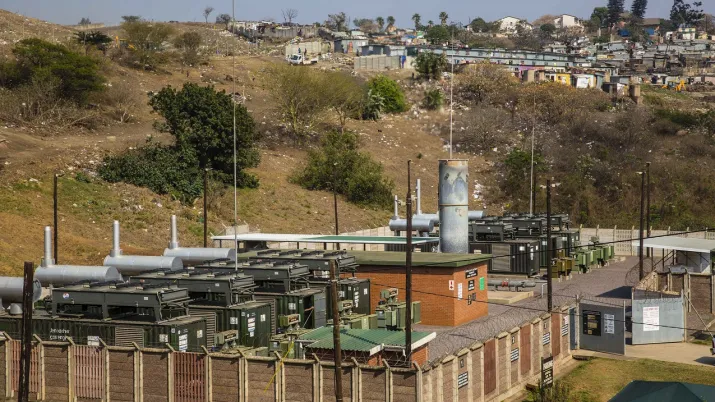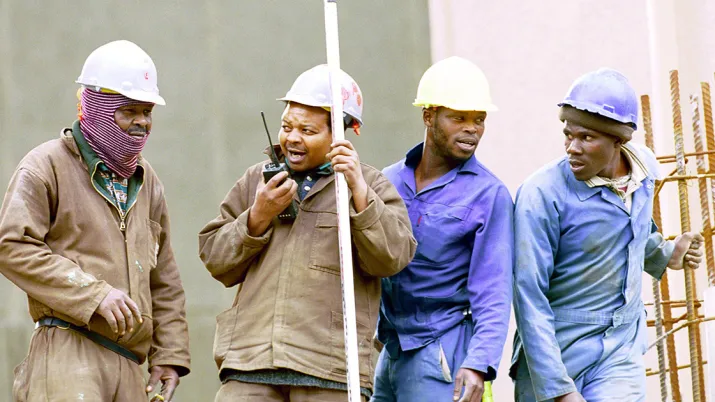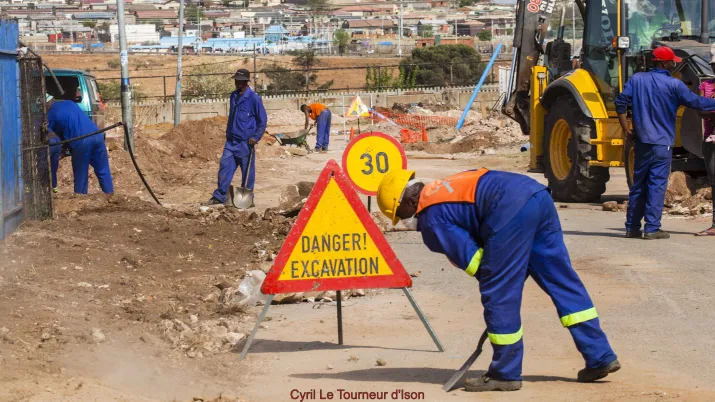
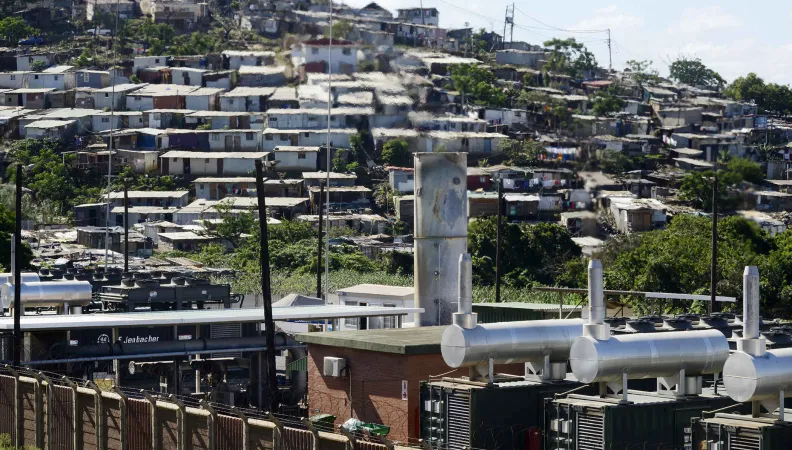
How can we better understand local realities and more particularly socio-economic outcomes at the community level? The Extension of the EU-AFD Research Facility on Inequalities in partnership with the Southern Africa Labour and Development Research Unit (University of Cape Town), and in close collaboration with local and national government entities, seeks to answer this question.
Context
South Africa’s spatial inequality translates in significantly different lived experiences among members of different communities across the country. Statistics South Africa gathers data on a range of socio-economic outcomes of individuals and households through an array of national surveys; these data can be analysed at the national, provincial, district and sometimes municipal level, and provide us with a sense of well-being, deprivation and inequities in these, between these different geographies. However, there is not yet one standardised set of data that would allow for a coherent, systematic and longer-term understanding, visualisation and tracking of a broad set of indicators on well-being, that allows for a better understanding of socio-economic outcomes at the community level. Yet, understanding this local context is important, as it is within that local reality that policies and interventions aim to make a difference. South Africa’s government has recognised this too and, with the introduction of its District Development (DD) Model, aims to see different spheres and departments of government work together for larger impact, “higher performance and accountability for coherent service delivery and development outcomes”. A consolidated, central point of information that is accurate and regularly updated, would provide a strong basis for the implementation South Africa’s DD Model.
This project therefore proposes the development of an interactive, online Community Explorer that would allow researchers, policy-makers and civil society members to build a stronger understanding of well-being at the community (or main area) level in South Africa. Such an understanding is crucial to inform development efforts implemented at that community level. We suggest drawing on the local level information for the Steve Tshwete municipality to pilot the Community Explorer approach.
The local municipality of Steve Tshwete is part of the Mpumalanga province, an area that is home to one of the country's largest coal mining areas and accounts for 83% of the coal produced in South Africa. Steve Tshwete can be considered as one of the commercial centers of this province, with one of the largest local economies in the district dominated by the mining, manufacturing and financial sectors. As such, coal mining and the three coal-fired power plants currently in operation are by far the largest contributor to local employment, accounting for 40% of it.
This project is part of the Extension of the EU-AFD Research Facility on Inequalities. Coordinated by AFD and financed by the European Commission, the Extension of the Research Facility will contribute to the development of public policies aimed at reducing inequalities in four countries: South Africa, Mexico, Colombia and Indonesia over the period 2021-2025.
Objectives
This project proposes to leverage the data and tools already available on the South African Youth Explorer (and the related WaziMap tool). The SA Youth Explorer is a SALDRU-led project that constructs and maps a range of indicators that measure key dimensions of well-being among young people, at various geographical levels. Using Census 2011 data, these indicators are currently constructed for the following domains: demographics, education, living environment, economic opportunities and youth poverty (including income poverty and multidimensional deprivation). In addition, the project has begun the construction, verification and maintenance of a central database of service provision, that allows for government-provided services to be mapped down to the main area level. Finally, it is the project’s aim to explore the possibilities of adding a third layer of knowledge with local labour market demand side information. As such, the overall aim of the proposed project is to provide “an understanding of the functionings of geographical areas as economic and social systems” and thereby “to promote the construction of an integrated and effective” approach to policy and planning that would ultimately contribute to the social betterment of all.
In addition, the project will use the administrative South African Revenue Service (SARS) and National Treasury (NT) Firm-Level (SARS-NT) Panel data developed as a joint SARS–National Treasury–UNU-WIDER initiative which gives matched employee-employer level information and thus allows computing labor market demand indicators. The greatest advantage of the administrative SARS–NT Panel data over other firm-level surveys is that it allows us to have employee-related information such as income, age and gender, as well as firm-level information such as labour costs, gross sales, industry sector, firm age, productivity, firm size, learnership and training cost . Another advantage of the administrative SARS–NT Panel data which is important for the project is that the worker and firm information can be aggregated to four different geographical levels, namely: province, district municipality, local municipality, and main place . With these geographical levels, it is possible to create local averages of various worker and firm variables that can then be mapped alongside Higher Education Institutes present at the local level.
Research findings
You will find below the two research papers related to this project:
- Developing a Youth Labour Market Index for South Africa at the sub-national level
- Youth and the just transition. A profile of young NEET in Mpumalanga
Contact
-
Anda DAVID
Economist, scientific coordinator of the EU-AFD Research Facility on Inequalities
How can we measure the macroeconomic risks that developing countries may encounter during their low-carbon transition? Developed by AFD, the ESTEEM model (Exposure to Structural Transition in an Ecological-Economic Model) identifies the transition risks to which the economies of developing countries are exposed, which makes it possible to anticipate them and to define a transition trajectory adapted to the situation of each country.
Context
The ecological transition is a unique type of structural change: green industries grow while greenhouse gas-intensive and non-green industries decline. This complex process affects the productive, trade and financial structure of national economies, which can generate transition risks.
These risks arise from the dependence of economies on high greenhouse gas emitting industries, which constrains their low-carbon transition:
- External risk: if a country depends on greenhouse gas-intensive industries as a source of foreign exchange, the transition will affect its balance of payments and the country's ability to import goods and services (including the machinery and inputs needed for the transition);
- Fiscal risk: if a country relies on emission-intensive industries as a source of tax revenue, the transition will reduce its budgetary resources, which are needed for public investments relevant to the transition (green infrastructure, social spending...);
- Socio-economic risk: if a country relies on emission-intensive industries as a source of employment, the transition will lead to the destruction of jobs in certain sectors, making targeted measures necessary (social protection, training, etc.).
However, not all countries are equal in the face of the ecological transition: they are affected differently by these changes, depending on the structure of their economy and their trade relations with other economies.
The ESTEEM model has been developed to identify and better understand these risks, so as to be able to define the most appropriate trajectory for each country.
Objectives
The ESTEEM macroeconomic model is a tool developed by AFD to understand countries' transition trajectories, in order to:
- Assess the extent to which their economy is exposed to risks of imbalances in the context of a green transition, by identifying the main macroeconomic constraints that may emerge and how they can be addressed to ensure an adequate transition path;
- Take into account the ecological and environmental specificities of countries, as they are more or less exposed to transition risks depending on the structure of their economy.
Find out more
Method
The research paper "Developing countries' macroeconomic exposure to the low-carbon transition" presents the methodology for assessing countries' exposure to external, fiscal and socio-economic risks. Based on their capacity to adapt their productive structure, it analyses countries' vulnerabilities and risks in these three dimensions. Using an environmental input-output table for 189 countries, it identifies carbon-intensive industries and then estimates each country's direct and indirect dependence on these industries.
Read the research paper
Results
Besides the above research paper, which provides a comprehensive analysis, other studies have been developed. The paper "Impacts of CBAM on EU trade partners: consequences for developing countries", for example, uses the ESTEEM model to analyse the impact of the border carbon adjustment mechanism (CBAM) on the European Union's (EU) trade partners. While most analyses of CBAM have focused on the consequences for EU economies, this research paper focuses on developing and emerging economies.
In addition, AFD is conducting ESTEEM projects in Uzbekistan and Vietnam, in which the ESTEEM model is used to provide the authorities of these two countries with an analysis of the macroeconomic impacts of their low-carbon transition.
Finally, based on the original ESTEEM project, other studies are being developed:
- ESTEEM-Biodiv seeks to understand the risks linked to ecological dimensions other than dependence on carbon-intensive industries (water stress, excessive land use, pollution, etc.);
- ESTEEM-Dynamic, which started in 2022, seeks to understand how the systemic impacts of a transition vary according to the trajectory or scenario selected. This new model, which is dynamic, does not take economic structures as given: by allowing certain variables to be modified, it makes it possible to assess which are the most appropriate paths to follow in order to reduce the risks of transition and ensure the effectiveness of a transition.
Research findings
The studies show that, depending on the structure of their economy, their budgetary leeway and the robustness of their social protection system, countries are more or less exposed to the risks and vulnerabilities generated by a transition to a low-carbon economy. The ESTEEM model, by making it possible to identify these risks, helps to anticipate them in order to promote the success of the transition.
The interest of the national applications of ESTEEM – currently in Uzbekistan and Vietnam – is to provide an analysis taking into account the specificities of each country:
- Uzbekistan: although Uzbekistan does not rely much on declining industries, the Uzbek economy is a high emitter of greenhouse gases in key transition sectors, such as electricity and construction. This means that decoupling trajectories requires productive and technological capacity building actions to ensure an adequate transition trajectory, leading to job creation and avoiding fiscal and external imbalances.
- Vietnam: the analysis shows that Vietnam is a highly exposed economy at socio-economic level, particularly because high-paying jobs are located in declining industries. Furthermore, the analysis of the different climate scenarios shows that the economy is very exposed because the country's agriculture will be strongly impacted. Nevertheless, Vietnam is also a very dynamic economy with a strong capacity to migrate to green products, which can contribute to the success of the transition.
Find out more:
- Developing countries' macroeconomic exposure to the low-carbon transition (AFD Research Papers, October 2021)
- Low-carbon transition: What macroeconomic vulnerabilities for developing countries? (Research Conversation webinar, December 2021)
- Low-carbon transition in Latin America: what are the risks and the main constraints? (Development Matters, OECD blog, June 2022)
- Impacts of CBAM on EU trade partners: consequences for developing countries (AFD Research Papers, March 2022)
Contact
-
Guilherme MAGACHO
Economist - Modeller
What is the short-term impact of the COVID-19 pandemic on households and firms behaviour in the Middle East and North Africa? A research partnership between AFD and the Economic Research Forum (ERF) provides evidence on the short-term effects and responses in Tunisia, Sudan, Morocco, Jordan, Egypt and Algeria.
Contexte
Since 2020, the COVID-19 pandemic has been testing the employment stability, the production capacity, the food availability as well as social protection systems response capacity in the Middle East and North Africa (MENA) region at an unprecedented scale. Thus, evidence is needed to detail how are countries faring in the short-run of this global event and how are governments responding to alleviate the vulnerabilities faced by household and firms alike.
Objectif
ERF and AFD have collaborated in a research partnership aimed to provide a platform to answer some pressing questions regarding the impact of COVID-19 on people’s lives and firms’ behaviours, and shed light on the coping mechanisms that have been taken to help them in these tough times. This project was led by Ragui Assaad (University of Minnesota and ERF), Caroline Krafft (St. Catherine University), and Mohamed Ali Marouani (Université Paris1-Panthéon-Sorbonne and ERF).
Under this collaboration, a call for proposals was launched in 2020 on “The Impact of COVID-19 on Households and Firms in the MENA Region”, with a view to understand the consequences of the social and economic crisis generated by the pandemic. ERF received 53 proposals, and the review process led to the acceptance of 6 proposals selected to use some novel rapid phone surveys for household and firms, to highlight with relevant research questions several dimensions of coping mechanisms and changes experienced in several countries of the MENA region. Six articles and six policy briefs are part of this collaboration.
Method
Researchers responding to this call received access to the data of the new ERF COVID-19 MENA Monitor rapid phone surveys, including enterprise survey data (available for download) and household survey data (available for download) for the following countries: Egypt, Morocco, Tunisia and Sudan.
As part of the partnership, four ERF policy briefs describe the data and provide a digest of what the rapid phone surveys describe about the impact of the pandemic on MENA labour markets and firms:
- Krafft, Assad & Marouani (2022), The Impact of COVID-19 on Middle Eastern and North African Labor Markets: Employment Recovering, but Income Losses Persisting
- Krafft, Assad & Marouani (2021c), The Impact of COVID-19 on Middle Eastern and North African Labor Markets: A Focus on Micro, Small and Medium Enterprises
- Krafft, Assad & Marouani (2021b), The Impact of COVID-19 on Middle Eastern and North African Labor Markets: Glimmers of Progress but Persistent Problems for Vulnerable Workers a Year into the Pandemic
- Krafft, Assad & Marouani (2021a), The Impact of COVID-19 on Middle Eastern and North African Labor Markets: Vulnerable Workers, Small Entrepreneurs, and Farmers Bear the Brunt of the Pandemic in Morocco and Tunisia
Results
The six selected research projects provide a wide variety of evidence in the context of research on the short-term socio-economic effects of the Covid-19 pandemic:
- The first article (by V. Hlasny & S. Al Azzawi) explores the effects of the pandemic on workers’ employment outcomes in Egypt and Jordan. They estimate logit models of workers’ job loss and multinomial logits of workers’ labour market statuses, investigating who has been most affected among the working population. They show the COVID regime stringency having affected negatively employment and labour market participation of most groups of workers – particularly youths, even if they were not disadvantaged pre-COVID. Higher education is associated with the retention of a better employment status, conferring consistently high returns in terms of remaining an economically active individual, or remaining employed, and in formal employment. Workers’ pre-COVID employment status affects their outcomes amid COVID, implying strong employment-status dependence. Those laid off amid COVID come predominantly from among those without (formal) employment pre-pandemic. Between mid-2020 and mid-2021, men’s employment prospects gradually improved, but women faced a stagnation, by being largely excluded from work opportunities. Youths trailed non-youths early during the pandemic, but have caught up during recovery. In sum, youths and women have been affected more adversely than non-youths and men at the height of the pandemic. They face higher risks of getting laid off, and have a harder time returning to work – supporting the ‘last in’ if not the ‘first out’ hypothesis.
- The second article (by Z. El-Sahli & M. Alsamara) investigates the effects of the pandemic on small and medium-sized enterprises (SMEs) in four non-oil-exporting MENA countries (Jordan, Morocco, Tunisia, and Egypt). MENA SMEs resorted to wage and work hours reductions more often than layoffs in the wake of the pandemic. Within SMEs, larger firms are more resilient, recover faster, and adapt more often. At the sectoral level, the accommodation and food services sector is the worst affected in most of its outcomes. There is, however, clear recovery in Q2 2021 (versus Q1) across sectors and countries. Furthermore, SMEs that switch to remote work are less likely to face closures, they recover faster, and adapt more frequently, signalling higher resilience and adaptability. On the other hand, participation in government assistance programs does not improve firm outcomes, whereas firms that participate in international trade are more resilient and adaptable in the face of the shock.
- The third article (by A. El-Shal, E. Moustafa, N. Rostom & Y. Abdelfattah) looks at social safety nets (SSNs) and emergency transfers from NGOs during the onset of the pandemic, estimating if and to what extent SSNs have mitigated food insecurity in MENA between November 2020–June 2021 in Egypt, Morocco, Jordan and Tunisia. Using a difference-in-differences approach, the authors show that those who received non-usual government support in Tunisia were 15 percentage points (ppts) less likely to be unable to buy their typical amount of food due to price increases than those who did not receive support. No significant effects are observed in Egypt, Jordan, and Morocco. Non-usual social support from non-governmental institutions had greater effect. Individuals who received non-usual support from non-governmental institutions in Morocco and Jordan were, respectively, 22 ppts and 15 ppts less likely to report being unable to buy their typical amount of food due to decreased income. Their estimates also show that government SSNs have mitigated the negative effect of food insecurity on resorting to adverse coping strategies during COVID-19, especially selling assets
- The fourth article (by A. Spinardi, N. Isamiddinova, I. Clavijo & K. Henkens) investigates the associations between factors affecting households during the pandemic, such as food insecurity and gender mental health inequalities in Egypt, Tunisia, Morocco, Jordan, and Sudan. Using data from the World Health Organization (five-question module to measure mental health and well-being) and the ERF COVID-MENA Monitor Household Survey, it inspects gender mental health gap and quantifies the relative contributions of some COVID-19 related shocks and changes on gendered mental health inequality. The results indicate a statistically significant difference in the mental health well-being between men and women, with women’s mental health being significantly poorer than that of men. Women, on average, worry more over the health consequences of the pandemic and the household’s economic situation. They report higher levels of food insecurity in their households, and this variable significantly explains the observed difference in mental health outcomes between genders.
- The fifth article (by L. Idres & M. Lassassi) analyses the populations’ behaviour toward COVID-19 safety measures in Algeria, Morocco and Tunisia, specifically inspecting which safety measures are observed and what category of people is most likely to observe them. To answer these questions, ERF COVID-MENA Monitor Household Survey are used for Morocco and Tunisia, whilst for Algeria a household survey collected from the Research Center of Applied Economics for Development (CREAD) is used. There are some similarities among the population’s behaviour of these countries, such as the fact that women are found to be those who most observe the safety measures. The educational level also plays a role in determining behaviour, but its impact differs from country to country. Moreover, an ordered probit model is estimated to identify the determinants of the observed safety measures intensity in each country. Women and the elderly mostly comply with the barrier methods, but men and youth are those who use these measures more intensely. Furthermore, a simulation analysis shows that the percentage of Moroccans observing three safety measures converges to 80%, against 59% in Tunisia, and only 5% in Algeria.
- The sixth article (by S. Nour) proposes a country case study for Sudan, using two distinct sources of data. The World Bank and Sudan Central Bureau of Statistics High Frequency COVID-19 Survey (2020) data shows that the impact of COVID-19 on employment status is manifested in a loss of jobs for the majority and nearly two-thirds of households during June - July 2020. The employment loss, the unemployment and even the change of employment of households are mainly explained by the closure of businesses and administrations due to the restrictions applied in response to the pandemic. The impact of COVID-19 is also manifested in loss of income for almost a fifth of households, and reduction of livelihoods or sources of income. The ERF COVID-19 MENA Monitor Household Survey (2021) shows an increase in temporary or permanent layoffs/suspensions of workers, reduced hours, reduced wages, delays in payment of wages for workers and a limited provision of social insurance to workers.
Lessons learned
Several recommendations stem from the research questions discussed within this research partnership. These are available for free download from the AFD Policy Dialogue series:
- “Women and Youth labor market outcomes during Covid19: Evidence from Egypt and Jordan”
- “Resilience in the Time of Covid-19: Lessons Learned from MENA SMEs”
- “Social Safety Nets and Food Insecurity in MENA in the Time of Covid-19”
- “Gender and Mental Health: Covid-19 shock-related factors”
- “Populations' behavior analysis toward Covid-19 safety measures: Evidence from Algeria, Morocco and Tunisia”
Contact:
- Cecilia Poggi, AFD Research Officer
- Yasmine Fahim, Director of Research & Programs, ERF
The integration of young people into the labour market is a challenge for Côte d'Ivoire, in a context of strong population growth. AFD is working with the Centre de recherche microéconomique du développement (CREMIDE) of Université Felix Houphouët-Boigny in Abidjan to conduct a skills assessment in four secondary cities in the country, and examine their adequacy with local job offers. The objective is to formulate recommendations regarding the integration of young people into the labour market and increase the attractiveness of these cities.
Context
The economic upturn in Côte d'Ivoire since the 2010s has had a limited impact on employment. The transition to employment is often difficult: 35% of 16-35 year olds are far from the labour market (neither employees, nor educated or in training). Moreover, the share of informal employment remains very high (89.4% in 2019). In this context, as a result of population growth, 300,000 young graduates join the job market every year – and an equivalent number leave the education system without a diploma, and without prospects. The mismatch between skills and job offers would be one of the explanations for the difficulties of integrating young people into the labour market.
If these young people carry economic and social development opportunities, they also carry risks if their potential is not used. Population growth makes it imperative to understand changes in labour supply and demand in order to adapt the education and learning system to the needs of the local labour market.
Goal
This research project aims to analyze the supply and demand of skills in Bouaké, Daloa, San-Pedro and Korhogo, four secondary cities in Côte d'Ivoire with strong economic potential but that is still little exploited. The city of Abidjan, on which the majority of studies on Côte d'Ivoire focus, is not specifically addressed by this research, but it remains the "reference" case for the analysis of the situations of secondary cities.
Deepening the results of a previous research project on the mismatch between skills and jobs in Côte d'Ivoire, this research project aims to enrich national knowledge on the functioning of the labour market and the nature of bottlenecks that make the transition to employment difficult for young people, as well as to make recommendations aimed at promoting employment and the attractiveness of the four cities.
Additionally, the project includes capacity-building activities specifically targeting young CREMIDE researchers, to support them in the development of their research and to encourage the establishment of scientific partnerships through their participation in international conferences, workshops and training seminars, and through residence in specialized research centres.
Method
The study will include an in-depth examination of the structure and composition (demography, training and skills) of the local workforce, and of spatial inequalities in skills supply and demand. A gender-specific assessment of the local skills supply will also be carried out, as well as a prospective analysis of the impact of technological developments on the labour market in these cities.
The data used will come from both employment surveys available since 1993 and field surveys conducted during this project. The analysis will incorporate a prospective aspect aimed at understanding jobs in Côte d'Ivoire by 2025 and 2030.
Knowledge will be shared with the research community and made available to national and local decision-makers through workshops, conferences and publications in adapted formats to inform public decision-making.
Contact:
- Linda Zanfini, research officer at AFD
What is the effect of app-based platforms for the personal service sector in Argentina? This project explores the labour conditions and performance experienced on the platform by workers like food delivery riders, hail-riding drivers, home cleaners and office repair providers in the Buenos Aires Metropolitan Area. It examines through a gender lens the extent to which its flexible character influences the incorporation, job retention and the performance of women and men.
Context
In Argentina, the participation to the platform economy is a recent but rapidly expanding phenomenon. The severe recent economic crisis and its reinforcement with the Covid-19 crisis have been destabilizing to standard work relations, in an environment where informality is widespread and where gender inequalities are experienced across occupations. The high rate of internet connectivity (with coverage among the highest in Latin America) as well as the hardship of the economic conditions experienced in the labour market provide a particularly favorable environment for the expansion of the platform modality.
Objectives
The research partnership between AFD and the Economics Department at the Instituto de Ciencias of the Universidad Nacional de General Sarmiento (UNGS) seeks to create some primary qualitative and quantitative data on platforms in Buenos Aires Metropolitan Area.
It explores app-based platforms for the personal service sector, such as the ones for domestic work, office repair services, food delivery and ride-hailing services. The project develops articles inspecting various aspects of the platform economy, characterizing the workers that engage in it, their labour conditions, as well as their perceptions about this type of insertion. It enquires about the levels of flexibility and/or control posed by platforms on the work process, inspecting the relationship with existing labour regulations and its implications for workers’ labour conditions. Moreover, the research identifies the opportunities/obstacles for entry and permanence in the analyzed occupations and the way in which gender restrictions operate.
Method
The project is based on a mixed methods’ approach, developing its primary qualitative and quantitative data.
In the first phase of the project, a series of in-depth interviews and focus groups is conducted with workers of each occupational group in order to delve deeper into the different dimensions of platform work.
In the second phase of the project, building on the information from the qualitative data collection, an ad-hoc quantitative survey is designed to collect data about workers on the platform to strengthen knowledge on their experience. The survey is based on a non-probabilistic sample with gender quotas per platform, seeking to ensure comparability among occupations and demographic groups. Moreover, thanks to a collaboration with the ILO Country Office for Argentina, the data is inspected jointly with an existing dataset produced by ILO.
Results
Several articles and presentations stem from this fruitful collaboration, with five initial research papers available for download in the AFD repository.
- The first article investigates whether working through a digital platform increases labour registration in high-informality occupations. It analyses how labour entry occurs in three selected platform-based occupations in Argentina. Considering the peculiarities of each occupation, it identifies which elements may contribute to a “formalization effect” and how this is experienced by workers. The main results of this working paper show that “formalization” is dependent on several factors: a platform’s business model, or the company’s interest and need to promote or encourage such process; the pre-existing occupational dynamics in terms of formalization; and general labour market conditions. In the context of an Argentine labour market harmed by a prolongued recession, most transitions to formality via the platform occur to previously unemployed workers who join them. However, given that in many cases unemployment is preceded by stable waged jobs, formalisation promoted by platforms (usually through the figure of the registered independent workers) is often perceived as a setback.
- The second article explores the challenges posed by regulation of platform labour, based on the case of Argentinean riders. The article analyses the treatment of three dimensions that tend to be at the centre of riders’ own concerns when it comes to the regulation of their occupation. First, the preservation of flexible schedules is found as a strong driver for riders participation into the platform. Second, the continuity of income self-regulation is a very relevant aspect for workers, even though this often implies overworking. Third aspect is an effective access to social protection, found as a major threat for riders’ job safety and well-being, and the absence of an occupational hazards insurance for riders stands out as a real barrier for workers.
- The third article explores how the digitalization of the work relation affects domestic workers in Argentina at the onset of the Covid-19 crisis. It analyses the use workers do of Zolvers, the only digital platform for domestic service in the country, and it compares what are the differences between jobs that have been taken on the platform and those outside. The working paper argues that the association between domestic service and the platform economy should be analysed in context: the uberisation of the activity is not a linear and uniform trend, but rather a contextual one. Compared to off-platform jobs in the sector, the article finds significantly higher levels of registration among Zolvers workers. This is particularly relevant since Zolvers’ jobs are characterized by few weekly hours, a kind of insertion that has proved most resistant to formalisation policies in the sector. The article delves into the reasons behind these phenomenon, which are tightly related to the platform business model. However, in the context of the Covid-19 crisis, the working paper also shows that registration, although having a protective effect, does not counteract the vulnerability implied by short-hours job positions, whose termination is substantially cheaper than full-time work.
- The fourth article investigates gender inequalities among platform riders and drivers. It identifies whether there exist gender gaps in terms of hours and income and what is their magnitude. Moreover, it analyses some possible determinants, including features specific to these occupations. The working paper finds that platforms are facilitating an increase in female participation due to three main factors: the impossibility of finding another job, the impersonal recruiting mechanisms and time flexibility offered by platforms. This trend still implies significant gender gaps. The analysis suggests that the differentiated economic performance of male and female riders and drivers is mainly associated to pre-existing gender inequalities that are reinforced by algorithmic bias in the platform. In particular, the scoring system of platforms tends to reward intensive workloads and participation in the more profitable shifts, such as nights and weekends. This implies important obstacles for women in terms of both their care responsibilities and their need to prevent street insecurity events.
- The last article delves deeper into female platform drivers’ labour market trajectories. It inspects the profile of female drivers joining the platform in exploring which previous job experiences may have helped them to dare into a male-dominated occupation. Additionally, it reviews how, once in the platform, female drivers juggle between this activity and their socially assigned care responsibilities. The working paper shows that female drivers participation defies the idea that occupations involving driving or circulating in public spaces are inappropriate for women. However, this conquest has strong limits. The working paper finds that the daily efforts to reconcile paid work together with domestic care activities imply negative impacts in terms of earnings levels and health. The situation exposes an omnipresent unequal gender order, which still needs to be systematically questioned and confronted.
The Research Conversation webinar "Digital labour platforms: what challenges and opportunities for Argentina?" has been organized to discuss the results of the research project.
Contacts:
- Dr Francisca Pereyra, Adjunct Professor, Economics Department, Instituto de Ciencias, Universidad Nacional de General Sarmiento (UNGS)
- Dr Cecilia Poggi, AFD Research Officer