
Share the page
Guinea
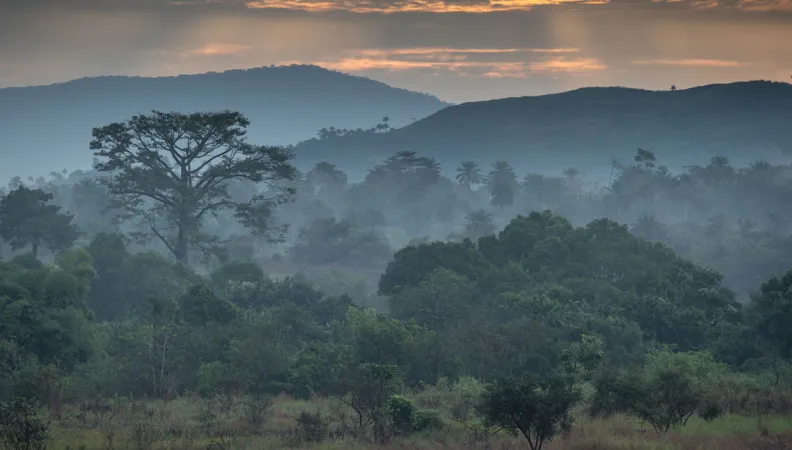
Located on the west coast of Africa, Guinea, known as the region’s “water tower,” has abundant natural resources but faces significant demographic, social, and health challenges. AFD supports the country in improving access to essential services and is one of its main partners, particularly in the education sector.
Context
Located on the west coast of Africa, Guinea has abundant natural resources, including significant mineral reserves (bauxite, gold, diamond, iron, manganese, zinc, cobalt), as well as agricultural and hydropower potential. Yet these resources contrast with living standards, and the country remains among the poorest on the continent.
With a population of 13.5 million and a fertility rate of more than five children per woman, Guinea has not begun its demographic transition. Nearly half the population is under 15, increasing pressure on education, training, and employment. Poverty remains particularly high in rural areas, where access to basic social services is limited. The Ebola epidemic has also weakened the health system and the economy.
Guinea’s economy faces a dual challenge: transforming its resources to support development while preserving a unique natural environment threatened by deforestation, soil degradation, and the impacts of climate change. A biodiversity hotspot, the country must balance growth, food security, and climate resilience.
Present in the country since 1979, AFD is a longstanding and trusted partner of Guinea, which is a priority country for French development assistance. It uses a wide range of tools: debt reduction and development contracts (C2D), sovereign loans, project financing, guarantees, as well as technical expertise and training.
AFD focuses its interventions on key sectors: energy and water to improve access to essential services; health to strengthen the system and crisis resilience; governance to support decentralization and public administration reform; agriculture and rural development to support value chains and improve connectivity in production areas; climate and environment to protect biodiversity and strengthen adaptation.
Through these actions, AFD helps reduce inequalities, strengthen institutional capacity, and support Guinea’s path toward sustainable and inclusive development. The Conakry office reports to the Gulf of Guinea regional division and works in coordination with all Group entities (Proparco, Expertise France, Campus AFD).
Our approach
AFD and Guinea: tackling poverty and supporting well-balanced growth
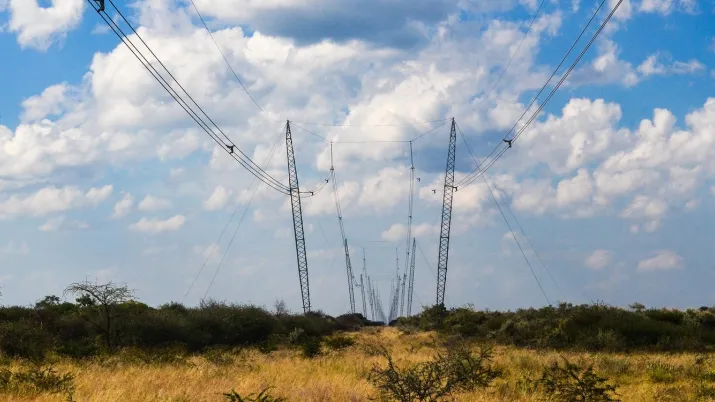
Despite an estimated hydropower potential of 6,000 MW, Guinea still has low access to electricity (29% on average, 2% in rural areas). Since 2016, AFD Group has committed more than €305 million to the sector, enabling nearly 450,000 people in the capital to connect to the grid. Alongside Électricité de Guinée (EDG), AFD finances the construction of high-voltage lines, the reinforcement of substations, and network densification to secure Conakry’s power supply, improve access in other regions, and support West African interconnection.
AFD is also active in the water sector, supporting Société des Eaux de Guinée (SEG) in improving its performance through the PACT project: reducing technical and commercial losses, upgrading connections to standard, improving billing reliability, and strengthening management capacity.
Lastly, as Conakry’s solid waste management system reaches capacity, AFD is supporting the construction of an engineered landfill, co-financed by the European Union. The project will benefit nearly 3 million people and contribute to lasting improvements in living conditions, while avoiding the emission of 34,000 tons of CO₂ over 20 years.
Agriculture employs more than 60% of the workforce in Guinea but faces constraints including the isolation of production areas, low yields, and soil degradation. Since 2017, AFD has committed more than €77 million to support over 10,000 family farms and develop four high-potential value chains (rice, groundnuts, fish farming, and poultry). Through the Rural Roads project, 600 km of roads are being rehabilitated to open up production areas and improve access to markets. The ASAF project helps strengthen sector governance through reliable tools for agricultural statistics, land monitoring, and territorial planning.
AFD also works to balance production with the preservation of natural resources. In Maritime Guinea, the SARITEM project promotes sustainable rice cultivation in mangrove areas; in Forest Guinea, PISCOFAM supports family-based commercial fish farming; and in the Dabola groundnut basin, support focuses on improving seeds and access to microcredit.
A biodiversity hotspot, Guinea is also supported in protecting its ecosystems. In Forest Guinea, AFD supports the management plan for the Ziama Reserve to restore 4,200 ha, relocate 1,000 farmers, and develop agroecological activities. Through the CLIMAGUI project, it also supports strengthening national climate services to improve community resilience to climate change.
Lastly, AFD has supported Crédit Rural de Guinée, a leading microfinance institution, for 30 years to strengthen incomes and growth prospects for rural populations.
Education and young peoples' access to employment are major challenges facing Guinea today, with a low literacy rate (40%), low quality education, insufficient infrastructure, and training programs poorly adapted to the market's needs.
AFD is a key partner in the education sector and supports the Guinean Government, alongside the Global Partnership for Education (GPE) and UNICEF, through the creation of a Common Fund covering the three education sectors.
In the field of vocational training, we assist projects to support vocational training centers and integration schemes. Entrepreneurship support has been added to this system and includes support for women entrepreneurs.
Since the Ebola epidemic, AFD has been working alongside Guinea to strengthen its health system and reduce inequalities in access to care. More than €33 million has been mobilized since 2014 to support 150 health facilities and train 5,000 health professionals.
AFD contributes to strengthening human resources through continuing education projects, including the Ressources Humaines en Santé Publique (Human Resources in Public Health) program implemented by Expertise France, as well as support to the Agence nationale de Sécurité Sanitaire (National Health Security Agency) with the NGO Bioforce. It also supports civil society organizations, including Solthis for HIV prevention and treatment, DREP Afrique for sickle cell disease, and Santé Sud to support the deployment of doctors in remote areas.
In terms of infrastructure, AFD has financed the rehabilitation and equipment of 39 public laboratories through the LABOGUI project, supported the creation of the Institut Pasteur de Guinée, and strengthened biological diagnostics through the regional RESAOLAB program. It also works to prevent and control infections in several regions of the country.
Lastly, AFD supports sexual and reproductive health through the DSSR project in Boké, in partnership with Expertise France and local organizations, to promote women’s rights and access to care. In parallel, a project led by AMREF aims to reduce gynecological and obstetric violence. The One Health initiative, integrated into PREZODE, complements this approach by supporting the prevention of zoonotic pandemics.
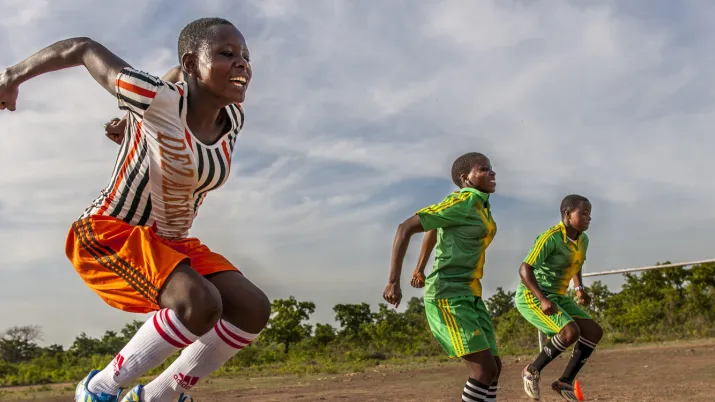
New initiatives are also being rolled out in sports, particularly for girls, and in culture through the Accès Culture program.
A longstanding partner in Guinea’s decentralization process, AFD supports the Agence nationale de financement des collectivités locales (ANAFIC) to help operationalize transferred responsibilities and ensure greater citizen participation in local governance. It also supports initiatives led by NGOs and decentralized cooperation, strengthening the role of local authorities in territorial development.
In parallel, AFD supports the modernization of public administration. The Appui au Perfectionnement de l’Administration Publique (Public Administration Capacity-Building Support) project, implemented by Expertise France, aims to strengthen the Institut national de Formation et de Perfectionnement (INFP) and train 600 mid-level civil servants, while contributing to a younger and more gender-balanced civil service.
AFD is also active in the economic and financial sectors, alongside the ministries of economy, finance, and budget. Through the PAGEF project, it supports the reliability of budget forecasts, public debt management, and oversight of public entities. Through the AMRIC project, co-financed with the European Union, it supports domestic revenue mobilization, strengthens oversight bodies, and promotes tax compliance, while also engaging civil society organizations.
In the field
Below, find the country's projects, news, publications, and contact details in one click.
Projects
News & Press Releases
Accelerating electrification and supporting the clean energy transition in Sub-Saharan Africa
Published on January 28, 2025
“More tech companies are developing in Africa than in the rest of the world”
Published on June 8, 2023
Key figures
-
660 million euros committed since 2014
-
32 projects in progress
-
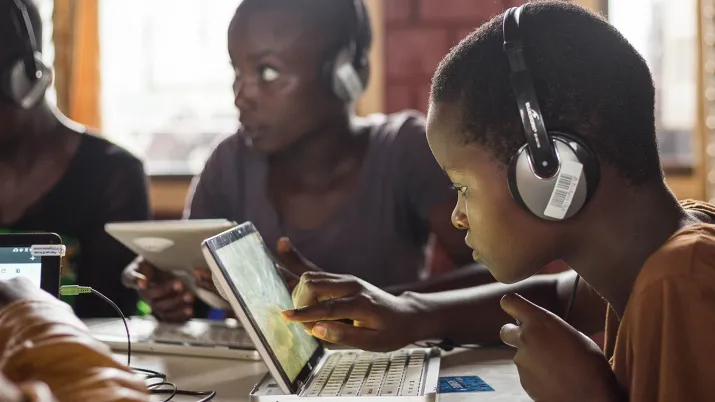
Over 2 million students benefiting from improved learning conditions.