
Share the page
Mauritius
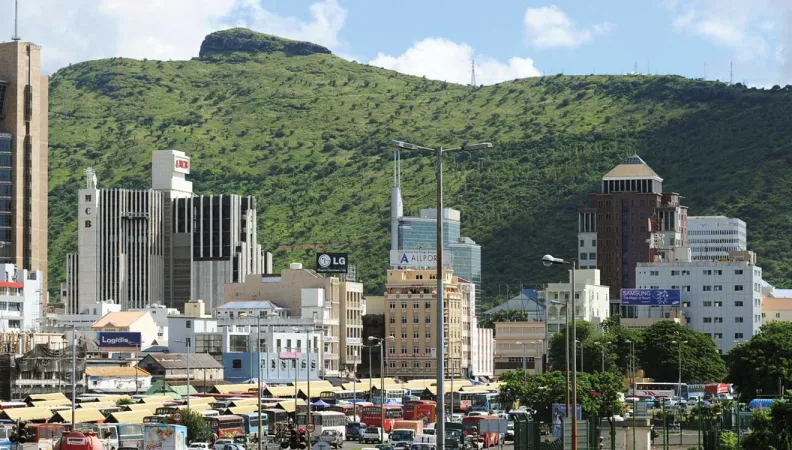
As a small island state that is highly vulnerable to climate change yet economically dynamic, Mauritius promotes a model of sustainable development that combines social welfare and growth. AFD's work there primarily involves access to water, the energy transition, sustainable finance, climate change adaptation and regional cooperation.
Context
Mauritius is a small island State, but has nevertheless succeeded in diversifying its economy and integrating world markets. The island’s high population density has also contributed to its development. It has established ties with its neighbor, Réunion, and the other Indian Ocean islands, both at the economic and environmental levels.
However, the country comes up against the fact that it has limited resources which are threatened by climate change. Today, the country must also overcome serious issues with water access and a looming energy crisis, while adapting to the effects of climate change. Mauritius needs to find new growth drivers in order to build a stronger and more sustainable economy that benefits everyone.
AFD has been operating in Mauritius since 1975. After ceasing its activities in 1995, due to the level of development achieved by the island, since 2006 it has been supporting its economic and ecological transition. AFD has become one of its main partners. Our financing benefits both public authorities and private actors: banks and companies. Our action covers the entire Indian Ocean region.
AFD's Mauritius office is directly attached to the Indian Ocean regional office in Saint-Denis.
Our approach
"Mauritius and AFD: reconciling economic growth, social well-being and respect for the environment"
- Making green finance more accessible: AFD provides support to Mauritian financial institutions through green credit lines that facilitate access to financing for both businesses and individuals, for projects aligned with the Sustainable Development Goals (SDGs). Climate change mitigation and adaptation projects are a key priority.
- Supporting the development of sustainable finance: The aim is to structure an ecosystem conducive to green investment by building the capacities of financial institutions and economic stakeholders.
Backed by EU-delegated funds, this program is targeting three complementary areas:
- Supporting the Bank of Mauritius to incorporate climate-related risks into regulation and supervision of the financial sector.
- Developing skills in the banking sector through specialized training and the creation of a sustainable finance center.
- Facilitating the development of green projects in the private sector.
- SUNREF program: In addition to credit lines, the SUNREF Technical Assistance Program has launched a research fund to perform analyses aimed at, firstly, promoting the development of well-established sectors in Mauritius, such as electric vehicles, liquid effluent, and sustainable construction, and, secondly, exploring new potential growth areas such as carbon credit markets, green hydrogen, and agrivoltaics.
- Water: AFD has granted a public policy loan to modernize the water supply network and provide secure access to drinking water in Mauritius and Rodrigues. The goal is to build the sector's institutional capacities, by developing a new water policy and master plan focused on integrated water resources management (IWRM).
- Energy: AFD is supporting the Mauritian government to define its energy policy and plan its investments. It is also promoting the development of renewable energies and energy-efficient systems, in particular, through its support for the private sector via the TFSC credit line implemented with Mauritian public banks, and for the Green Climate Fund. In Rodrigues, AFD has been involved in developing the "Rodrigues Île Verte " roadmap, which aims to achieve a 100% renewable energy mix. Led in partnership with ADEME (French Agency for Ecological Transition), this approach has given rise to a territorial strategy, an action plan and a monitoring framework. Additional support is now being provided to implement this roadmap and lay the groundwork for the first investment projects.
- Waste management and the circular economy: AFD has called on the expertise of ADEME Réunion to help build the capacities of the Mauritian Ministry of Environment, Solid Waste Management, and Climate Change. This work is aligned with the Mauritian government's initiative, also supported by AFD, to make the shift from a linear to a circular economy.
- Mauritius was one of the first countries to sign the Paris Agreement. Its nationally-determined contributions are focused on improving water resource management, combating coastal erosion and reinventing its agricultural model.
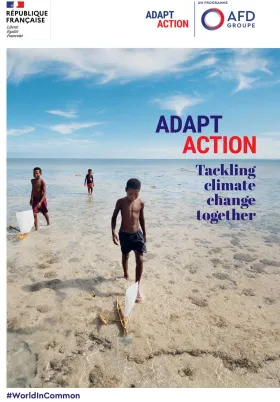
- AFD's is directing its support towards climate governance to improve inter-ministerial coordination, develop sector-specific public policy, and launch structural projects through the Adapt’Action facility. To support the island in its agricultural and energy transition, AFD has mobilized its expertise and SUNREF credit lines to finance climate change adaptation projects.
- AFD is also helping to preserve coastal areas by developing more sustainable economic activities and protecting marine and terrestrial resources through a project backed by the French Facility for Global Environment (FFEM).
Regional cooperation is essential to overcome the common challenges faced by Indian Ocean countries. With this in mind, AFD is working on the following projects:
- Health: The SEGA One Health epidemiological surveillance network, led by the Indian Ocean Commission, aims to improve health in member states (Union of the Comoros, Madagascar, Mauritius, Seychelles, and Réunion) through improved disease monitoring in both humans and animals.
- Cultural and Creative Industries (CCIs): The "Regional CCI Development Project in the Indian Ocean" aims to build more inclusive societies and foster a sense of belonging among regional communities. Its goal is to encourage wider circulation of artists and cultural goods on a regional and international scale, promote diversity of expression through culture, make access to culture a fundamental right, particularly for women and vulnerable groups, and build the capacities of cultural stakeholders to help them become more competitive, resilient, innovative and collaborative.
- Climate: The "Hydromet" project aims to increase the climate resilience of IOC member states and their populations by improving knowledge of climate hazards and developing early warning mechanisms. This project will help improve the region's understanding of climate change by strengthening the capacities of national meteorological services in order to provide more accurate forecasts, develop data-driven early warning systems, and adopt a regional approach to climate change projections.
- Waste management: The ExPLOI project aims to reduce plastic pollution in the ocean resulting from the uncontrolled release of waste, while developing a regional circular economy in the southwest Indian Ocean. It will also establish a framework to drive research, education, and innovation for the reduction and recovery of marine plastic waste.
- Coastal erosion : The RECOS project aims to restore and protect coastal ecosystems in the Indian Ocean (mangroves, coral reefs, wetlands, etc.), which are essential to increasing climate resilience in these areas. Over five years, this initiative plans to strengthen regional governance, develop pilot projects in ecological restoration and sustainable management, and promote scientific cooperation, awareness-raising, and knowledge capitalization. The ultimate goal is to build the resilience of coastal communities, strengthen governance and develop scientific knowledge, while supporting sustainable, income-generating value chains.
In the field
Below, find the country's projects, news, publications, and contact details in one click.
News & Press Releases
Publications & Media
Key figures
-
32 projects financed since 2007
-
€1,103 committed since 2007
-
21 regional projects financed