Share the page
Climate change: a MOOC for more sustainable construction in the Mediterranean
Published on
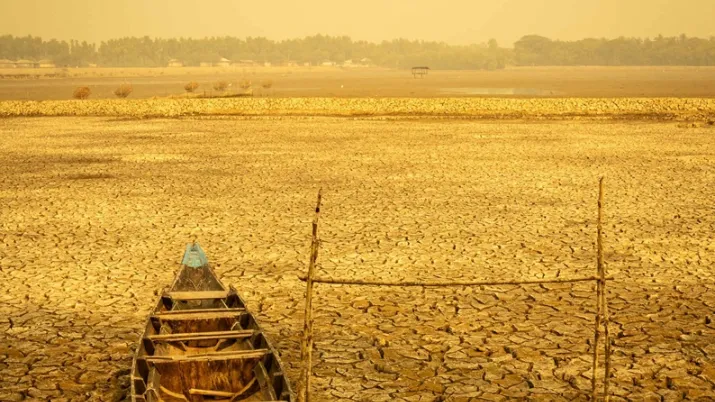
From heat waves and droughts to water stress, the Mediterranean is on the front line of climate change. How can buildings be designed to remain comfortable and energy-efficient under these conditions? PEEB Med and Agence Française de Développement (AFD) are launching the MOOC
"Construire durable en climat méditerranéen" (Sustainable Construction in Mediterranean Climates,) a free online course open to everyone.
This course is available in French and Arabic. Tutoring, however, will be available in French only.
The Mediterranean basin is home to more than 500 million people and is experiencing sustained urban growth and increasing pressure on natural resources. Hot, dry summers, mild, wet winters, and high levels of sunshine all pose specific challenges for the building sector, which accounts for a significant share of the region’s greenhouse gas emissions. Buildings need to adapt to these conditions to improve comfort while reducing the need for air conditioning.
Developed in collaboration with ADEME and MeetMED III and funded by the European Union, the MOOC (Massive Open Online Course) is designed for building sector professionals, including project owners, architects, engineering firms, and construction companies. It is also intended for teachers and students, as well as anyone interested in learning about sustainable construction in Mediterranean climates.

A comprehensive course to understand the challenges
Over three weeks, participants will explore the key principles of bioclimatic design, including thermal inertia, natural ventilation, and the management of sunlight and humidity. They will also learn about tools for assessing sustainable projects, including life cycle assessment, life cycle costing, and certification schemes, and examine practical examples filmed in the Maghreb and France. The MOOC is expected to take a total of 10 hours to complete.
The course will feature expert videos, field reports, discussion forums for participants, and an optional learning pathway for those wishing to explore the subject in greater depth. Quizzes will allow participants to assess their knowledge throughout the course, and a certificate of completion will be available to those who successfully complete it.
Tutored support
Tutoring begins on 21 September 2026 and will run for three weeks. During this period, participants will be able to exchange ideas on discussion forums, ask experts questions, and take part in live webinars. After the three-week period, the MOOC will remain freely available with no time limit, but without tutoring.
Ready to rethink how buildings are designed and constructed in the Mediterranean? Register now.
Learn more:
What role does AFD Group play in international environmental negotiations?
Published on October 7, 2026
Why does France’s development bank finance climate action in other countries?
Published on October 7, 2026
“Climate adaptation should be seen as a pathway, not a collection of solutions.”
Published on October 2, 2026