Share the page
Financial and digital inclusion for women in Africa: seven years of action by the G7 Partnership
Published on
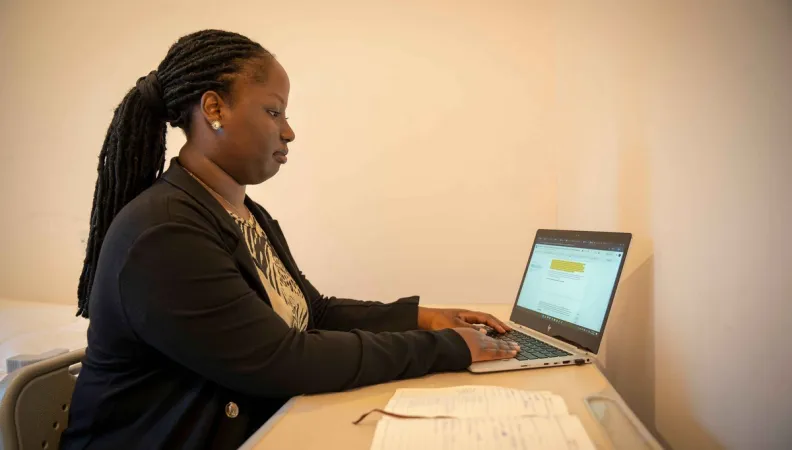
On 23 June, in Paris, Agence Française de Développement (AFD), the French Treasury, and the United Nations Development Programme (UNDP) brought together partners in the G7 Partnership for Women’s Digital Financial Inclusion in Africa to review seven years of progress and set priorities for the next phase.
Today, 1.3 billion adults worldwide still do not have a bank account, and more than half of them are women. In sub-Saharan Africa, the gender gap in account ownership remains 12%. Without access to financial services, it is more difficult to build a business, invest, or protect one’s income.
Opening the 23 June meeting marking seven years of the G7 Partnership for Women’s Digital Financial Inclusion in Africa, Christophe Lecourtier, Chief Executive Officer of Agence Française de Développement (AFD), recalled that married women in France could not open a bank account or freely manage their own income without their husband’s authorization until 1965.
“This right may seem commonplace today, yet it was won only recently. It remains a fundamental issue and a daily struggle for the empowerment of millions of women around the world,” he said.
Advancing Women's Financial Inclusion in Africa

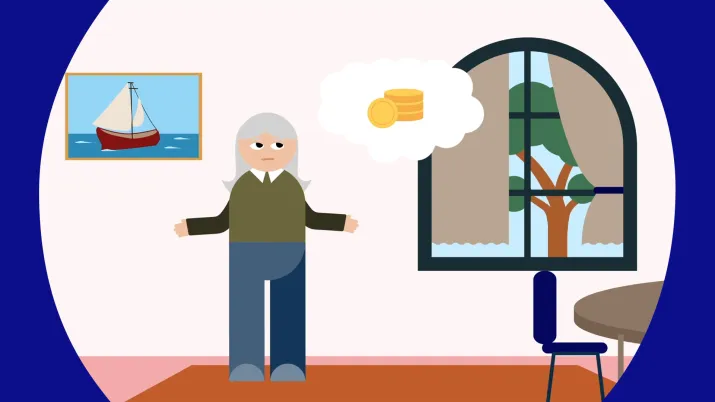
Éléonore Caroit, French Minister Delegate for Francophonie and International Partnerships, recalled meeting a woman farmer in Côte d'Ivoire who kept her savings in a jar above her stove. Whenever an unexpected expense arose, those savings quickly disappeared. “Simply having a bank account in your own name changes lives, creates opportunities, and gives women genuine independence,” she said.
Across Africa, mobile money has helped transform access to financial services. It allows people to use their mobile phones to send and receive money, make payments, save, and withdraw cash without necessarily having a traditional bank account. In low- and middle-income countries, the share of women with a mobile money account rose from 37% in 2011 to 73% in 2024. But technology alone is not enough. It must be supported by public policies, infrastructure, and services designed to meet women’s needs.
A coalition to strengthen the entire ecosystem
This conviction led France to launch the G7 Partnership for Women’s Digital Financial Inclusion in Africa during its G7 presidency in 2019.
“We wanted to focus on a practical issue that could improve the daily lives of hundreds of thousands of women across Africa,” recalled Bertrand Dumont, Director General of the French Treasury.
Seven years later, the partnership has brought together organizations that still too rarely work together. At AFD, governments, central banks, the World Bank, and development finance institutions exchanged ideas with innovative companies such as Wave Mobile Money, researchers from J-PAL, as well as UNCDF and the Gates Foundation.
One message emerged clearly: women’s financial inclusion is both a matter of equality and a driver of development. Expanding women’s access to financial services benefits society as a whole.
Sustaining momentum
Since 2019, the partnership has supported initiatives across Africa, shared research findings, and helped advance reforms that promote women’s financial inclusion. AFD Group contributes through loans, grants, and its Choose Africa initiative.
In Egypt, a program implemented with the Micro, Small and Medium Enterprise Development Agency (MSMEDA) mobilized nearly $10 million in financing and technical assistance. Between 2020 and 2024, it supported more than 18,000 women-led businesses and helped create more than 33,000 permanent jobs.
These results show that effective solutions already exist. The challenge now is to scale them up and strengthen coordination among partners to increase their impact.
For Éléonore Caroit, this review marks the beginning of a new phase. Discussions identified several priorities: expanding proven approaches, better targeting women, young people, small and medium-sized enterprises (SMEs), and rural communities, and building ecosystems that support lasting financial inclusion.
Despite pressure on development financing, G7 partners reaffirmed their shared ambition.